FYI: This website contains affiliate links. As an Amazon Associate I earn from qualifying purchases.
- Home
- Garden
Urban Gardening in Small Spaces
By Amy DeVries
Short answer: The best way to start urban gardening in small spaces is with the garden you can water. Pick one spot your hose or watering can reaches easily, grow only what fits there this year, and add more only when watering still feels easy in July.
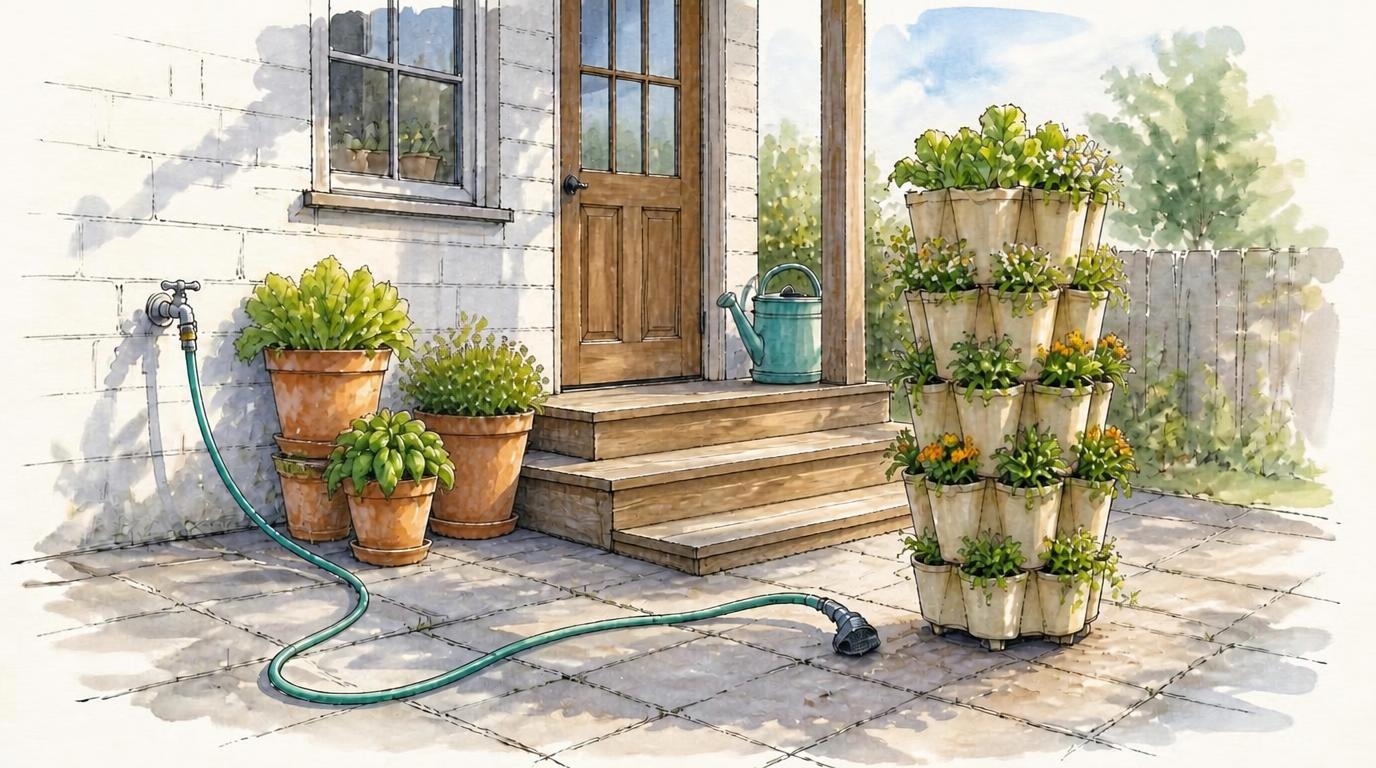 A few plants your hose can reach is a real garden.
If you're short on space, time, or confidence, you're in good company. A single pot counts. If you're growing something and eating it, you're gardening.
I learned to garden from my dad, and I eventually worked up to 18 raised beds on a quarter acre inside the Baltimore Beltway. When we moved to a 1920s house we rent on 3 acres, I tried to plant that much again. It was too much. Now I grow mainly in three GreenStalk vertical planters, because the hose reaches them easily.
So here's where I'd start: Start with the garden you can water, then grow more only when that's easy.
Which page should you start with?
Pick the line that sounds most like you.
- "I don't have any outdoor space." Start with sprouts.
- "I only have a patio, steps, or a balcony." See Container Gardening for Beginners.
- "I'm eyeing a vertical planter but don't want to waste money." See my GreenStalk Review.
- "I have one small sunny spot in the yard." See Square Foot Gardening for Beginners.
- "My garden always fizzles by July." See How to Save Time Watering Your Garden.
- "I want free water for the garden." See the Water Collection hub.
- "I want to stop throwing out food scraps." See the Compost Pile for Beginners.
- "There's a rat in my compost." See Rats in Compost: How to Keep Them Out.
- "Bugs or frost keep wiping out my plants." See Row Covers for Vegetables.
- "I want to grow from seed." See How to Start Seeds (and When to Just Buy Plants).
- "I want to grow food from one store-bought sweet potato." See How to Grow Sweet Potato Slips.
- "I'm not sure gardening is even the right first step." The free guide below can help you decide.
A garden you can water is one small system, and it may not be the one you need first. If you're wondering where to begin, whether it's food, water, or home comfort, my free 2-page guide helps you pick one place to start. It's called Which Urban Homestead System Should You Start First?, and it's built for small spaces and busy lives.
The smallest garden that works
You don't need land, a big budget, or a perfect setup. A beginner garden has just four pieces:
- A water source you'll actually use. That's an outdoor spigot, a rain barrel, or the kitchen sink if you'll be filling a watering can.
- A spot inside your easy reach. Stretch the hose as far as it goes without dragging it around corners, or count how many steps you're happy to carry a full watering can.
- The sunniest place inside that reach. Choose plants that fit that light.
- Only what fits there this year. One pot, one planter, or one bed is plenty.
That's it. Everything else on this page can wait until that feels easy.
Why I start with the water
A small yard can grow more food than you'd think. On our quarter acre inside the Beltway, we grew tomatoes, peas, beans, greens, squash, cucumbers, okra, potatoes, and sweet corn.
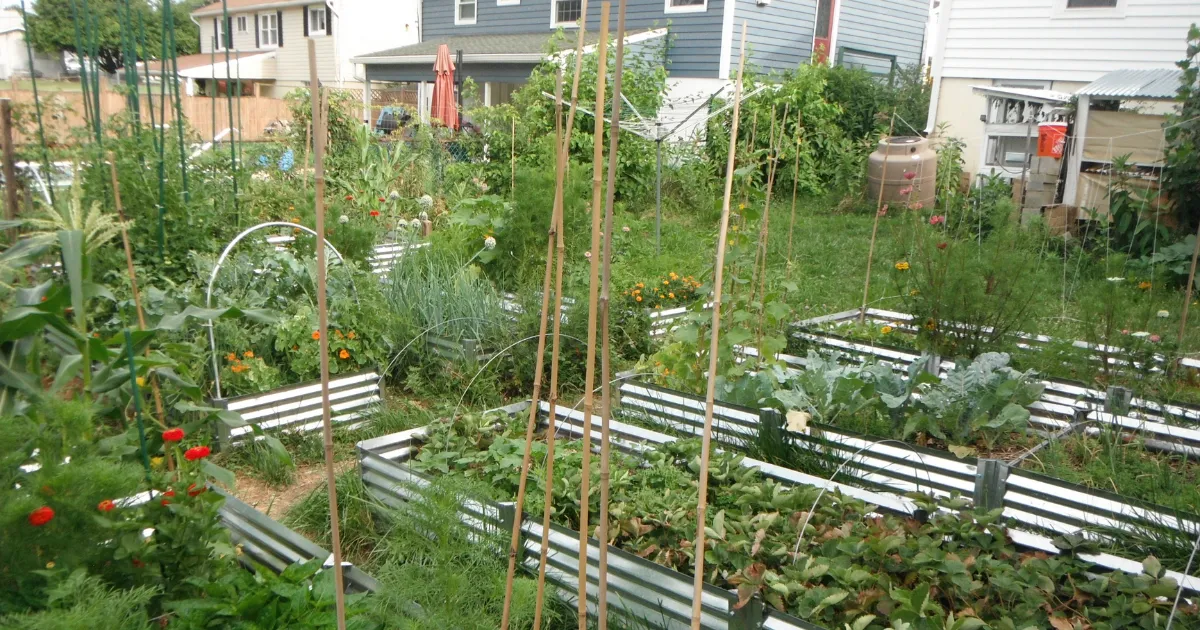 Our raised beds at the old Beltway house. You can grow a lot of food in a small space.
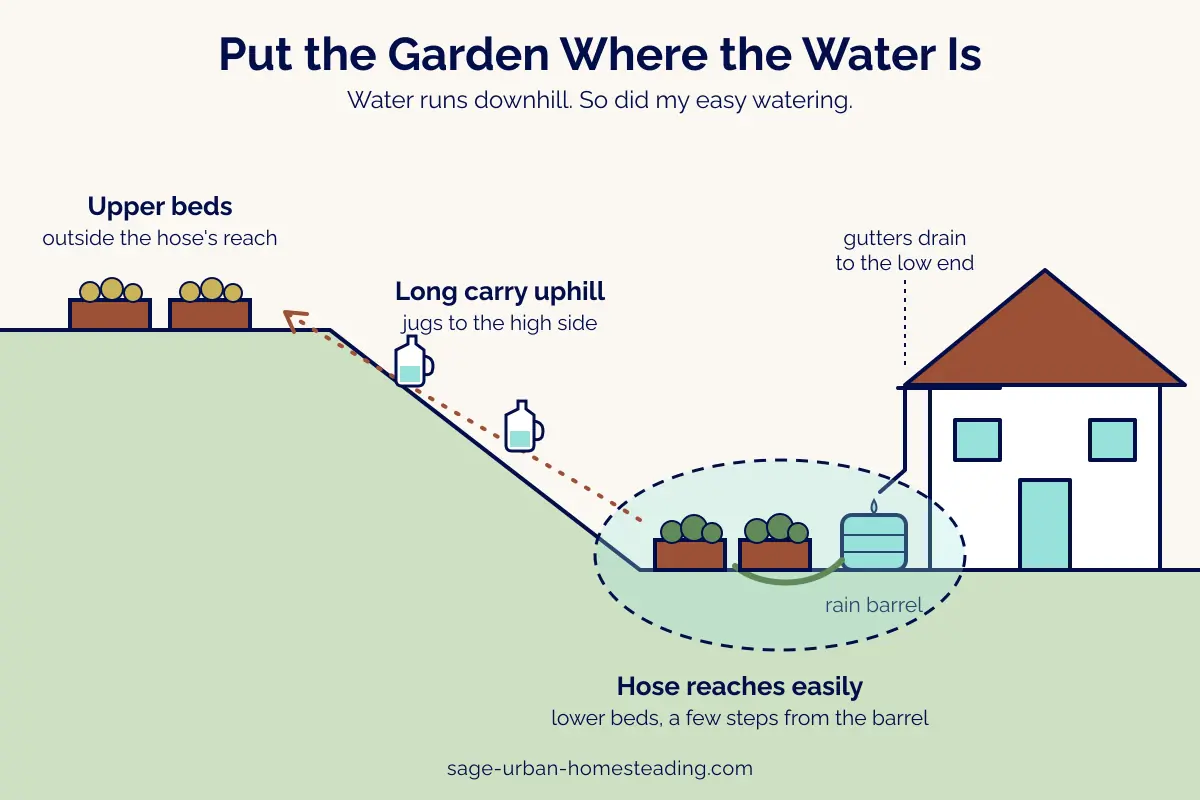
At the Beltway house, our yard sloped, so I put raised beds on the level spots at the top and the bottom. We ended up adding more beds around the bottom, as you can see in the photo. Our gutters drained to the low end, so the lower beds were an easy hose away from the rain barrel water. For the higher beds, I carried jugs uphill. Same garden, same plants, but the beds at the top took far more work.
Our first year at this house with more land, I planted 50-foot rows in a big sunny area the hose didn't reach. Watering took an hour or more, before breakfast. By the end of the season, the weeds had closed off the walkways and we couldn't get into the garden at all.
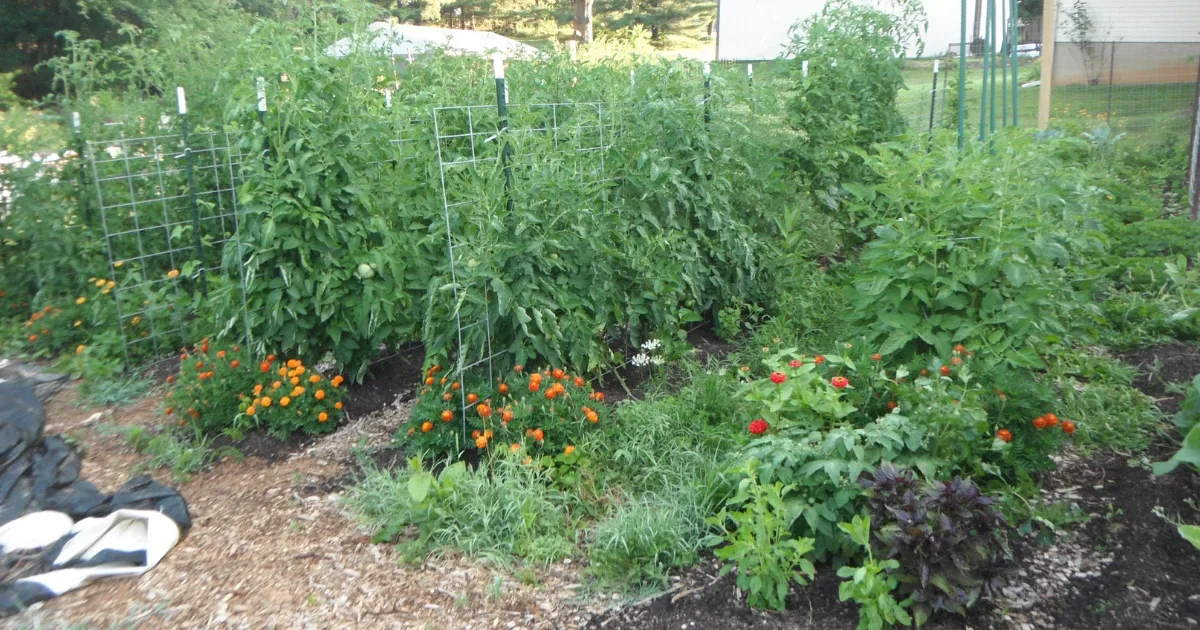 The year the garden was too big. The hose didn't reach it, and by the end of the season we couldn't get into it.
Now I garden close to the house. The GreenStalks and the beds with our tomatoes and sweet potatoes all sit where a hose from a house spigot reaches them. I water the GreenStalks every morning in summer, and most days it's a nice part of the morning instead of a chore.
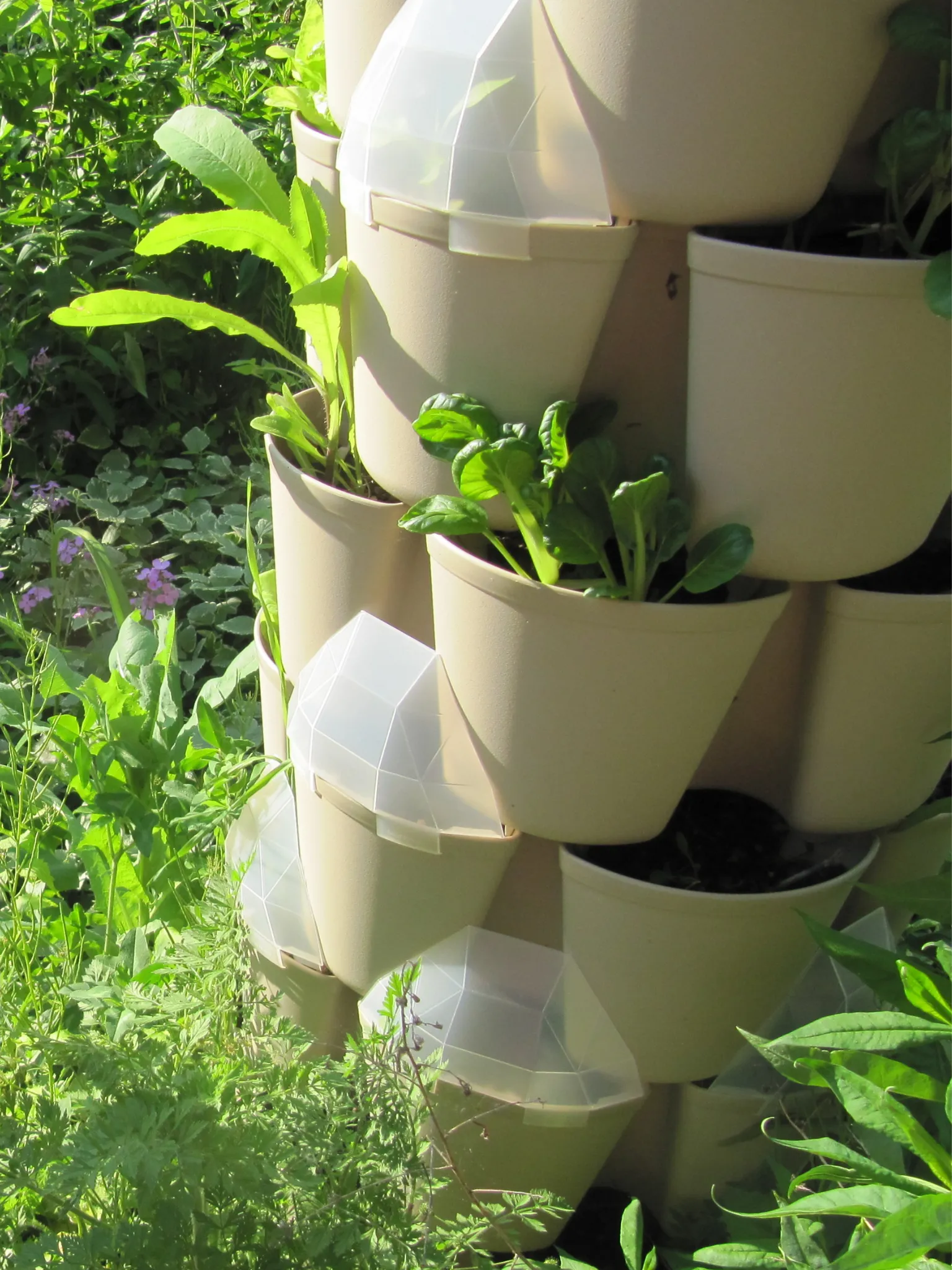 Getting an early start in a GreenStalk, within reach of the hose.
The rest of your yard, or your someday garden, will still be there next spring.
Water first for urban gardening in small spaces
Watering is the chore that grows every time the garden does, so it's the first thing to get right.
Saving time watering
Watering takes more of my garden time than anything else, and the fix that helped most wasn't gear. It was moving the garden closer to the water. See how to find your easy-water zone, why a deep soak at the start can save you work later, and how to tell when your garden is ready to grow. See How to Save Time Watering Your Garden.
Collecting rainwater
We started with plain rain barrels under the downspouts, and today we collect rain in 200-gallon tanks from the metal roof of a shed. You can start even smaller, with a few sturdy tubs set out before a rain. Free water follows the same rule as the hose: keep it close to the plants you water most. See Water Collection.
Choose where to grow
Pick the growing space that fits the spot you actually have. You can always add another one later.
Container gardening
If you rent, or you only have a patio, steps, or a balcony, containers are the place to start. I've grown in pots, potatoes in bags, and even celery in a box. See what you can actually grow in containers, and how to get started without buying much. See Container Gardening for Beginners.
Vertical planters
We bought three GreenStalks with our own money in June 2024, and they're now where most of my gardening happens. Lettuce, basil, dill, and flowers have done well. Strawberries disappointed me, and fertilizing is the part I'm still learning. Read the real downsides, and who I think should skip one, before you spend the money. See my GreenStalk Review.
Square foot gardening
Square foot gardening is my go-to method for fitting real food into one small sunny spot, and I use a Seeding Square to space the seeds. We have clay soil at both of our houses, so I've always filled my beds with added soil. Start with a single 4x4 bed and see how it fits your life. See Square Foot Gardening for Beginners.
Start your plants
You don't need a big setup to get plants going, and you don't have to grow everything yourself.
Starting seeds
These days I start seeds on one little sunny table and move them to the porch once they have their first leaves. I used to run a basement shelf with lights and fans. Then we moved, the new basement was too cold, and the mice found my sprouts. See what to start, what to buy as plants, and when a bigger setup is worth it. See How to Start Seeds (and When to Just Buy Plants).
Growing sweet potato slips
Every year I grow purple sweet potato slips, all descended from one sweet potato I bought at the store years ago. The slips start small, but the vines need room. The year I planted them near the top of a GreenStalk, they grew down over the whole planter. See How to Grow Sweet Potato Slips.
Protect and feed your garden
You don't have to fix everything at once. Start with the problem you're having now.
Row covers
Bugs and frost are two of the fastest ways to lose a small garden. I’ve grown a winter harvest garden under row cover and tried a bug cover over our brassicas, with mixed results. See what a simple cover can and can’t do for raised beds and small plots. See Row Covers for Vegetables.
Starting a compost pile
Composting doesn't have to involve math or a thermometer. I've always used an open pile outside, held in with cinder blocks, and I let it sit for at least a year before I use it. If you don't have a yard corner for a pile, this page covers what you can do instead. See the Compost Pile for Beginners.
Rats in compost
Rats in compost usually mean something nearby is feeding them, not that you're composting wrong. At our Beltway house, the real draw was the feed falling through our quail pens, not the pile across the yard. See what to check, what to change, and why you don't have to quit composting. See Rats in Compost: How to Keep Them Out.
No outdoor space? Start with sprouts
My friend Willa from Sonnewald Natural Foods says that even if you don't have the room and sun for a pot, you can grow your own sprouts in a jar. I used a plastic sprouter made for better airflow than a jar.
We tried it a couple of times with a sprouting seed mix, alongside our homeschool lessons. I rinsed them twice a day and kept the sprouter in a safe spot in the kitchen, and we had no problems with mold or odors.
Here's the honest part: we didn't enjoy eating them. The chickens did. So start with one small batch, and find out whether your household likes them before you buy much.
One safety note: A clean sprouter helps, but it can't guarantee safe sprouts. Bacteria usually come in on the seed, and the warm, damp conditions that sprout seeds suit bacteria too. The CDC says children, older adults, pregnant women, and people with weakened immune systems should avoid raw sprouts of any kind, and that cooking sprouts thoroughly kills the harmful bacteria. What you eat is your call. Look at the risks and decide what's right for your household.
Our indoor fig tree
Our fig tree lives in a southwest window all year. It's still very small, and it gave us three figs last year. Three figs won't feed anyone for long, but it's real fruit from a tree inside the house. None of my other houseplants can boast that they've fed us.
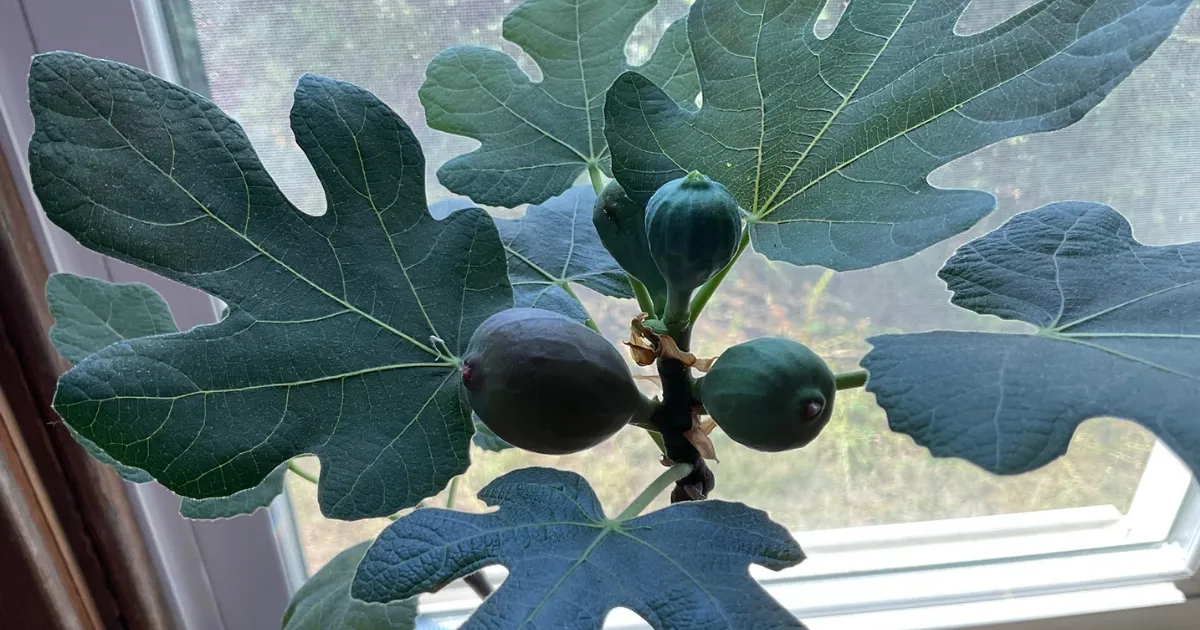 Our indoor fig is still very small. It gave us three figs last year.
Windowsill herbs: No promises
You'll see indoor herbs on every small-space list, but I can't promise you'll have an easy time with them. Mine haven't gone well. The mint I tried growing hydroponically in the top of our aquarium got spider mites. I'd still like to try thyme in an indoor pot, once I have the space.
Amy DeVries helps beginner urban homesteaders learn by doing. A lifelong gardener, she has grown food in spaces that expanded to 18 raised beds, patio containers, dwarf fruit and nut trees, and gravity-fed rainwater systems. She shares practical lessons shaped by real experience. Amy homeschools her children and teaches the same hands-on skills that guide her work.
You might like these
How to Garden and Love It
Learn how to garden and grow your own food through easy urban farming techniques.
Composting Worms and How They Can Help You Save the World
EGrow even more in your garden when you raise composting worms to turn your food waste into a rich soil supplement.
Compost Bins and How to Use Them
Learn about the different types of compost bins and decide on the best way to use composting as part of your urban farming.

More Information
Disclosure
All information found on this website is editorial in nature and intended to motivate and inspire rather than be used as medical advice or legal advice.
As an Amazon Associate, I earn from qualifying purchases. I also use Google Ads and cookies as described in the Privacy Policy.
Thank you for your support!
By Amy DeVries, Copyright © 2011-2026 Sage-Urban-Homesteading.com All rights reserved.
