FYI: This website contains affiliate links. As an Amazon Associate I earn from qualifying purchases.
Row Covers for Vegetables: Simple Pest and Frost Protection
By Amy DeVries
Short answer: Row covers for vegetables work best as a frost blanket for cool-weather greens. One piece of fabric over one bed, held up on a few hoops and held down with boards, can keep kale and other greens growing into winter. For bugs, they're more of a tradeoff: they block some pests, trap others inside, and slow your plants down.
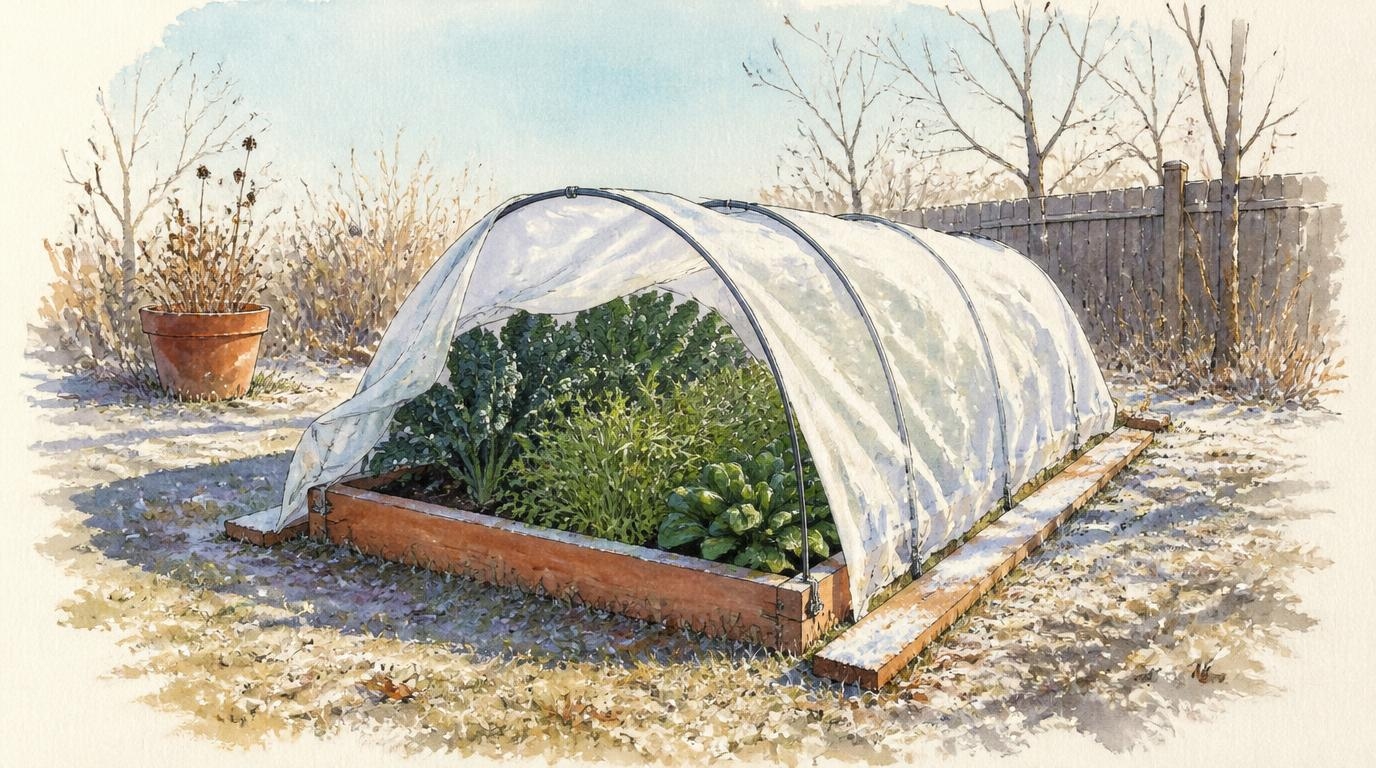 One cover over one bed can keep greens going after the rest of the garden quits.
If bugs ate your broccoli and frost killed your greens, and you're hoping one simple fix will handle both, you're in good company. I hoped the same thing. Row covers can help with both, but not equally, and not without a little upkeep.
I've used row covers two ways at the 1920s house we rent on 3 acres: as a frost cover over a winter garden, and as a bug cover over our cabbage, broccoli, and cauliflower. The winter garden kept us in greens until March. The bug cover was a mixed bag.
Here's the smallest setup that works, what I'd grow under it, what a cover can and can't do about pests, and what I'd skip.
What a row cover is
A row cover is a thin, light fabric that lets sun, air, and rain through. Thicker fabric traps more heat for frost protection. Thinner fabric is for keeping bugs off, and it lets more light in.
The brand I used is Agribon, which comes in different weights for frost and for bugs. I bought mine from Johnny's Selected Seeds (not an affiliate). For a real snow or ice storm, there's also heavier plastic you can put over the top. More on that below.
The University of Maryland Extension's row cover guide covers the technical side: fabric weights, how far apart to space hoops, and when to take covers off.
Row covers for vegetables: Start with one bed
You don't need to cover the whole garden. One raised bed of greens is plenty to find out whether a cover fits your life.
Ours was one long in-ground bed, not a raised bed. The same pieces work on a small bed, just fewer of them.
What you need
- Row cover fabric, big enough to cover the bed with extra on every side
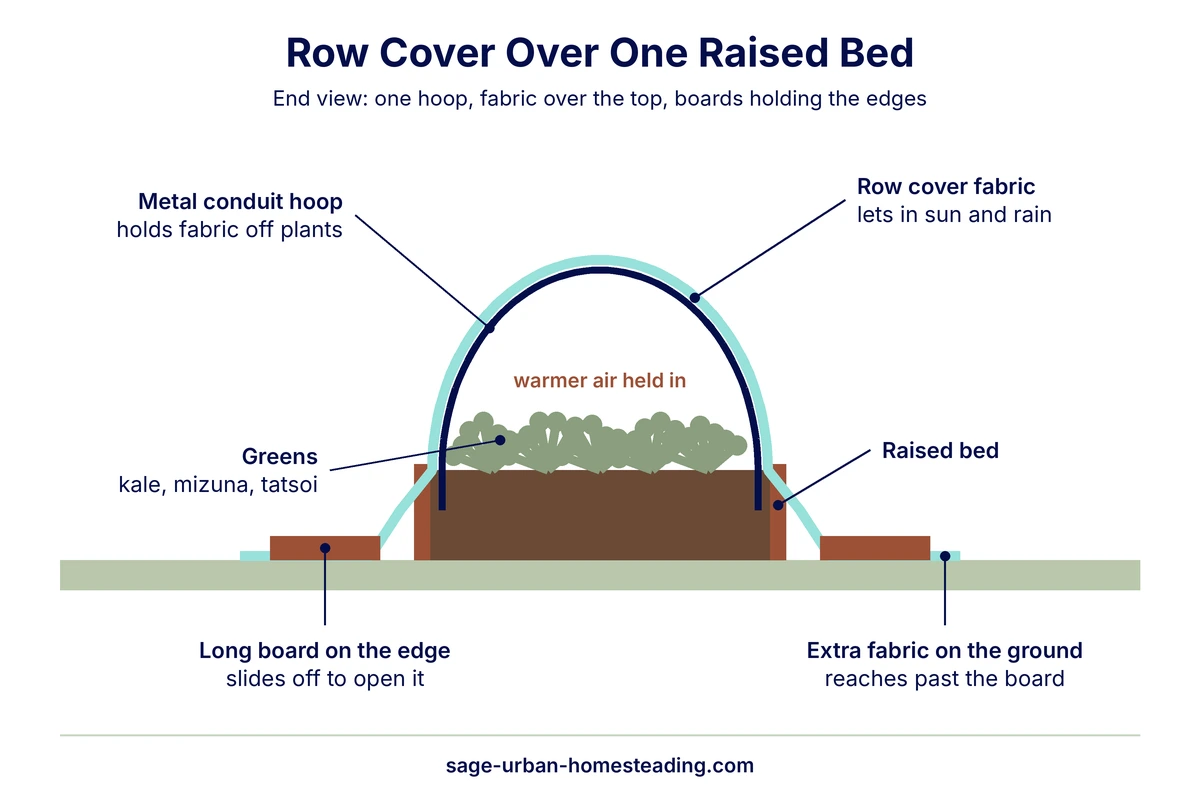
- A few hoops to hold it up off the plants. Ours were metal conduit, bent with a tool my husband bought. Push them into the ground spaced about 4 feet apart.
- Long boards to hold the edges down. We started with bricks, but boards were much easier to move when we opened and closed the cover.
- For winter: a sheet of heavier plastic for snow or ice storms
How to set it up
- Plant your greens first. Cool-weather greens like kale, mizuna, and tatsoi are the easiest place to start.
- Set the hoops across the bed, pushed into the soil on each side.
- Drape the fabric over the hoops, with plenty of extra on the ground along every edge.
- Lay boards along the edges to hold the fabric down. Boards can slide off and back in a minute.
- Open it on mild days so the plants get full sun and you can check on them. Close it again before a cold night.

Our winter harvest garden under row cover
I got the idea for a winter garden from Justin Rhodes and his book The Rooted Life (Amazon affiliate link). So one fall at the 1920s house, I planted one long bed with greens and root crops, covered it with Agribon on conduit hoops, and kept it going until March.
It was something to see. On mild days I'd open it up so the plants could get some sun, and there was this overgrown island of green in the middle of a barren brown garden. I was out there weeding on Christmas Day.
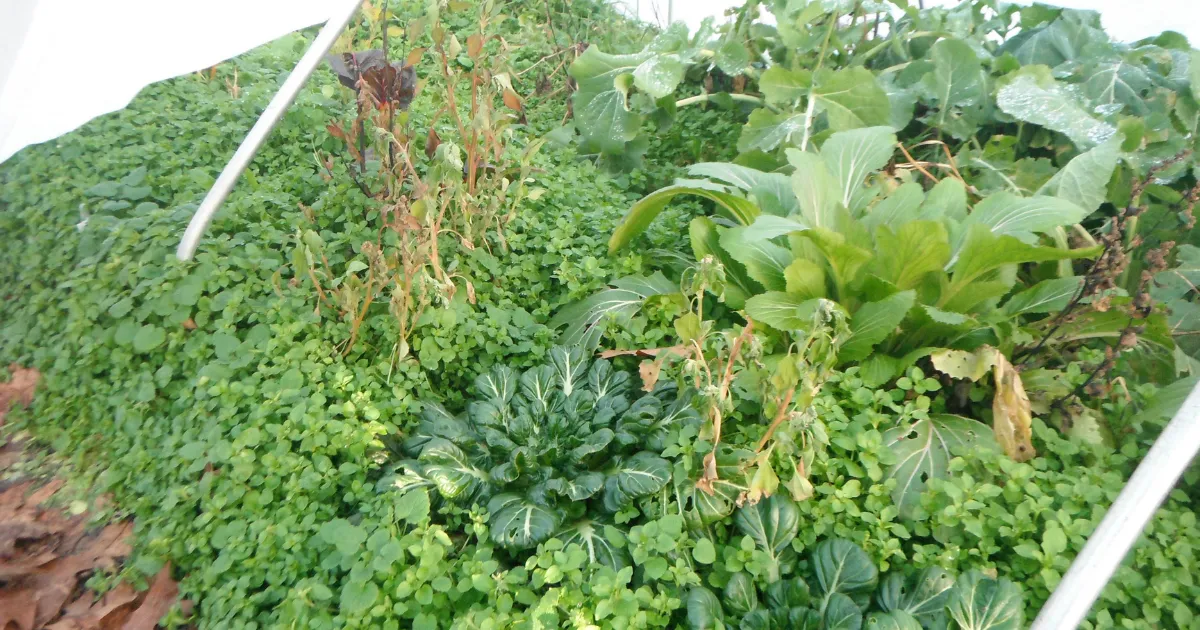 Our winter garden under the row cover on Christmas Day. Tatsoi, greens, and plenty of weeds, still growing in December.
What grew well, and what didn't
- Did very well: tatsoi, mizuna, and kale.
- Did well into fall: cilantro. It grew better in the fall than it does for me in spring, but it couldn't handle the very cold temperatures.
- Did ok: rutabagas.
- Small: beets. We just ate the leaves.
- Didn't grow (poor germination): carrots.
- A failure: cabbage. The bugs found it. It was like they'd found a winter resort and set up shop under the cover.
Mostly, I grew greens for our chickens. Their run was right next to the bed, so I'd toss them handfuls of weeds and greens, and seeing how excited they got made it worth it.
I also think the bed's soil was better the next summer. My guess is that the life in the soil got through the winter better under the cover.
What went wrong: Ice and plastic
The fabric tore a few times from ice, when I forgot to put the plastic on. The heavier plastic is meant to go on before a snow or ice storm. The hard part is knowing when that's coming, and running out to do it at the right time.
Would I do it again?
It was a unique experience, but in the end I decided I didn't need to do it again. If you're curious, I'd start much smaller than I did: one raised bed of the greens that did best, close to the house, so opening and closing it doesn't become one more chore.
And having some grateful small livestock nearby can keep you motivated to do weeding. Chickens aren't the only ones who like it. You can also give the green treats to quail or rabbits.
The same idea as window quilts
A row cover works like a window quilt for your garden: a layer of fabric that holds in warmth on a cold night. If you've made window quilts, you already understand how this works. See How to Make Window Quilts.
Keeping pests off crops: What a cover can and can't do
It seems like a fabric wall should keep bugs out. Sometimes it does. But a cover changes more than which bugs get in.
Our brassica bug cover
One year, I planted our cabbage, broccoli, and cauliflower together in one bed and put a lightweight bug cover over them. It kept off the white butterflies that lay the eggs that become cabbage worms. That part worked.
But other pests like slugs still got in. I also felt like the helpful predators couldn't do their job, because they couldn't get inside either. And the cover cut down the sunlight, so everything grew slowly. It took a long time for the plants to mature, and they weren't very big.
The biggest problem was me. That was the year our garden was too big and watering took too long. Opening and closing the cover was so annoying that I'd just water right through it. So I wasn't checking for weeds and pests nearly as often as I had in the uncovered raised beds at our old Beltway house.
Before you cover for bugs
- Know which pest you're blocking. Our cover stopped the cabbage white butterflies. It didn't stop everything.
- Expect slower growth. Less sun means smaller plants, or a longer wait.
- Plan to look under it. A cover hides problems too. If opening it is a hassle, you'll check less often.
- Uncover plants that need bees. Tomatoes, peppers, squash, and cucumbers need pollinators once they flower.
Why I leave room for the helpers
One summer at our Beltway house, I went out and found the potato plants in my grow bags chewed down. I was shocked. When I looked closer, I spotted the frass, which is the droppings caterpillars leave behind. Then I saw the hornworms.
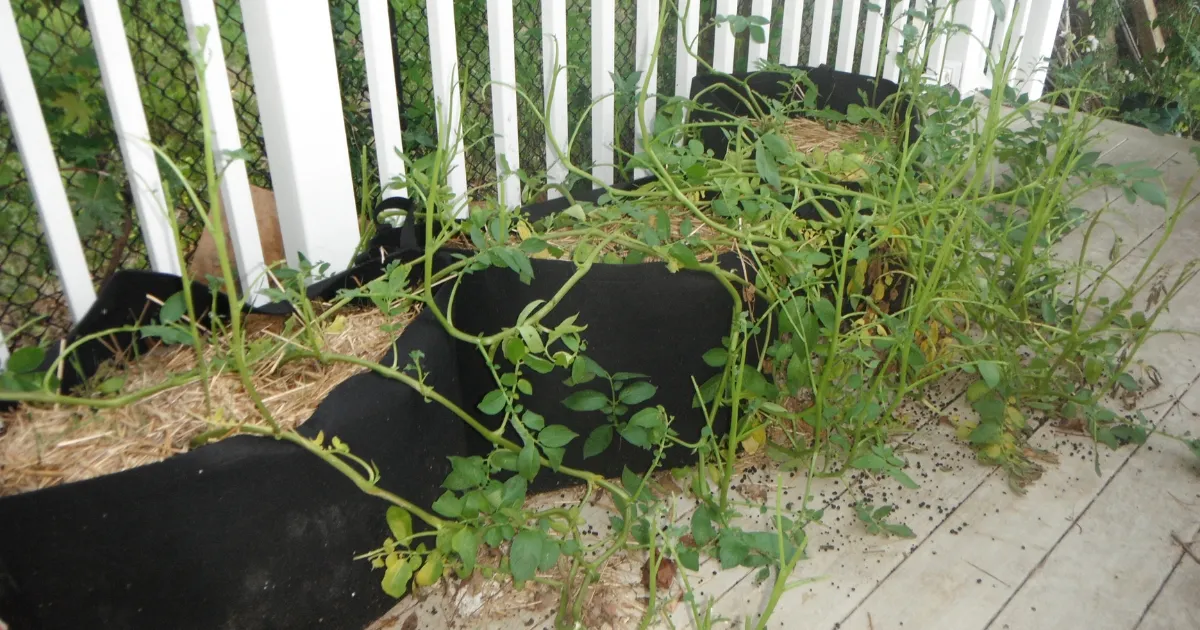 My potato grow bags the day I found them chewed. The black specks on the deck are frass, the first clue.
I didn't have to kill any of them. I just delivered them to our quail.
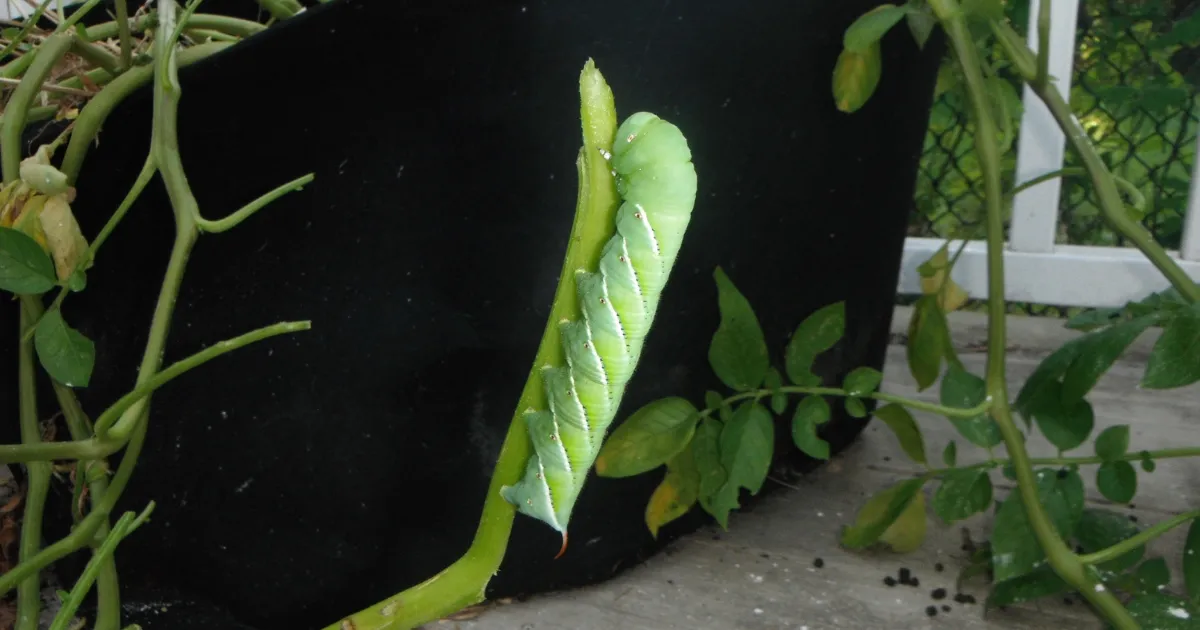 The culprit. Hornworms are big, but they blend right in with the stems until you see the damage.
Only a few days later, I found more hornworms on the tomato plants in the raised bed garden carrying tiny white wasp cocoons on their backs. I left those alone, so the parasitic wasps could finish growing and go on to find more hornworms.
That's the part a cover can get in the way of. Fabric that keeps pests out also keeps out the wasps and other helpers that would have eaten them.
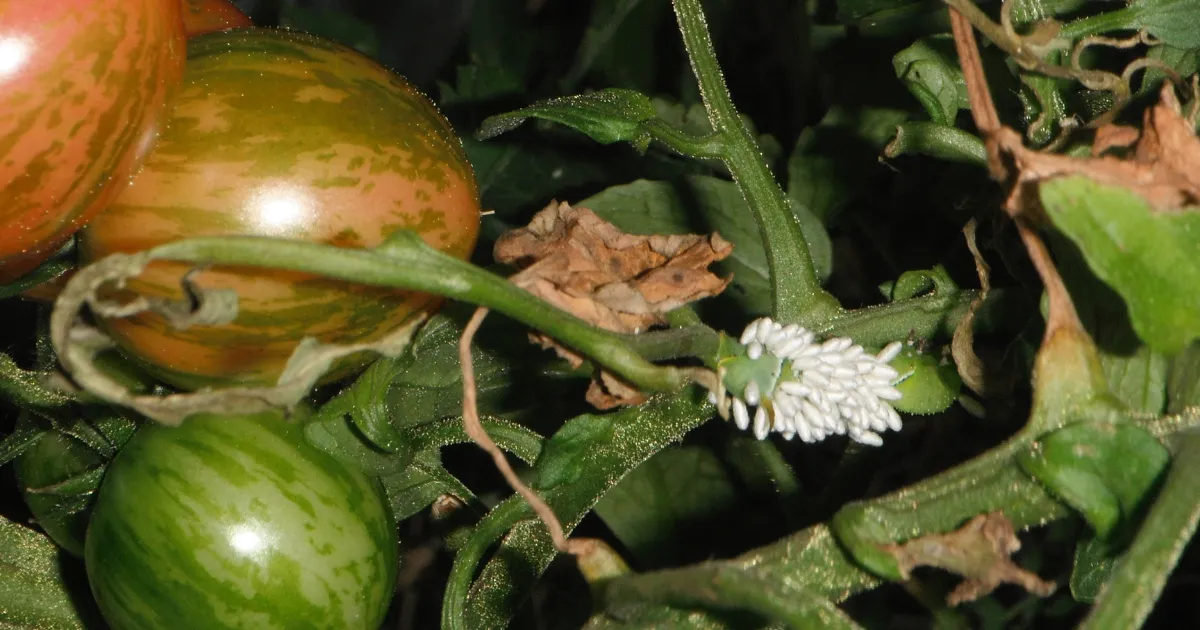 A hornworm carrying parasitic wasp cocoons. I left this one alone so the wasps could keep working.
What I do instead for some pests
For potato beetles, we don't do anything. I plant potatoes around St. Patrick's Day, so the plants are already big and finishing their life cycle by the time the beetles are a problem.
Variety matters too. I've grown several kinds of potatoes, and some clearly attract more bugs. Our best is Purple Viking. It always grows the best and produces the most, with hardly any bugs. Potatoes and tomatoes are the crops I've grown in enough varieties to learn this, and I think it would work for others if you try a few varieties and keep notes.
What about stinkbugs?
I first noticed the big invasive stinkbugs in the fall of 2009. They seemed to follow us, hanging out on our vehicles and finding ways into the house. Maryland was one of the hardest-hit areas.
The good news: we've never had a big stinkbug problem in the garden. For us, they were mainly an issue inside our Beltway house. Our dog would alert us right away when one got in.
If you do find them in your garden:
- They damage fruit by piercing it with a straw-like mouthpart, which leaves bad spots.
- They can't bite or hurt people, and they aren't toxic to pets.
- Knock them into soapy water. The University of Maryland Extension's brown marmorated stinkbug FAQ suggests hand-picking or knocking them into a container of soapy water.
- A cover is a hard fit for them. The crops they like best, like tomatoes and peppers, need bees once they flower.
If they're getting into your house, sealing gaps around windows and doors is the same work as stopping drafts.
Containers and GreenStalks
Row covers fit best over a bed in the ground or a raised bed. Here's how it went when I tried a cover on our GreenStalk vertical planters.
- Frost cover: a failure for us. I got one GreenStalk frost cover to try a winter garden there. It whipped around in the wind, even with the growth trellis rings. And a tall planter can't hold heat the way the ground does.
- Bug cover: I haven't used it. I have one, but it would make watering more of a hassle.
- Seed starting covers: these work. I start lettuce early right in our GreenStalks under GreenStalk's seed starting covers. See my GreenStalk Review.
For pots on a patio, I haven't used a row cover. If you're starting seedlings, a protective cover while they're small does a similar job. See How to Start Seeds (and When to Just Buy Plants).
What to try next
Pick the next small step that fits your space.
- You need a bed to cover first. See Square Foot Gardening for Beginners.
- You want to start your own greens. See How to Start Seeds (and When to Just Buy Plants).
- You're eyeing a vertical planter and want the real downsides. See GreenStalk Review.
- You want to feed that bed's soil with your scraps and leaves. See Compost Pile for Beginners.
- Your garden fizzles by July because watering takes too long. See How to Save Time Watering Your Garden.
One covered bed is one small system. If you're wondering what your next one should be, whether it's food, water, or home comfort, my free 2-page guide helps you pick one place to start. It's called Which Urban Homestead System Should You Start First?, and it's built for small spaces and busy lives.
Row covers for vegetables FAQ
Do row covers protect vegetables from frost?
Do row covers protect vegetables from frost?
Yes, that's where ours worked best. Our winter garden of kale, mizuna, and tatsoi stayed green under Agribon until March. The cilantro couldn't handle the very cold temperatures, though, so it depends on the crop. And make sure you have a cover designed for frost. They are thicker than the ones for bugs.
Do row covers keep bugs off?
Do row covers keep bugs off?
Some. Our bug cover kept the cabbage white butterflies off our brassicas, but other pests got in, and the helpful predators couldn't. The cabbage under our winter cover was eaten too.
Do I need hoops?
Do I need hoops?
We used metal conduit hoops so the fabric sat above the plants. University of Maryland Extension's guide covers when fabric can rest right on the plants and when it needs support.
How do I hold a row cover down?
How do I hold a row cover down?
We started with bricks and switched to long boards along the edges. Boards are much faster to slide off and back when you open and close the cover.
Can I water through a row cover?
Can I water through a row cover?
I did, and water does get through. But it meant I wasn't looking under the cover as often, and I missed weeds and pests. If you water through it, still open it up to check now and then.
Can I use a row cover on a GreenStalk?
Can I use a row cover on a GreenStalk?
It didn't work for us. Our GreenStalk frost cover whipped around in the wind, and a tall planter can't hold heat like the ground. The seed starting covers worked well for early lettuce.
Your row cover checklist
- Start with one bed of cool-weather greens like kale, mizuna, or tatsoi.
- Set a few hoops so the fabric sits above the plants.
- Hold the edges down with long boards instead of bricks.
- Open it on mild days for sun and a quick check.
- Keep heavier plastic handy for snow or ice storms.
- If you cover for bugs, know which pest you're blocking, and look underneath often.
- Uncover crops that need bees once they flower.

Amy DeVries helps beginner urban homesteaders learn by doing. A lifelong gardener, she has grown food in spaces that expanded to 18 raised beds, patio containers, dwarf fruit and nut trees, and gravity-fed rainwater systems. She shares practical lessons shaped by real experience. Amy homeschools her children and teaches the same hands-on skills that guide her work.
More Information
Disclosure
All information found on this website is editorial in nature and intended to motivate and inspire rather than be used as medical advice or legal advice.
As an Amazon Associate, I earn from qualifying purchases. I also use Google Ads and cookies as described in the Privacy Policy.
Thank you for your support!
By Amy DeVries, Copyright © 2011-2026 Sage-Urban-Homesteading.com All rights reserved.
