FYI: This website contains affiliate links. As an Amazon Associate I earn from qualifying purchases.
Rats in Compost: How to Keep Them Out
By Amy DeVries
Short answer: Rats in compost usually mean something nearby is feeding them, not that you're composting wrong. Take away the easy food, like meat, greasy or dairy scraps, animal feed, and pet food left out overnight. Bury fresh scraps, keep the pile damp, and you can keep composting.
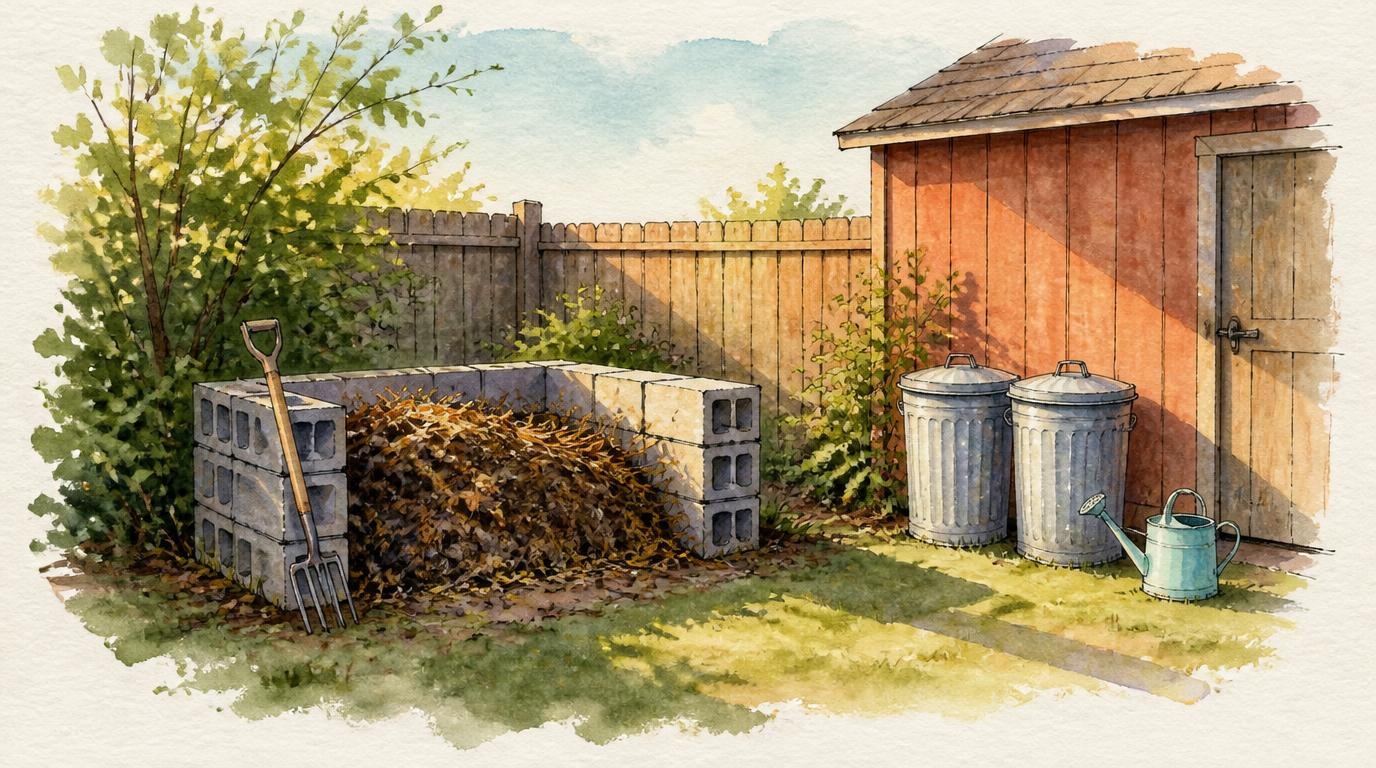 Rats don't mean you failed at composting. Start by looking at what's near the pile.
If you just saw a rat in your compost, take a breath. You didn't fail, and you don't have to give up composting. Rats live wherever people do, and a pile of food scraps is an easy stop on their rounds.
We've had rats, too. At our old quarter-acre place inside the Baltimore Beltway, they showed up after we'd had quail for a while. Rats are smart, and they'll always be around. But once I followed the food, cutting their numbers was simpler than I expected.
Here's what to check first, what to change, and what we do now.
Is it safe to keep composting?
Yes, with a few simple habits. Rats can carry germs that make people sick, so the goal is to avoid touching them or their droppings, not to panic about the pile.
I learned that one the hard way. I reached into a bucket near our quail pens to grab a bag, I think it was grit, and touched a rat that was sitting inside. Eew! I washed my hands well with soap right away, and after that I was a lot more careful about opening things before reaching in.
The habits that matter:
- Wear gloves when you work in the pile or handle a trap.
- Wash your hands with soap and warm water afterward, even if you wore gloves.
- Look before you reach into buckets, bins, or bags that have been sitting outside.
- Let finished compost sit before you use it. We let our pile sit for at least a year.
For handling a trapped rat or cleaning up droppings, the CDC has clear step-by-step instructions. See the CDC's guide to cleaning up after rodents.
Do you have to quit composting?
No. Quitting gets rid of one food source, but it doesn't change what drew the rats to your yard in the first place. Most of the time, a few changes to what goes in the pile and what sits near it are enough.
Look around the pile before you blame it
Our rats weren't really after the compost
At the Beltway house, our quail lived in pens raised off the ground, with wire mesh bottoms. Bits of feed probably fell through along with their droppings. That's what the rats were after.
They came out at dusk and crawled around under the quail pens. We could watch them from the window. They dug holes under there, too. Our compost pile was on the other side of the yard, far from the house. The real draw was the food falling through the pens. They were eating our neighbor's dog food, too.
The quail feed itself was never the problem, because we kept it inside, in a metal trash can in the basement. We never had rodents in that house.
What to check near your pile
Walk around your whole yard, not just the pile, and look for anything a rat could eat or hide in:
- Animal feed: chicken or quail feed, spilled seed, or bags left outside
- What falls under pens, coops, or bird feeders
- Pet food and water left out overnight, including bowls for outdoor cats
- Open buckets, bins, or bags sitting nearby
- Holes in the ground near the pile or near animal pens
If you find the real food source, deal with that first. The pile may be just a handy place to hang out.
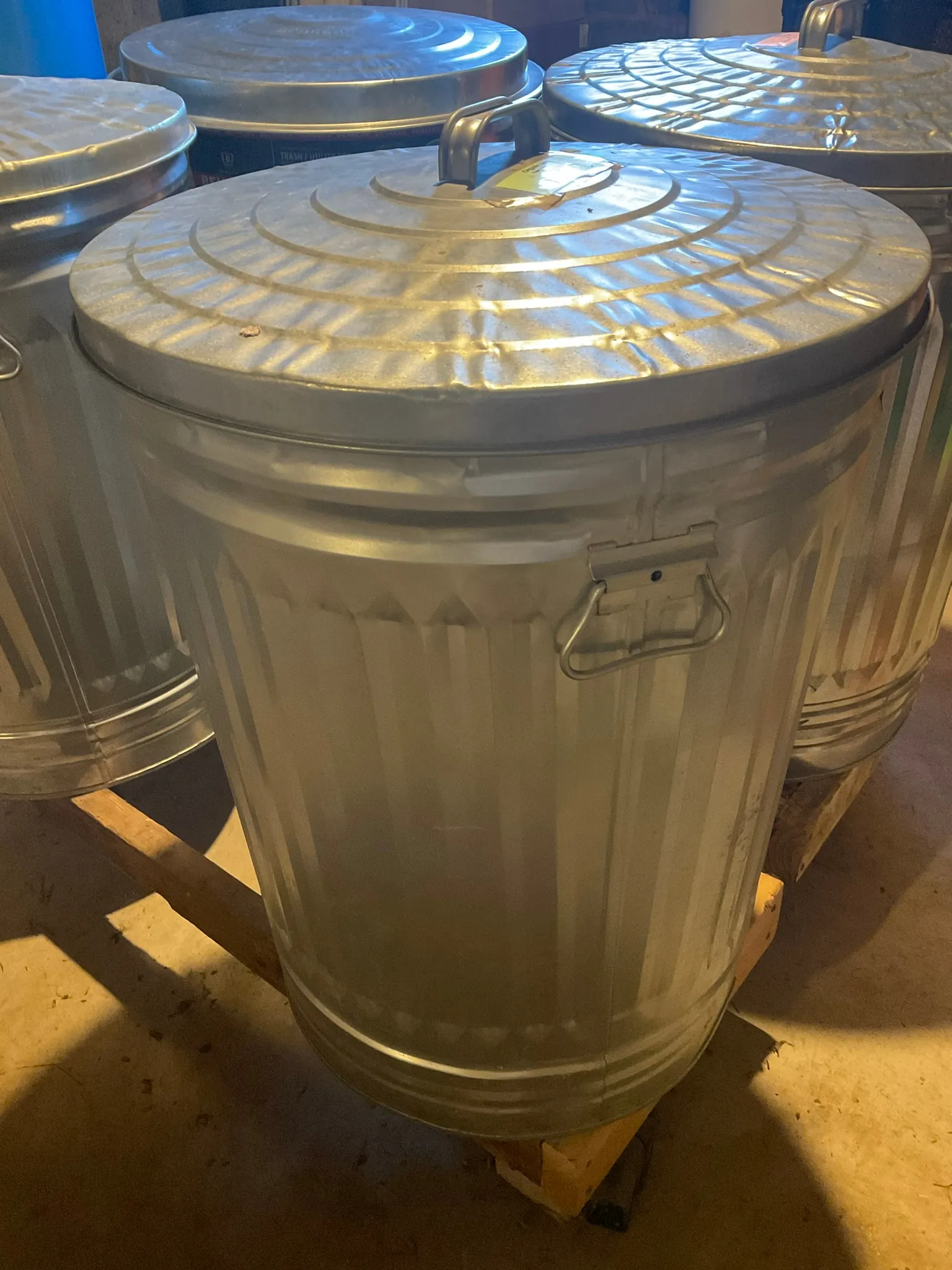 Our feed lives indoors, in lidded metal cans in the basement. Rats can't chew in, and it's one less reason for them to visit. They are on a platform for easy sweeping with a mousetrap underneath just in case.
What to change in your compost
These are simple changes, not a new system. Start with whichever ones fit your setup.
Do
- Bury fresh food scraps deep in the middle of the pile, especially meat, greasy food, and dairy.
- Keep the pile damp, like a wrung-out sponge, and dig in now and then to bury fresh scraps deeper. Rats like a dry, undisturbed pile for nesting.
- Store animal feed in metal cans with lids.
- Keep lids on any buckets or bins near the pile.
- Keep the area around the pile clear, so there's no clutter to hide under.
Skip
- Leaving meat, greasy food, or dairy near the surface, where rats and other diggers can smell them.
- Leaving scraps uncovered on top of the pile.
- Storing feed bags or open buckets right next to the pile.
A note on meat, greasy food, and dairy: Many guides, including WSU Extension, say to keep them out of backyard compost. We don't. We compost ours or feed them to the chickens, because pouring them down the drain isn't a better answer. The key is burying them deep in the middle of the pile.
It's the same "don't feed the pests" idea as keeping mosquitoes out of a rain barrel.
What we do now
At our current place, most of our food scraps go to the chickens instead of the compost. Our feed is stored in metal cans in the basement, we try to secure any leftover chicken feed in the pans overnight, and the pile sits for at least a year before we use it. We don't notice rat problems around the compost.
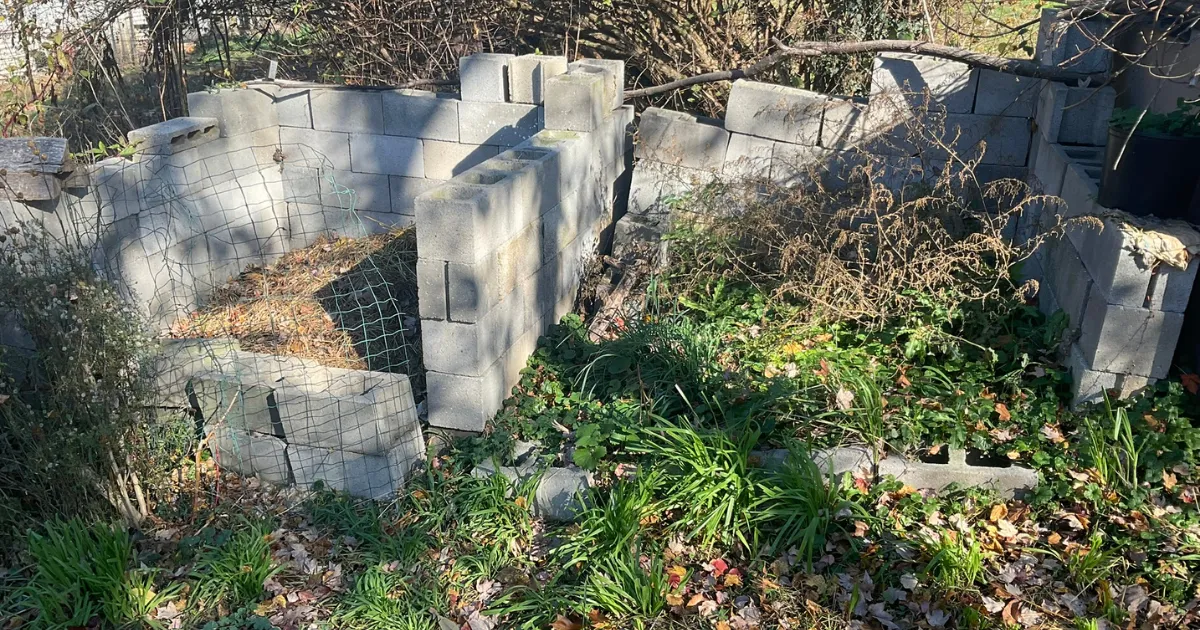 Our real compost pile in November. Cinder blocks, a little wire, and weeds around the edges. It isn’t tidy, and we still don’t notice rats here. Food matters more than neatness.
If the rats keep coming back
Our simple trap setup
When we've seen rat holes, we've used old-fashioned spring traps, also called snap traps. We bait them with peanut butter and meat and set them under an upside-down bucket. On our current property, when we spot a rat hole near the chickens, we set the bucket right over the hole with the trap underneath.
Trapping reduced the problem at both houses, but I wouldn't say we got rid of every rat. Rats are smart and always going to be around, so I think of it as keeping their numbers in check. Less food and a less friendly place to live mean fewer rats.
The bucket covers the trap, which helps keep curious pets and kids away from it. Wear gloves when you handle a used trap, and follow the CDC steps linked above.
If you see rats near your house, or your neighbors are seeing them too, it's worth calling a pest control professional or your local health department.
Not every digger is a rat
We set up a trail camera with night vision so we could see what was going on after dark. The camera showed us the opossums, foxes, and raccoons that come out at night. We haven't caught them in the compost on video, but we've seen signs that something gets into it. If your pile looks disturbed, it may not be rats at all.
The camera also caught them visiting our cat food and water at night. We had to stop leaving cat food out.
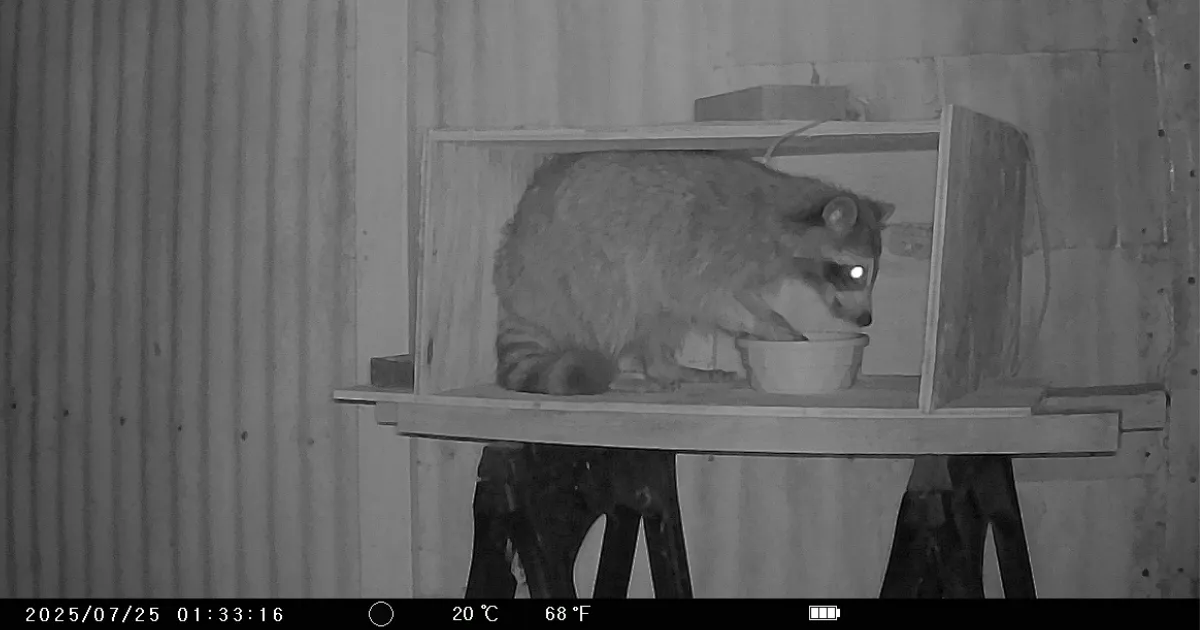 Our trail cam showed who was really eating the cat food. It wasn't the cats.It's a raccoon.
We also adopted a pair of barn cats on our current property. They add pressure on the rats, and so does our dog. That's a farm-sized step, though. Taking away food and hiding spots works in a yard of any size.
What about a closed compost bin?
I've always used an open pile, and I've never used a closed bin, so this part is research, not experience. If you're in a small yard or using a bin, WSU Extension suggests:
- Keep a lid on the bin and fasten it securely.
- If rats burrow under it, stand the bin on strong ¼-inch wire mesh.
- If they've chewed into a plastic bin, reinforce it with that mesh on all sides.
WSU also suggests a closed bin for kitchen scraps, with an open pile for yard waste. Before you buy anything, though, try the changes above. Food and hiding spots matter more than the container.
What to try next
Once your compost is back on track, pick the next small step that fits your space.
- You want a simple, low-effort compost pile from the start. [LINK: Compost Pile for Beginners — placeholder, not built yet]
- You're ready to grow food in one small sunny spot. [LINK: Square Foot Gardening for Beginners — placeholder, not built yet]
- Your garden fizzles by July because watering takes too long. [LINK: How to Save Time Watering Your Garden]
A compost pile is one small system. If you're wondering which one to start next, whether it's food, water, or home comfort, my free 2-page guide helps you pick one place to start. It's called Which Urban Homestead System Should You Start First?, and it's built for small spaces and busy lives.
Rats in compost FAQ
Does compost attract rats?
Does compost attract rats?
It can, if it offers easy food or a dry place to nest. In our experience, the bigger draw was the food falling from our quail pens, not the compost pile across the yard. Bury your scraps deep, especially meat, greasy food, and dairy, and check what else in your yard might be feeding rats.
Can I use compost that rats have been in?
Can I use compost that rats have been in?
We let our compost sit for at least a year before using it, and that's what I'd do. Wear gloves when you handle it, and wash your hands afterward.
Should I stop putting food scraps in my compost?
Should I stop putting food scraps in my compost?
No. Bury them deep in the middle of the pile, including meat, greasy food, and dairy. We send most of our scraps to our chickens now, but that's because we have chickens, not because composting scraps failed.
Do I need a closed bin to keep rats out?
Do I need a closed bin to keep rats out?
No. I've only ever used an open pile. A bin with a secure lid and a wire mesh base can help, but taking away food and hiding spots comes first.
Will the rats ever be completely gone?
Will the rats ever be completely gone?
Probably not, and that's okay. We reduced our rat problem at both houses, but never got rid of every rat. Less food, fewer hiding spots, and a trap when you see a hole keep their numbers small enough to live with.
Your rats-in-compost checklist
- Wear gloves in the pile, and wash your hands afterward.
- Look before you reach into outdoor buckets and bins.
- Walk around the pile and find what else might be feeding rats.
- Store animal feed in lidded metal cans, and don't leave pet or animal food out overnight.
- Bury meat, greasy food, and dairy deep, never on top.
- Bury fresh scraps in the middle.
- Keep the pile damp and dig in now and then to bury fresh scraps deeper..
- Let compost sit before you use it.
- If you see rat holes, set a covered snap trap. Aim for fewer rats, not zero.

Amy DeVries helps beginner urban homesteaders learn by doing. A lifelong gardener, she has grown food in spaces that expanded to 18 raised beds, patio containers, dwarf fruit and nut trees, and gravity-fed rainwater systems. She shares practical lessons shaped by real experience. Amy homeschools her children and teaches the same hands-on skills that guide her work.
You might like these
How to Garden and Love It
Learn how to garden and grow your own food through easy urban farming techniques.
Composting Worms and How They Can Help You Save the World
EGrow even more in your garden when you raise composting worms to turn your food waste into a rich soil supplement.
Compost Bins and How to Use Them
Learn about the different types of compost bins and decide on the best way to use composting as part of your urban farming.
More Information
Disclosure
All information found on this website is editorial in nature and intended to motivate and inspire rather than be used as medical advice or legal advice.
As an Amazon Associate, I earn from qualifying purchases. I also use Google Ads and cookies as described in the Privacy Policy.
Thank you for your support!
By Amy DeVries, Copyright © 2011-2026 Sage-Urban-Homesteading.com All rights reserved.
