FYI: This website contains affiliate links. As an Amazon Associate I earn from qualifying purchases.
Container Gardening for Beginners: What to Grow in Pots
By Amy DeVries
Short answer: Container gardening for beginners works best when you start with one big pot near your water. Big pots hold moisture longer than small ones, so they forgive a missed day. Fill it with potting mix, grow something you'll actually use, like herbs, water it every day in summer, and add another pot only when that feels easy.
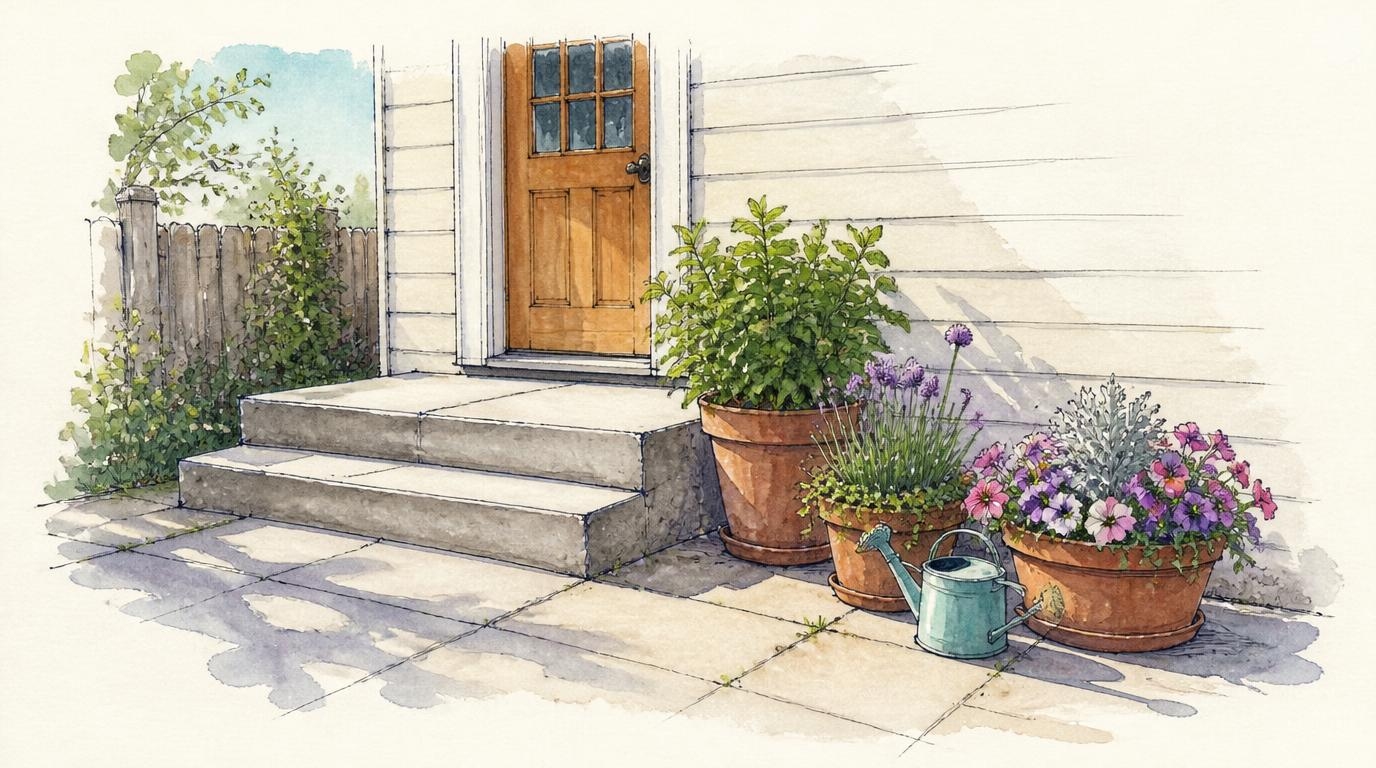 Three pots by the back door is a real garden.
If you rent and only have a patio or a few steps, and you're wondering what you can actually grow in pots, you're in good company. You don't need a yard to grow something real. One pot counts.
I've grown herbs in pots, potatoes in grow bags, and celery in a box. I've kept a blueberry bush, an orange tree, and a fig tree in pots too. Some of those were worth it, and some I wouldn't do again. Now, at the 1920s house we rent, my containers are a pot of mint and a pot of petunias near our GreenStalk planters, plus the fig tree inside.
Here's the smallest setup I'd start with, what's grown well for me in containers, what didn't, and what I'd skip.
Vegetable container gardening for beginners: Start with one big pot
My plants have been more likely to fail outdoors in small containers. Bigger ones hold onto moisture better, so they don't dry out between waterings as fast. If you're choosing between two small pots and one big one, I'd pick the big one.
What you need
- One big pot with drainage holes in the bottom
- Bagged potting mix, enough to fill it
- A sunny spot your hose or watering can reaches easily
- A plant or two you'll actually use. Herbs are a good place to start.
You don't have to start from seed. Buying a couple of small plants from a local greenhouse is a real way to start. See How to Start Seeds (and When to Just Buy Plants).
Use what you already have
A container doesn't have to come from the garden center. University of Maryland Extension lists 5-gallon plastic buckets, plastic storage tubs, and old nursery pots as options. A few things to know before you plant in one:
- It needs holes in the bottom so extra water can drain out. Without them, roots can drown.
- Dark containers run hotter in the sun, which can hurt young roots.
- Clay, ceramic, and wood dry out faster than plastic or metal.
- Skip the gravel or broken pot pieces in the bottom. They don't help drainage.
The University of Maryland Extension's container guide covers pot sizes, materials, and drainage in more detail.
Put it where the water is
Our pots get a daily dose from the hose, the same as our GreenStalks. That's only easy because they sit right next to each other, a short hose away from the house spigot. If your first pot is a long walk from the water, it'll be the one you keep meaning to get to. See How to Save Time Watering Your Garden.
If you have a patch of ground and not just pavement, one small raised bed may give you more food for the money. See Square Foot Gardening for Beginners.
What I've grown in containers, and what I'd grow again
Herbs on the patio
At our old quarter-acre house inside the Baltimore Beltway, I kept an herb pot on the patio with chives and thyme. It's the kind of pot I'd start a beginner with: small plants you can snip from all season, right outside the door. And they are perennials that should survive into the next season, too.
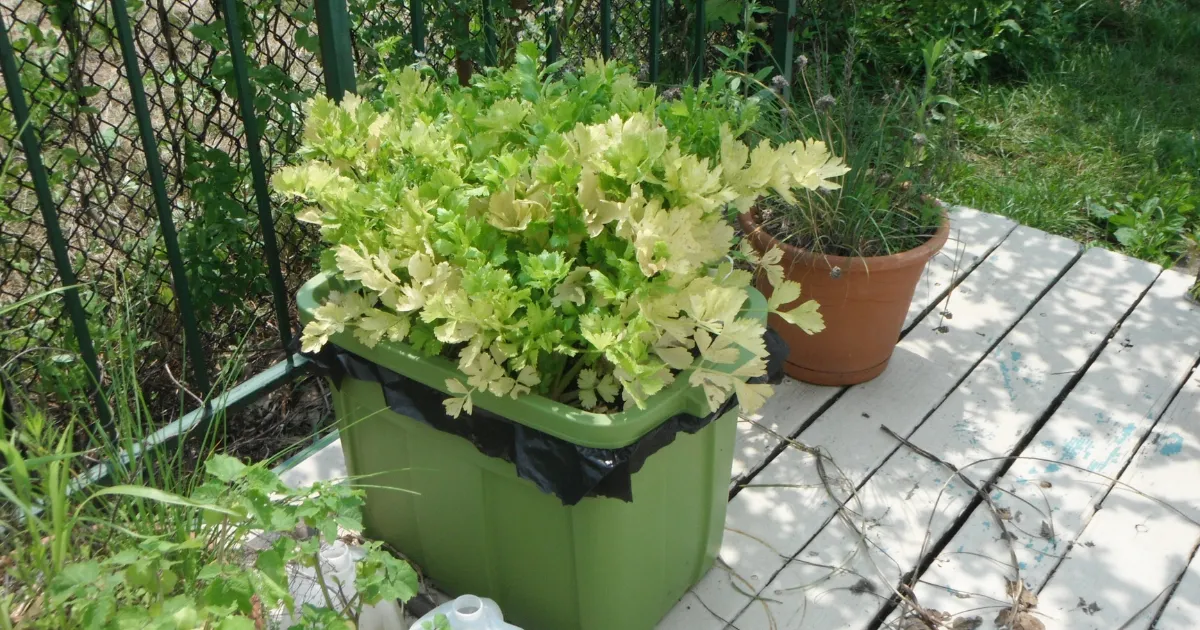 Our herb pot at the Beltway house, next to the celery tub.
Mint, in a pot of its own
Now I keep mint in a pot so it doesn't take over the yard. Mint spreads by its roots, so a pot keeps it where I want it.
Each spring, I pull some of the mint out of the pot so the rest has room to grow again. I dig up sections of the roots and pot them up in little pots for friends. One mint plant has turned into several gifts.
The petunia pot my kids choose
Every year we plant a pot of petunias around one plant in the center: a dusty miller with silvery-white leaves, or a coleus with colorful leaves. I let my kids choose the colors, and they help take care of it. It sits with the mint pot near our GreenStalks, so it gets watered along with everything else. Not every container has to grow food.
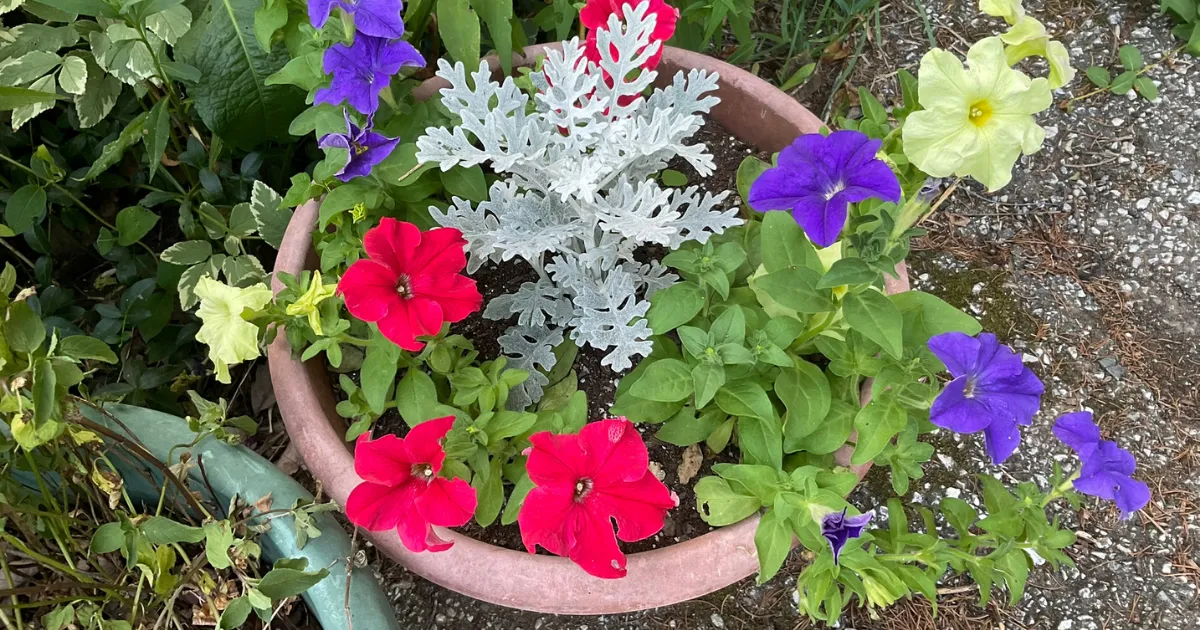 This year's petunia pot, with a dusty miller in the middle. My kids picked the colors.
Potatoes in grow bags
At the Beltway house, I grew Purple Viking potatoes in fabric grow bags. One summer, hornworms chewed the plants down. See Row Covers for Vegetables for the full hornworm story. Even so, it was still a good harvest, because Purple Vikings are awesome.
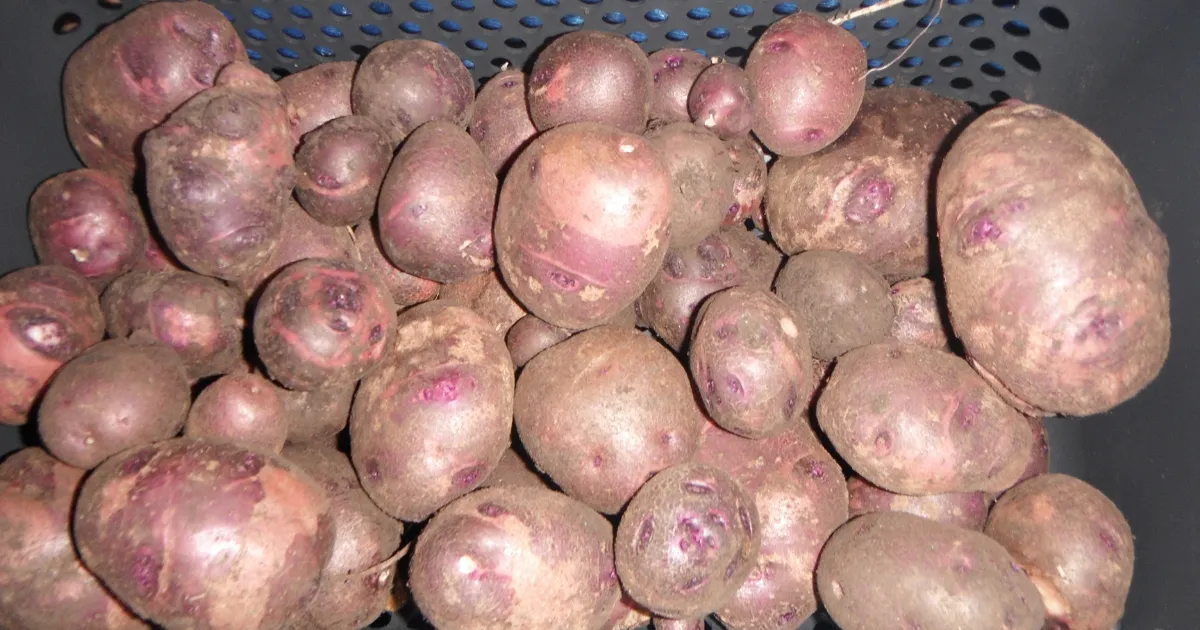 Our Purple Viking harvest from the grow bags, even after the hornworms chewed the plants down.
But I wouldn't buy grow bags again. Ours wore out faster than I expected. And harvesting was harder than digging potatoes out of a raised bed. If you have a ground spot, I'd grow potatoes there. If containers are all you have, know that potatoes need a lot of room: The University of Maryland Extension suggests about 30 gallons of potting mix for them.
Celery in a box
We also grew celery in a box, an idea we found online. It had a way to water from the side and plastic over the top to hold in moisture, so the soil stayed evenly damp.
The celery grew well. We just didn't like it. It had a much stronger flavor than store celery, and we aren't big celery eaters anyway. We used it now and then for juicing or in soups. After a couple of seasons, we got rid of the box, and I don't plan to grow celery again.
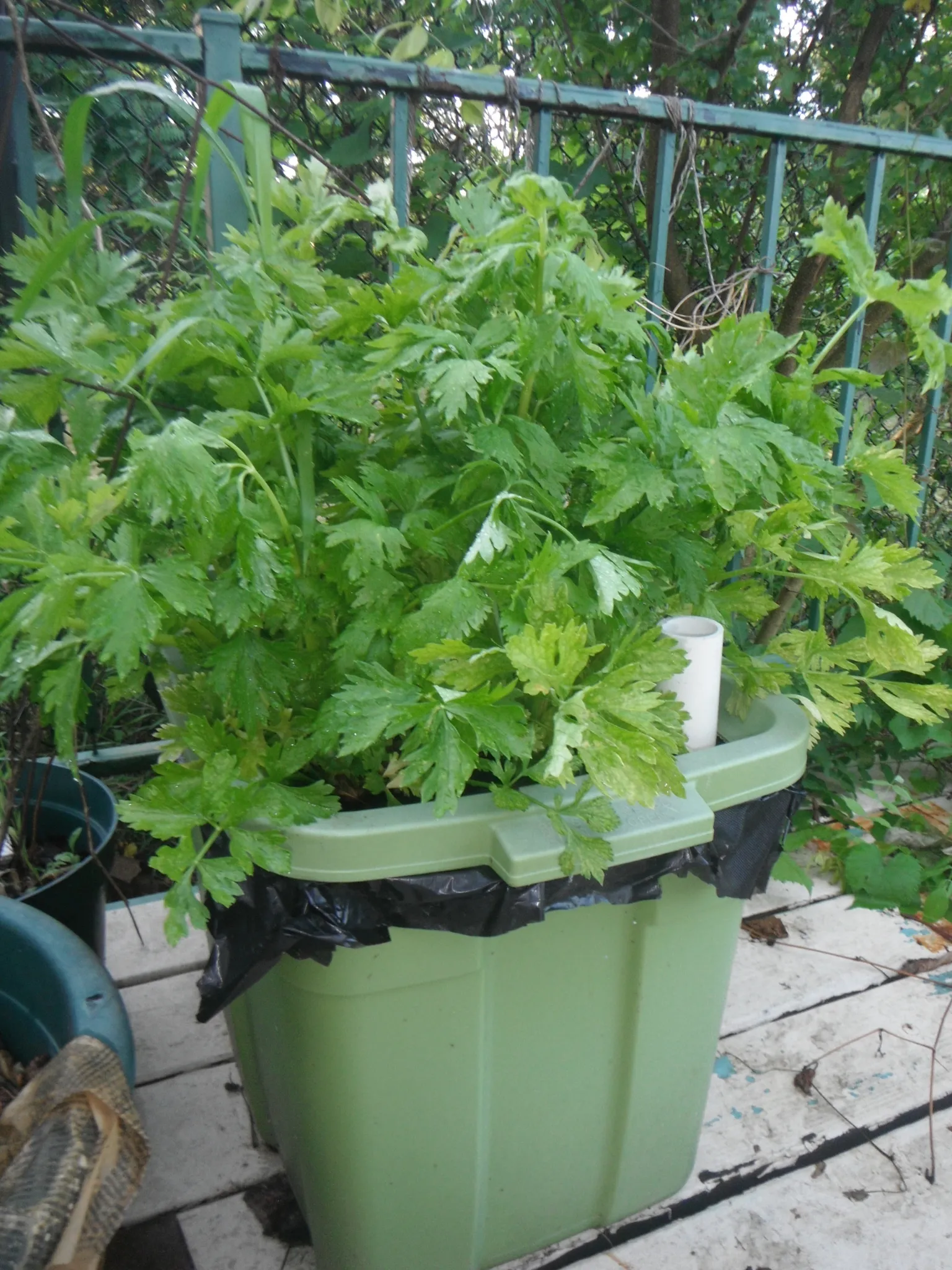 Our celery box was a plastic tub. The white pipe let us water from the side, so the soil stayed evenly damp. The celery grew well. We just didn't love eating it.
The lesson: Grow what you already eat. A container that works perfectly is still a waste of space if you never go out and pick what's in it.
Fruit in pots: One yes, two no's
Our fig tree lives in a pot in a southwest window all year. It's still very small, and it gave us three figs last year. Not many, but real fruit from a tree inside the house.
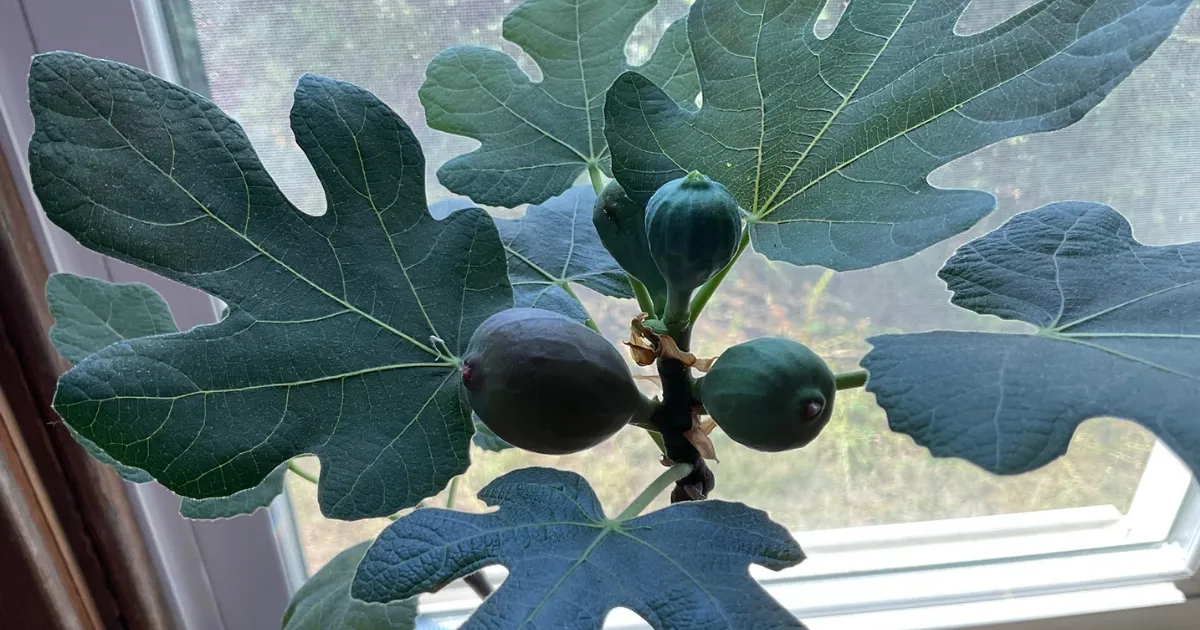 Our indoor fig is still very small. It gave us three figs last year.
For several years, we also had an orange tree in a pot. It spent summers outside and came in for winter. It never gave us fruit, and it had long spikes. One year, it must have come inside with a spider egg nest, because I ended up with a bunch of little spiders around that part of the house.
We also grew a blueberry bush in a pot. It did better once we planted it in the ground.
So a pot can be the right home for a plant, like our fig. It can also be a stop on the way to the ground.
Potting mix, water, and food
Potting mix: Fill once, then top it up
I fill my pots with bagged organic potting soil. My favorite was out of stock this year, so I tried a different kind.
You don't have to dump it out and start over every year. I keep what's in the pot, but it shrinks over time as it settles, washes out, and breaks down. So each spring I add more potting soil, along with some fertilizer and rabbit droppings from our rabbits. If you don't keep rabbits, fresh potting soil and a bagged organic fertilizer will do the job.
I like Happy Frog organic dry fertilizer that I bought on Amazon (affiliate link). I stir it into the soil when I plant. Any balanced fertilizer should work well.
Watering: Every day in summer
Our pots get water from the hose every day in summer, unless it rains. Some containers need watering every day in hot, dry weather. That's another reason I like bigger pots: they hold more water, so a hot afternoon is less likely to wipe them out. Not sure if a pot needs water? Do the finger test: stick a finger into the soil and see if it sticks to your finger. If it doesn't, the soil is too dry, so water it.
Feeding
I feed my pots with the same organic fertilizer I use in our GreenStalks. Fertilizing is still the part I'm learning, and I wrote more about that on my GreenStalk page.
If you'd like to make your own compost to mix in later, an open pile works if you have a yard corner, and the Compost Pile for Beginners page has ideas if you don't.
Gardening on a balcony: Check the weight first
I haven't gardened on a balcony, so I'll stick to what to check before you start.
- Pots get heavy. University of Maryland Extension says a 20-inch pot full of damp potting mix and plants can weigh 100 pounds.
- Ask before you fill. Check with your landlord or building manager about weight limits and any rules before you set out big pots.
- Go lighter. Plastic pots and bagged potting mix weigh less than clay pots and soil dug from the ground.
- Catch the drips. A saucer under each pot keeps water from running down onto the balcony below. Empty saucers after watering so roots don't sit in water.
The University of Maryland Extension's container guide covers balconies and other spots in more detail.
Thinking about a tall vertical planter on a balcony? Read the weight notes on my GreenStalk Review first.
What to try next
Once one pot feels easy, pick the next small step that fits your space.
- You want a lot of plants in a small footprint and are eyeing a vertical planter. See my GreenStalk Review.
- You have a patch of ground and want more food for the money. See Square Foot Gardening for Beginners.
- You want to start your own seedlings, or figure out which ones to just buy. See How to Start Seeds (and When to Just Buy Plants).
- Your plants are crispy by July because watering takes too long. See How to Save Time Watering Your Garden.
- Bugs or frost keep wiping out your plants. See Row Covers for Vegetables.
- You want to turn your food scraps into something useful. See Compost Pile for Beginners.
- You want free water for your pots. See the Water Collection hub.
- You want to grow food from one store-bought sweet potato. See How to Grow Sweet Potato Slips.
One big pot by the door is one small system. If you're wondering what your next one should be, whether it's food, water, or home comfort, my free 2-page guide helps you pick one place to start. It's called Which Urban Homestead System Should You Start First?, and it's built for small spaces and busy lives.
Container gardening FAQ
What can I grow in containers as a beginner?
What can I grow in containers as a beginner?
Herbs are an easy start. I've grown chives and thyme in a patio pot, and I keep mint in its own pot so it doesn't spread. Flowers like petunias count too. Grow what you'll actually use. Our celery grew well, but we didn't enjoy eating it.
What size pot should I start with?
What size pot should I start with?
Bigger than you think. In my experience, outdoor plants are more likely to fail in small pots, because bigger ones hold moisture longer. The University of Maryland Extension suggests 1 to 3 gallons for small herbs and greens, 4 to 6 gallons for medium plants like beans and chard, and 8 to 10 gallons for one tomato or pepper.
How often do I water containers?
How often do I water containers?
Ours get water from the hose every day in summer, unless it's raining. Some containers need daily watering in hot, dry weather. Do the finger test: if the soil doesn't stick to your finger, it's time to water.
Do I need new potting soil every year?
Do I need new potting soil every year?
I don't replace mine. I keep what's in the pot and top it up each spring with fresh potting soil, fertilizer, and rabbit droppings, because the mix shrinks over time.
Can I grow potatoes in containers?
Can I grow potatoes in containers?
Yes. I grew Purple Vikings in grow bags, and we got a good harvest. But the bags wore out fast and were harder to harvest than a raised bed, so I wouldn't buy them again. The University of Maryland Extension suggests about 30 gallons of potting mix for potatoes.
Can I container garden on a balcony?
Can I container garden on a balcony?
Many people do, but check the weight first. A 20-inch pot full of damp mix and plants can weigh 100 pounds, according to the University of Maryland Extension. Ask your landlord or building manager about limits, and use saucers to catch drips.
Your container garden checklist
- Start with one big pot with drainage holes.
- Fill it with bagged potting mix.
- Set it in the sunniest spot your hose or watering can reaches.
- Grow something you'll actually use, like herbs.
- Water almost every day in summer, as needed.
- Top up the potting mix and fertilizer each spring.
- On a balcony, check weight limits first and use saucers.
- Add another pot only when the first one feels easy.
Amy DeVries helps beginner urban homesteaders learn by doing. A lifelong gardener, she has grown food in spaces that expanded to 18 raised beds, patio containers, dwarf fruit and nut trees, and gravity-fed rainwater systems. She shares practical lessons shaped by real experience. Amy homeschools her children and teaches the same hands-on skills that guide her work.
You might like these
How to Garden and Love It
Learn how to garden and grow your own food through easy urban farming techniques.
Composting Worms and How They Can Help You Save the World
EGrow even more in your garden when you raise composting worms to turn your food waste into a rich soil supplement.
Compost Bins and How to Use Them
Learn about the different types of compost bins and decide on the best way to use composting as part of your urban farming.
More Information
Disclosure
All information found on this website is editorial in nature and intended to motivate and inspire rather than be used as medical advice or legal advice.
As an Amazon Associate, I earn from qualifying purchases. I also use Google Ads and cookies as described in the Privacy Policy.
Thank you for your support!
By Amy DeVries, Copyright © 2011-2026 Sage-Urban-Homesteading.com All rights reserved.
