FYI: This website contains affiliate links. As an Amazon Associate I earn from qualifying purchases.
- Home
- Home Efficiency
Home Efficiency for Beginners: Start Small, Stay Warm
By Amy DeVries
Short answer: Home efficiency for beginners starts with comfort, not a renovation. Pick the one spot that bothers you most, like a drafty door, a cold window, or a chilly room, and try the smallest fix that could help. Save the big upgrades for when something already needs repair or replacing.
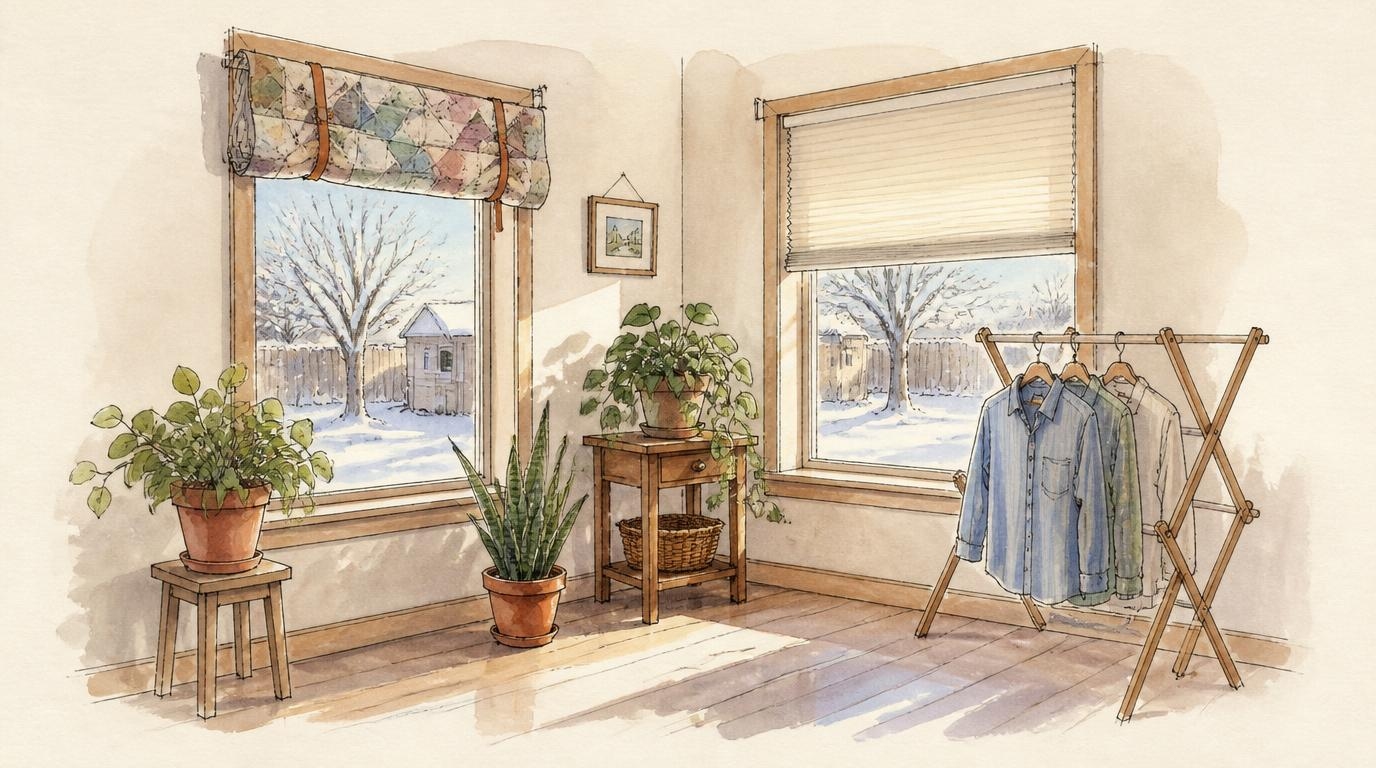 You don't need a renovation to feel warmer. Start with one window, one draft, or one habit.
Our first homestead was a quarter acre inside the Baltimore Beltway. Later we sold that house and started renting a 1920s place with enough land for roosters (they're worth it). So I've been the owner weighing big upgrades, and I'm now the renter who has to ask before changing much.
Most home efficiency advice starts with new windows, attic insulation, or a new heating system. Those can matter, but they're expensive, and they're not even an option if you rent. The things we still do every day are much smaller: closing the shades morning and evening, hanging homemade window quilts at night, and stapling cardboard over a drafty basement door.
That's what this page is about. Whether you own, rent, or need permission to change things, you can start with one window, one draft, or one habit. Small counts here.
Start with comfort, not a renovation
Think of home efficiency as a ladder. You only climb to the next step when the one you're on stops being enough.
- Daily habits. Free, and you can start tonight: close the shades at dusk, shut doors to rooms you aren't using, dress for the season.
- Removable fixes. Inexpensive things you can take with you: draft stoppers, window quilts, removable weatherstripping, even a piece of cardboard.
- Bigger upgrades, timed well. Insulation, a new heating system, new windows. These make the most sense when the house is already opened up or something needs replacing anyway.
That third step is how we've handled big upgrades. At the Beltway house, we got by with window air conditioners for years. When the old furnace needed replacing, we chose one that could also run central air. In our current house, insulation was sprayed into the walls while the crumbling plaster was being repaired. The walls were already open, so that was the moment.
These days we also heat with a woodstove alongside our heat pump in winter. It's a big, permanent piece of equipment, and it's not where I'd suggest anyone start.
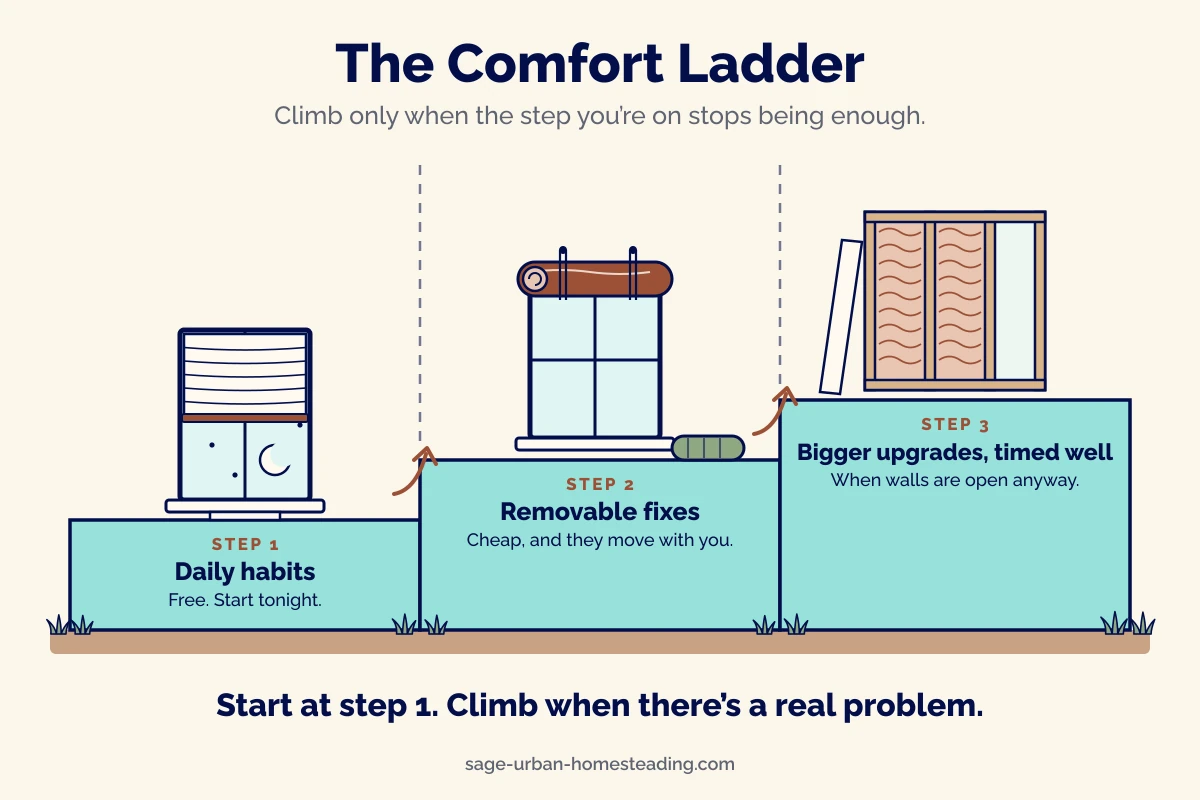 Start with free habits, add removable fixes next, and save big upgrades for when the walls are already open.
Find where your heat Is going
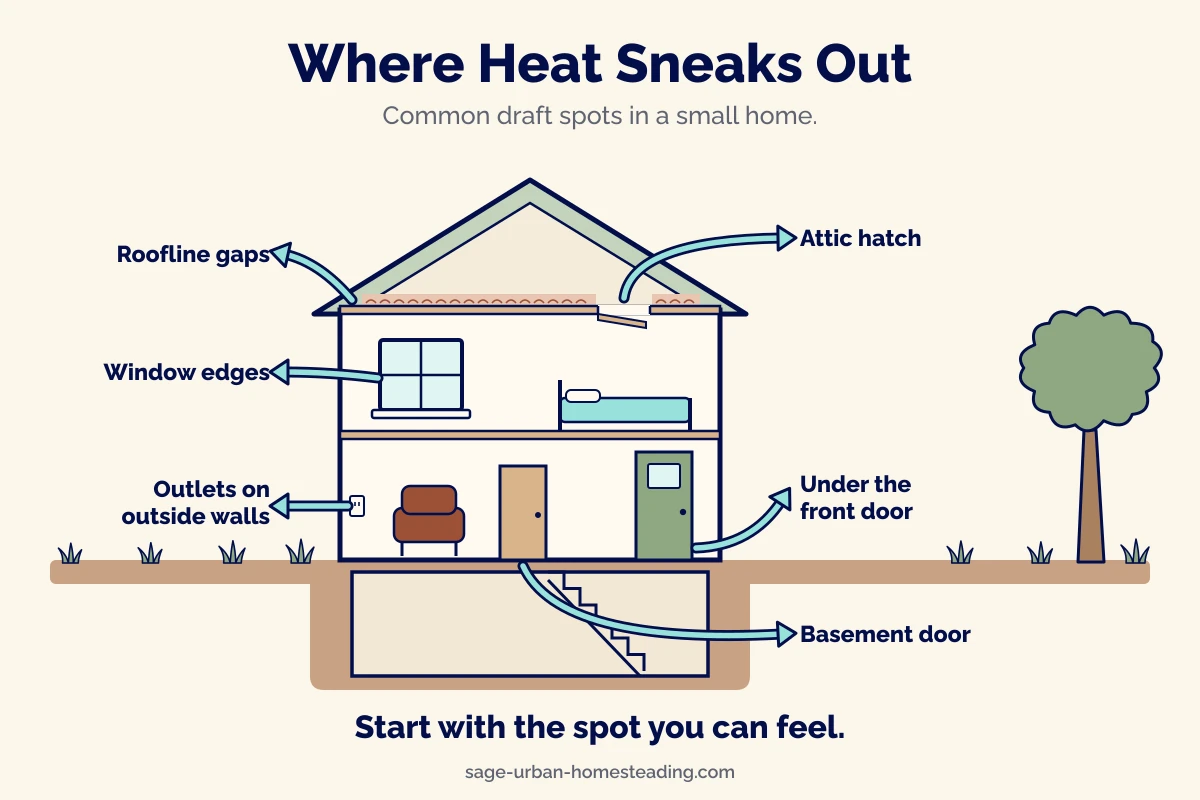
You probably already know your coldest spots. Start there. On a cold or windy day, hold a damp hand near window edges, the bottoms of exterior doors, outlets on outside walls, and the attic or basement door. If you feel moving air, you've found a draft.
We also use a thermal camera. We bought it for our freeze dryer and ended up using it far more for finding cold spots. When I checked our bedroom window with and without its window quilt, the camera also showed gaps in the wall insulation up near the roofline. You don't need one to start, though. The free hand test, just using your hand to feel the air, finds the drafts you can feel. See Finding Drafts and Cold Spots.
Here's the exact thermal camera we use that we bought on Amazon (affiliate link). Skip it if you haven't tried the free hand test yet, or if you'd only use it once. It's most worth it if you'll check your home every winter or have other uses for it.
 Our bedroom window on a cold January evening, with the window quilt down (left) and up (right).
Keep the heat in
Windows
Windows are where we started, and they're still where we put the most daily effort. Each window gets one cover, either a cellular shade or a window quilt, never both. On the windows with shades, the routine is simple: shades go up in the morning to let the sun in and come down in the evening to hold the heat. See Morning and Evening Shade Routine.
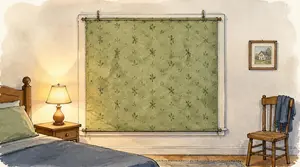
On the windows with window quilts, the quilts roll down at night. They keep the cold glass from pulling heat out of the room, and they keep the room dark for sleeping. I've made three versions over the years, and each one fixed a problem the last one had. See How to Make Window Quilts.
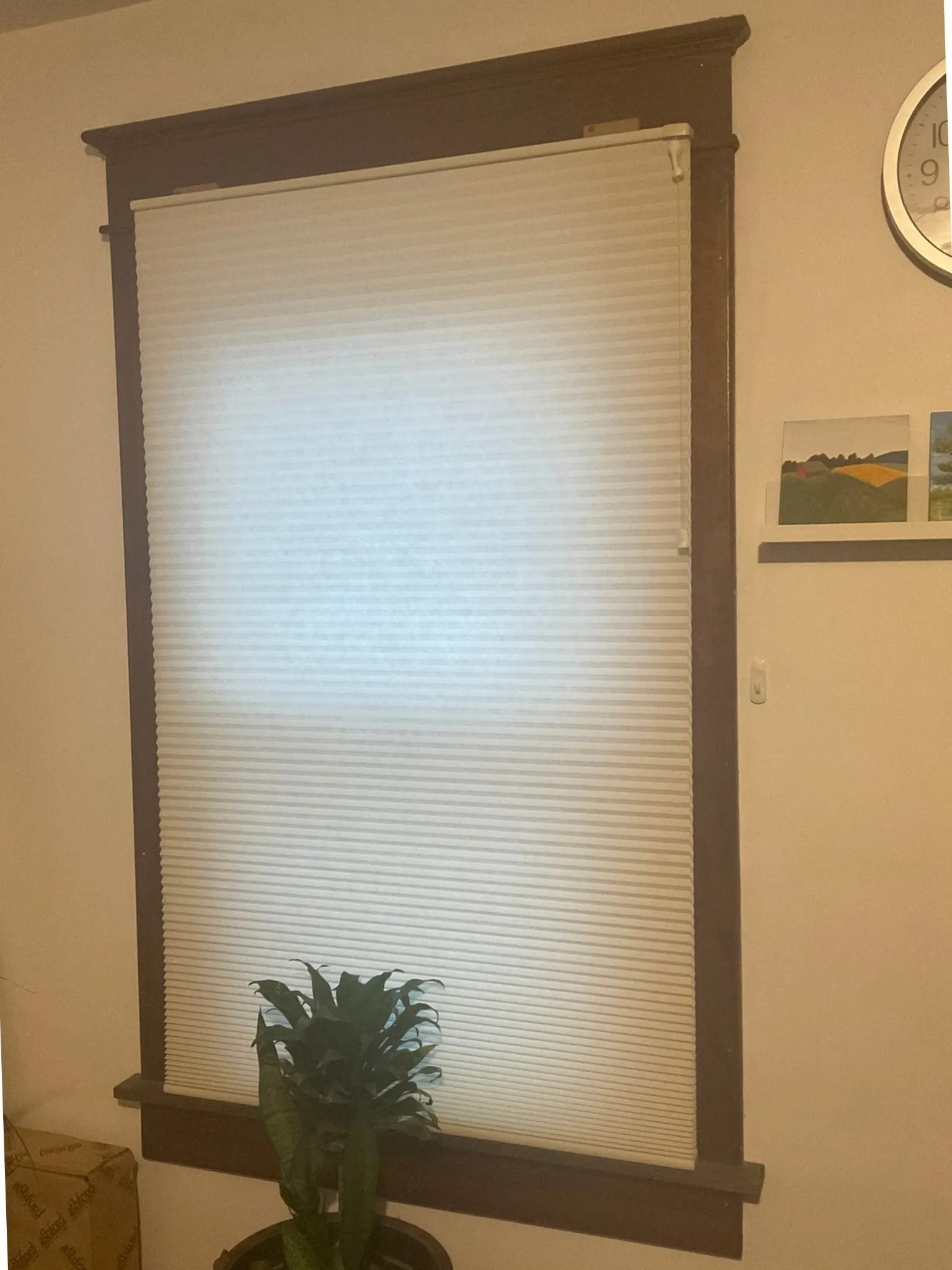 Our cellular shades come down every evening and go back up every morning.
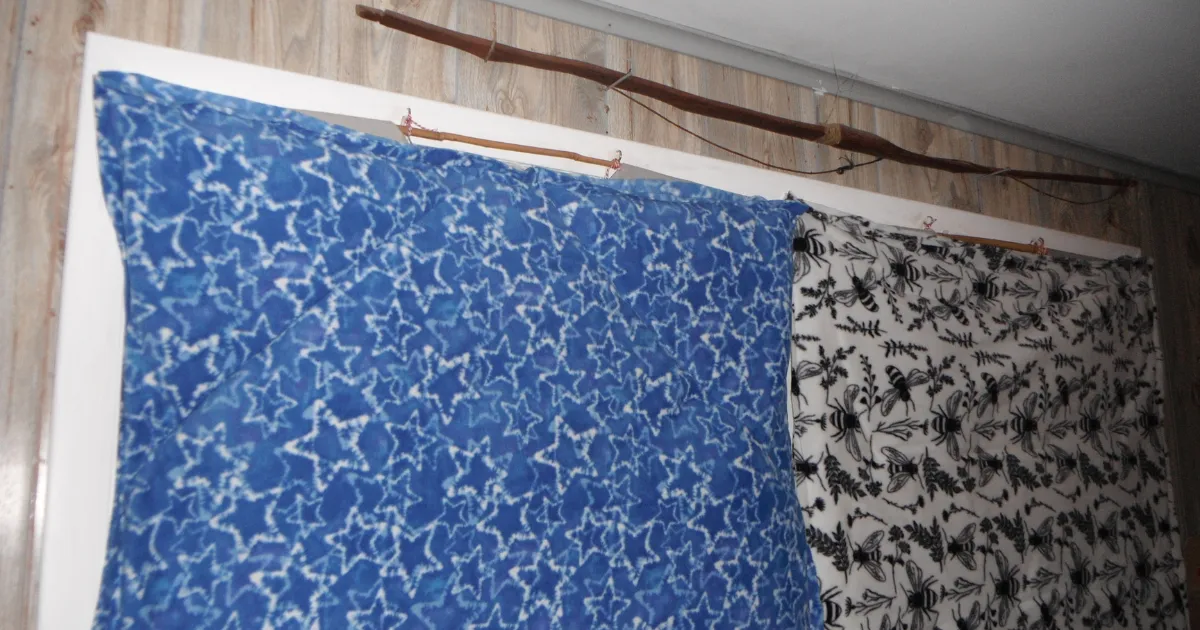 Our washable fleece window quilts, down for the night.
Drafts
Our interior basement door lets cold air up into the house. The fix? A piece of cardboard stapled over it. It isn't pretty, and it doesn't need to be. It cost nothing, it helps, and it comes off leaving nothing worse than a few staple holes.
Some draft fixes are ongoing upkeep, not one-time projects. The strips on the bottoms of our storm doors keep coming loose. A new strip lasts a while, then it's time again. That's normal, not a sign you did it wrong. See Draft Fixes for Renters.
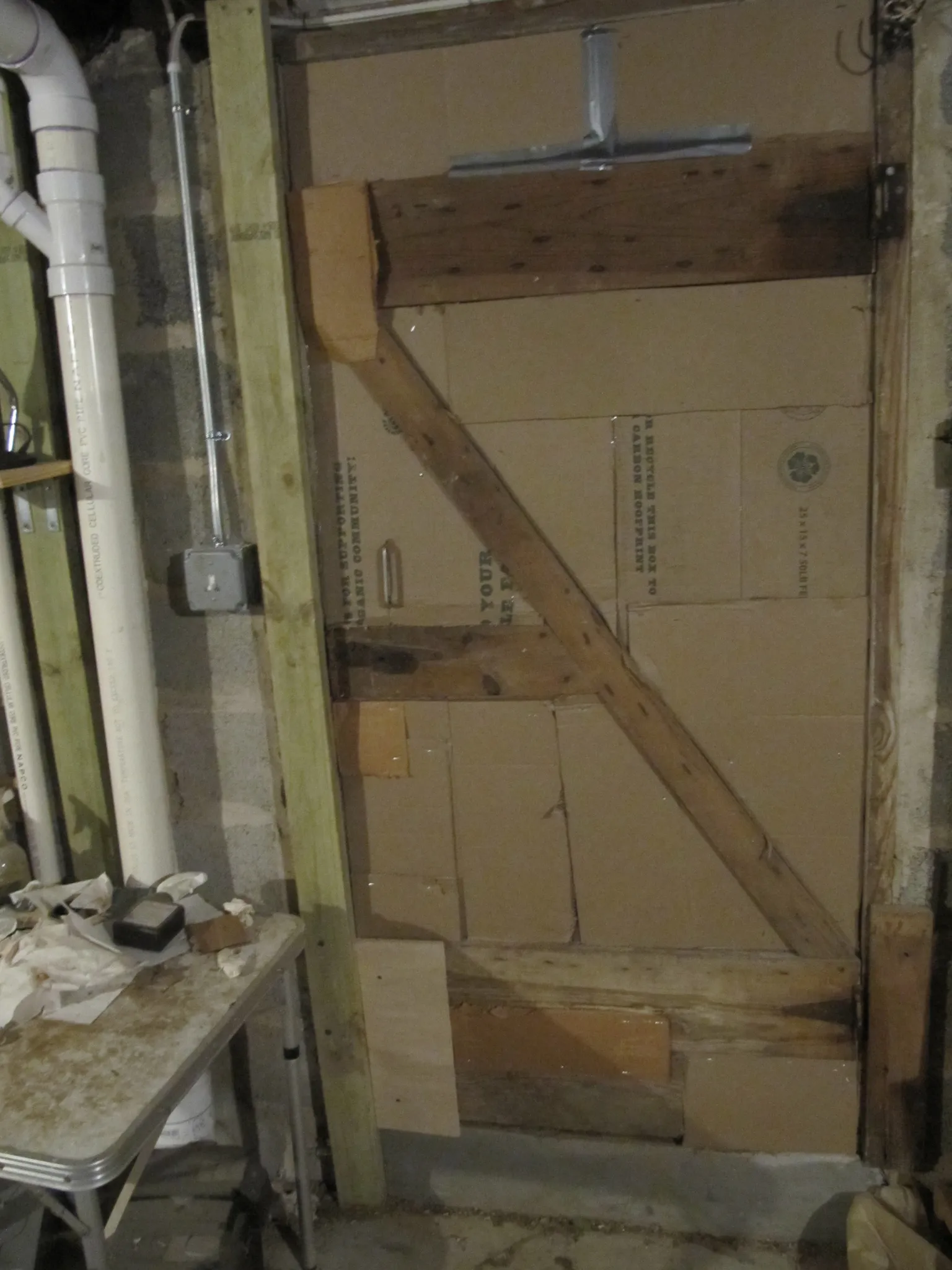 Not pretty, but it works: cardboard over our drafty basement door.
Heat the rooms you actually use
You don't have to keep every room the same temperature all day. Our programmable thermostat has different temperatures for upstairs and downstairs, and for daytime and nighttime. If your home has one thermostat, a simple day and night schedule is still a good place to start. See Should You Turn the Heat Down at Night?
The same idea works in summer. For years at the Beltway house, we only had window air conditioners. We kept one daytime "cold room" with a window unit, away from the kitchen, and ran a window unit in the bedroom at night. The kitchen had a ceiling fan. The rest of the house could stay warmer, because we were comfortable where we actually spent our time.
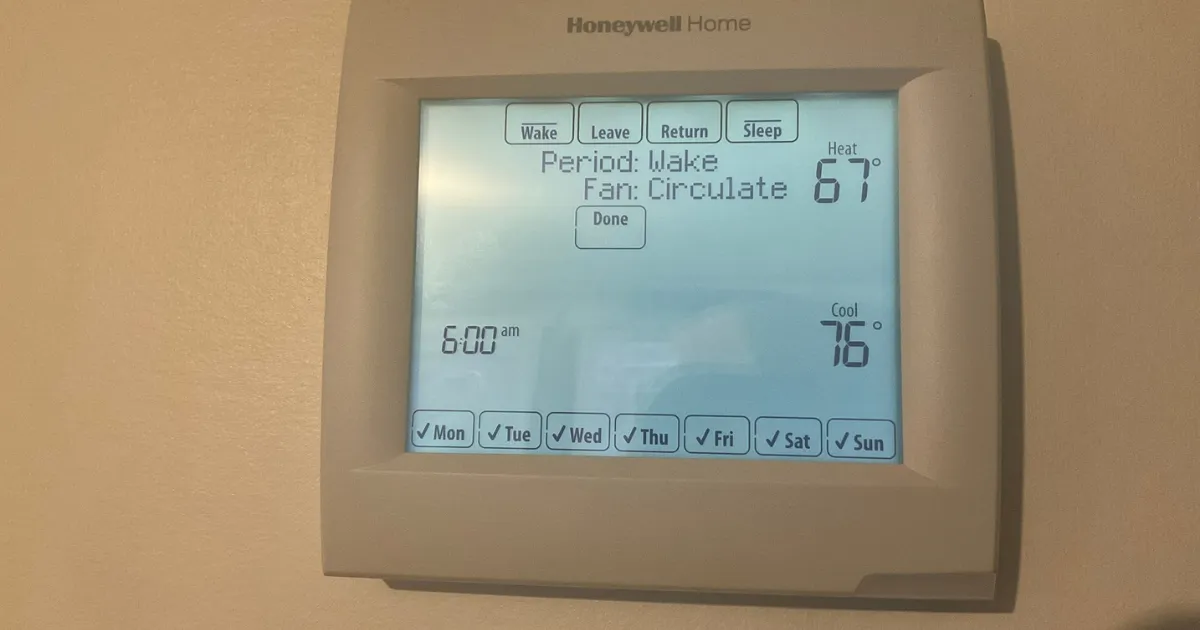 Different settings for upstairs and downstairs, day and night.
Laundry and everyday energy
I wash our clothes in cold water and line dry them indoors, all year round. The one exception is towels. Line-dried towels come out too stiff and scratchy for us, so they still go in the dryer. You don't have to line dry everything for it to count. Drying racks live in our house the way some people keep a laundry basket out. In winter, I don't wait for a sunny day, and in summer I don't need a clothesline to get started. See Line Drying Clothes Indoors.
Here is the big drying rack we use the most (Amazon affiliate link). We also have this sturdy drying rack for when we need more drying space (Amazon affiliate link). Skip it if you're not sure you'll line dry often. Try draping a load over chair backs or a shower rod for a week first, then buy a rack once you know it fits your routine.
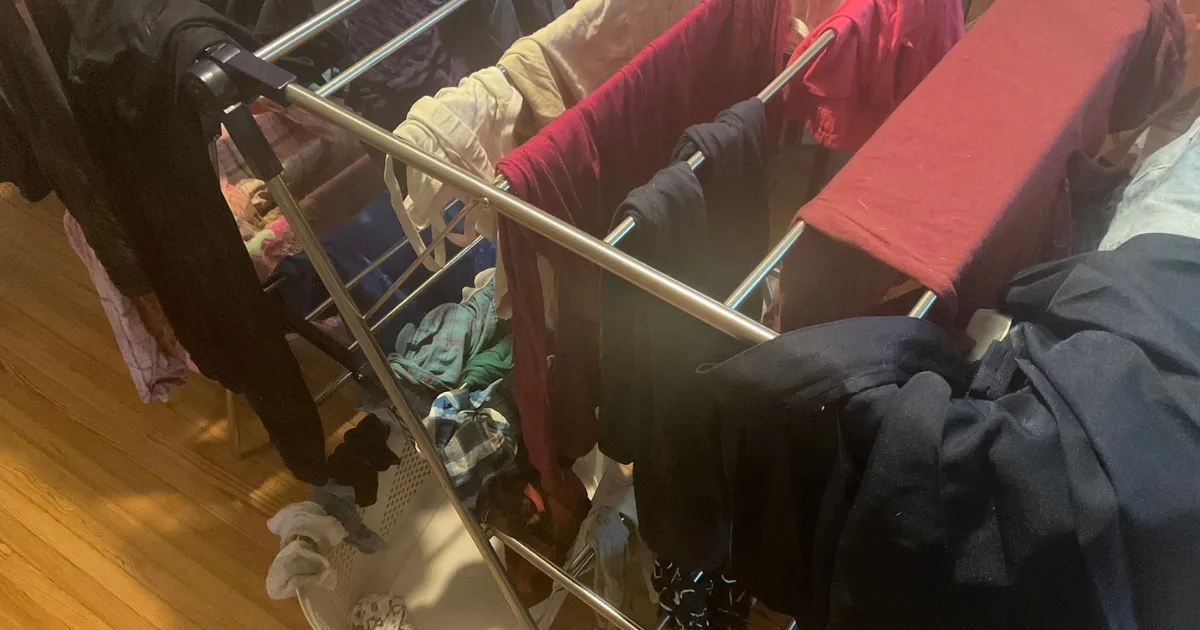 Our drying racks get used every week of the year.
Which should you try first?
Pick the line that sounds most like your house, and start with just that page.
- Your home feels drafty and you rent. See Draft Fixes for Renters.
- You're not sure where the cold is coming from. See How to Find Drafts.
- Your windows feel cold at night. See How to Make Window Quilts.
- You want a free habit you can start today. See Should You Close Blinds?
- Some rooms are too warm and others too cold, or your bills feel high. See Should You Turn the Heat Down at Night?
- Your dryer runs constantly. See Line Drying Clothes Indoors.
These are starting points for home efficiency. If you're not sure home efficiency is even the right place to begin, compared with water, food, or something else, my free 2-page guide helps you decide. It's called Which Urban Homestead System Should You Start First?, and it's built for small spaces and busy lives.
When it's time to call a pro
Small fixes go a long way, but some jobs belong to someone with training and the right tools:
- Attic or wall insulation
- A heating or cooling system that can't keep up, or needs repair or replacing
- Outlets or switches that feel warm, buzz, or spark
- Anything that changes the building itself, if you rent or need approval. Ask first.
Home efficiency FAQ
Do I need my landlord's permission for any of this?
Do I need my landlord's permission for any of this?
Habits and fixes that don't attach to the building, like draft stoppers, curtains on existing rods, and drying racks, usually don't need anyone's okay. For anything you'd screw, glue, staple, or paint, check your lease and ask first. That's how we handle it, too.
Is a home energy audit worth it?
Is a home energy audit worth it?
Start with your own walk-through. You'll find the drafts you can feel for free. A professional assessment goes further, using tools like blower doors and thermal cameras, and gives you a list of what to fix first. Before paying for one, ask your electric or gas utility whether they offer free or discounted assessments.
Is a space heater a good way to warm one room?
Is a space heater a good way to warm one room?
It can be, but it needs care every time. Plug it straight into a wall outlet, never an extension cord or power strip. Keep it at least three feet from anything that can burn, and turn it off when you leave the room or go to sleep. Maryland's health department has a short space heater safety checklist.
Will these small fixes really lower my bill?
Will these small fixes really lower my bill?
It depends on your house, your climate, and your energy rates, so I won't promise a number. What I can promise is the part you'll feel first: a warmer chair, a less drafty hallway, a bedroom that holds its heat overnight. Lower bills are the bonus.
Your home efficiency checklist
- Name your coldest spot: one window, door, or room.
- Do the damp hand test there on a cold or windy day.
- Start one free habit this week, like closing the shades at dusk.
- Try one removable fix on that coldest spot.
- Write down one bigger upgrade to save for the next repair or replacement.
Want help deciding what to set up after this? My Small-Space Self-Sufficiency Starter Map ($12) maps out your next small systems for the space you actually have.

Amy DeVries helps beginner urban homesteaders learn by doing. A lifelong gardener, she has grown food in spaces that expanded to 16 raised beds, patio containers, dwarf fruit and nut trees, and gravity-fed rainwater systems. She shares practical lessons shaped by real experience. Amy homeschools her children and teaches the same hands-on skills that guide her work.
You might like these
How to Make Window Quilts
Learn how to make homemade window quilts the quick and easy way for more window insulation and the health benefits of sleeping in the dark.
Draft Fixes for Renters: How to Stop Drafts in a Rental
Easy draft fixes for rentersl, sorted by how removable each fix is: no-trace fixes, small-hole fixes, and what to ask your landlord about first.
How to Find Drafts in Your House: Finding Drafts and Cold Spots
How to find drafts in your house for free with the damp hand test, where to check first, and when a thermal camera is worth borrowing or buying.


More Information
Disclosure
All information found on this website is editorial in nature and intended to motivate and inspire rather than be used as medical advice or legal advice.
As an Amazon Associate, I earn from qualifying purchases. I also use Google Ads and cookies as described in the Privacy Policy.
Thank you for your support!
By Amy DeVries, Copyright © 2011-2026 Sage-Urban-Homesteading.com All rights reserved.
