FYI: This website contains affiliate links. As an Amazon Associate I earn from qualifying purchases.
GreenStalk Review: Is a Vertical Planter Worth It?
By Amy DeVries
Short answer: This GreenStalk review comes from three seasons with three planters I purchased myself. For us, it's been worth it, because they sit where our hose reaches and I water them every summer morning. Lettuce, herbs, basil, dill, and flowers have done well. Strawberries and carrots disappointed me, and fertilizing is still the part I'm learning.
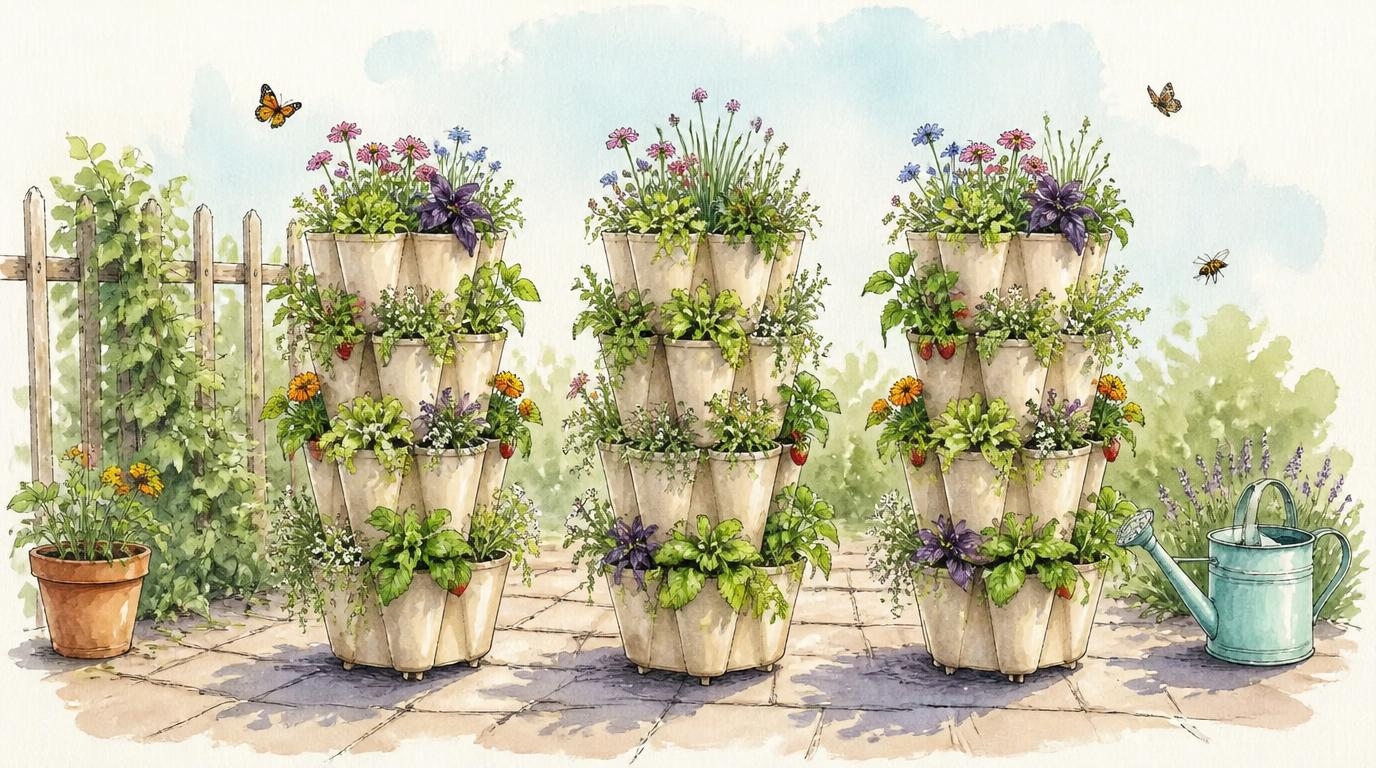 Three GreenStalks, three seasons, and an honest look at whether they're worth it.
If you've been eyeing a GreenStalk and wondering whether it's worth the money, or just another thing you'll regret buying, I get it. They aren't cheap, and the photos online always show the planter at its fullest, in its very first summer.
I bought three GreenStalks directly from the company in June 2024, and I've planted them every year since. They're now where most of my gardening happens, even though we have 3 acres, because the hose reaches them easily. Here's what's grown well, what hasn't, the downsides, and who I think should skip one.
My three GreenStalks, and what I'd buy now
All three of ours are Stunning Stone with the basic texture. One is the Original with 5 tiers and two are the Leaf with 7 tiers. The Original has deeper pockets; the Leaf has shallower ones.
Original or Leaf: what I'd choose now
If I were buying again, I'd get two Originals and one Leaf, or skip the Leaf entirely. Most of what I want to grow does better in the Original. The soil stays moist longer, and the roots have more room.
If you're buying only one, I'd start with the Original unless you are a big fan of lettuce. I went with Leaf for the strawberries. More on those later.
The extras I bought
With the planters, I bought the protective covers and the spinner bases. Later, I added two different types of plant supports and the seed starting covers. GreenStalk also sells a watering system with hoses, but I haven't used it.
Here's the honest part: the extras add up. You don't need all of them to start. The planter, potting mix, and a spot your hose reaches are what matter in the first season.
Where ours sit and how I water them
Our GreenStalks sit on pavers next to the driveway, where the hose reaches them easily. That's the whole reason I downsized to them.
I water them every morning by hose and rotate them one quarter. If I hurry, it takes about 15 minutes. Most days, I let the dog out with me and take my time, so it's closer to 30. A GreenStalk is designed to be watered through the top reservoir, which drips down through every tier.
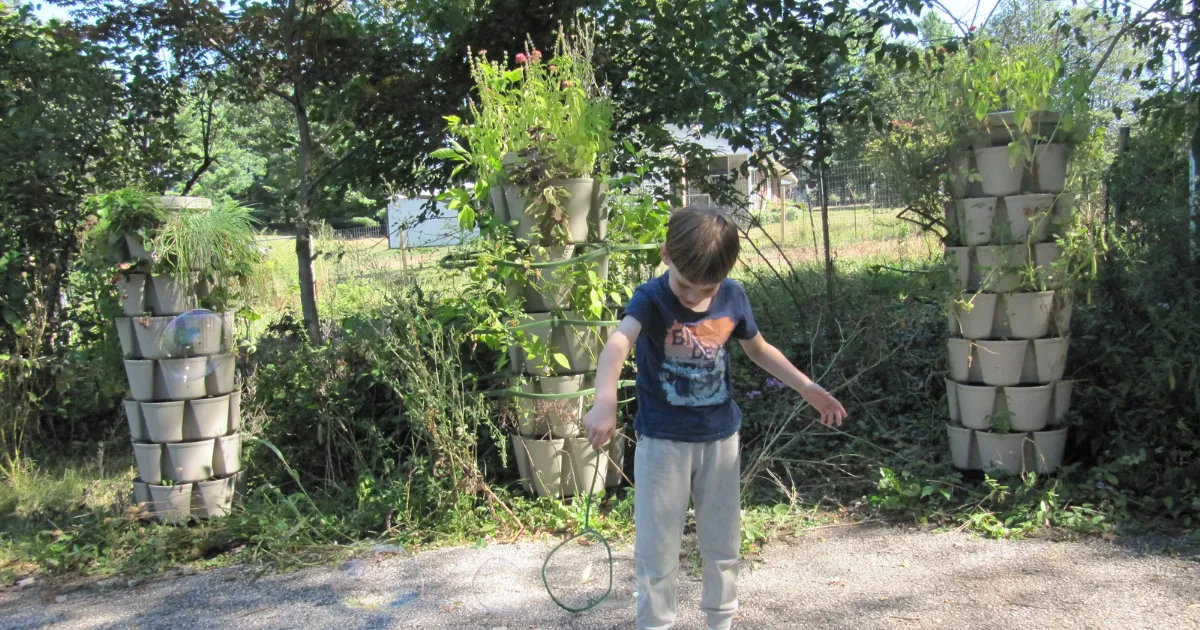 Our three Greenstalks, close enough to the hose that watering fits into a regular morning.
This year, a house wren built a nest in the top of one planter, right where the hose goes to fill the reservoir. Not every pocket was planted either, so I watered all three from the outside, shooting the area above each pocket with the hose so it dripped down into the pocket. That's the 15 to 30 minutes above. Our GreenStalks did better this year than last. I was also better about fertilizing, so I can't credit the watering alone, but it's worth trying if your plants struggle.
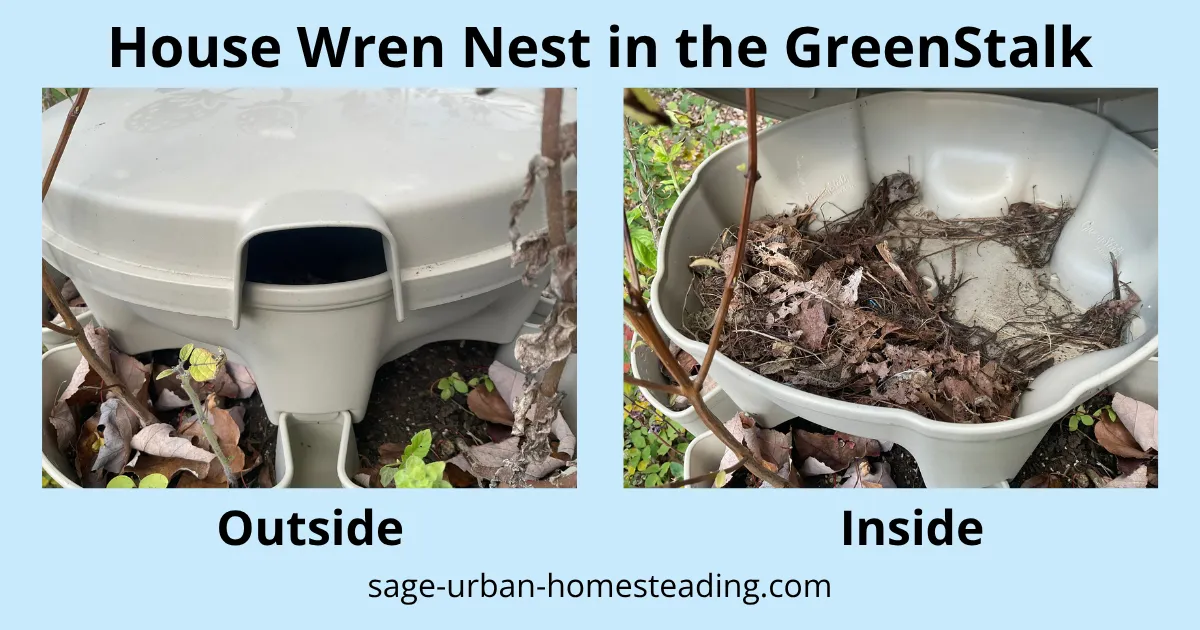 The wren went in through the hose opening in the lid and filled the top reservoir with leaves and twigs. It looks like a messy pile, but it was a nest.
If you're not sure you can water most summer mornings, read this first.: How to Save Time Watering Your Garden.
What grew well
- Lettuce. It did well, especially when I started it early under the seed starting cover called a Seed House.
- Perennial herbs. I keep them in the top pockets. They've done well and survived winters there.
- Basil. I like to grow several varieties, and they're happy in the pockets. One variety, Blue Spice Basil, has reseeded itself in the GreenStalk every year.
- Dill. The GreenStalk is the only place I've ever grown dill successfully. I planted it near the bottom of the one that got the most shade.
- Cucumber. Last year it did better in the GreenStalk than in the beds, with fewer bugs. I planted it near the bottom, where the soil stays wetter. The supports were a struggle, though. The vines didn't want to stay on them and didn't grab where I wanted.
- Bush beans. They did okay with the supports.
- Flowers. I've realized flowers matter to me, so I always plant marigolds and sweet alyssum around the sides, with short zinnias and bachelor's buttons on top. The chives, basil, and thyme at the top also blossom. They're for our bees, and for me. I love seeing the color and the butterflies when I look out the window.
One pocket in the Original grows a dandelion I never planted. I let it stay since we eat it. The greens are easy to find, and I know the dog hasn't been near it.
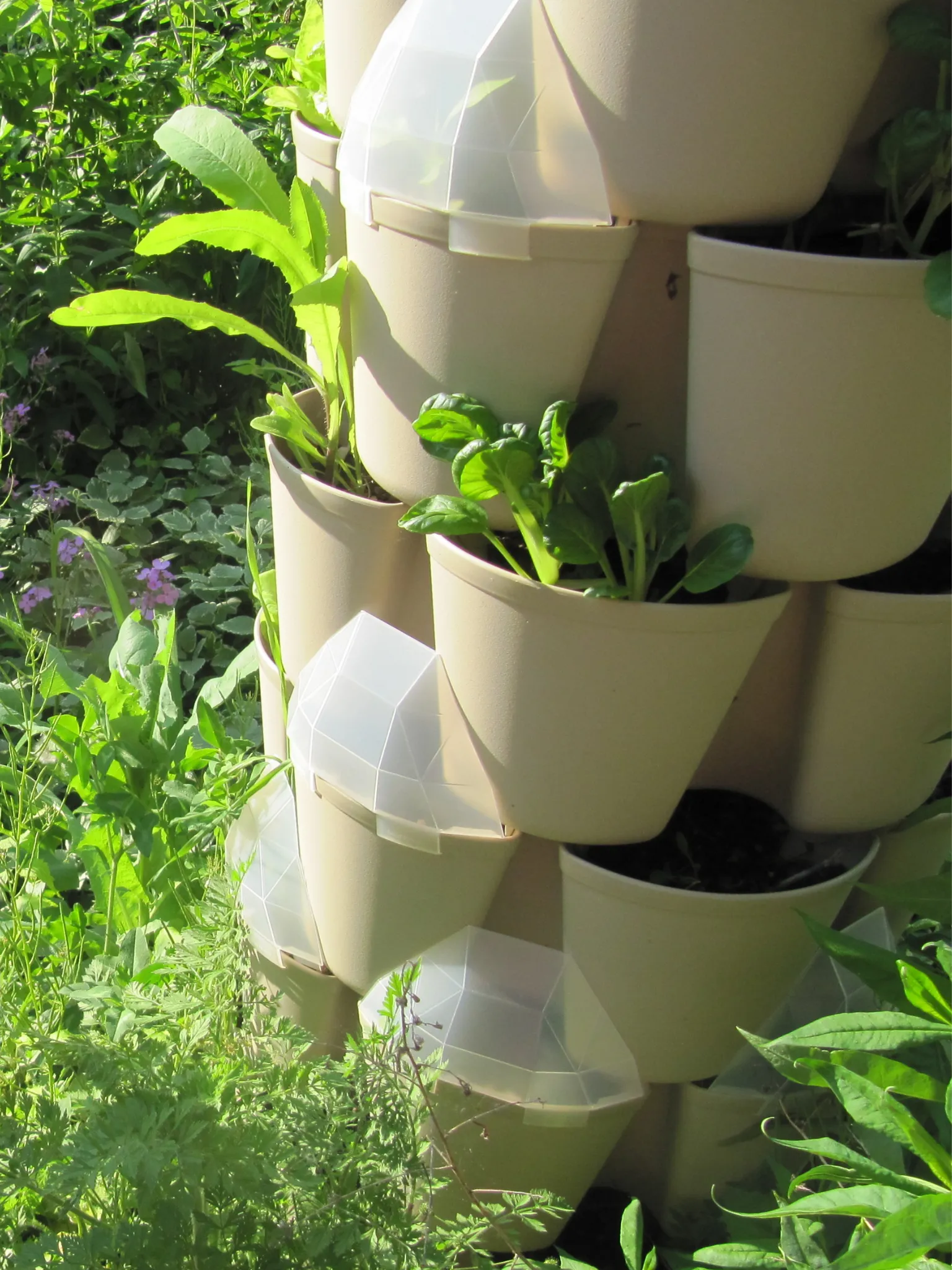 Lettuce and tatsoi were some of our best crops, especially when I started them early under the Seed House covers.
What didn't work as well
Strawberries
Strawberries are the crop everyone pictures in a GreenStalk, and they're the one that disappointed me most. Ours do much better in the raised beds.
The first winter, every strawberry plant in the GreenStalks died. Last winter, we took the tiers apart and set them in the top of an empty raised bed, and about half survived.
One thing that does work: When the strawberries send out runners, I lead each one to an empty pocket and hold it in place with a stone until it roots.
Root crops
The carrots didn't get as big as I'd hoped. Beets did okay. We don't like radishes, so they're not on my list.
Sweet potatoes
The first year, I planted sweet potatoes near the top of the Original. The vines grew down over the whole planter, so it wasn't useful for much else that season.
Peppers
Peppers were disappointing. They set hardly any fruit, and what they did grow took a long time to mature. I think they need steadier moisture than they got.
Peas
Peas produced some, but not nearly as well as they do in the ground.
The real downsides
Wind and the top covers
The wind has blown the covers off the tops many times. Now I try to take them off before a windy day, so I don't have to search the yard for them afterward.
Keep them heavy
None of ours have tipped over. I keep them watered so they stay heavy. If you give one a little shake with your hand, you can feel how heavy it is. Ours sit on pavers, not a balcony, so if you're up off the ground, check your weight limits before you fill one.
The top dries out faster
The tiers don't stay equally moist. The top dries out faster, and the bottom stays wetter. That's why I plant Mediterranean herbs near the top and cucumbers near the bottom. I haven't had any trouble with clogged drip holes.
Slugs
I put copper tape around the base of each planter to cut down on slugs (Amazon affiliate link). It seems to have helped.
Fertilizing is the part I'm still learning
I fill ours with potting soil, rabbit droppings, and an organic fertilizer. The second season, the leaves turned yellow, and something was clearly off balance. I did better this year, but I still don't feel like I've got it figured out.
If that happens to you, it's not a sign you did something terrible. Watering a container every day washes nutrients out of the soil, so container plants need regular feeding. University of Maryland Extension explains this in its guide to keeping container vegetables going.
Winter
The perennial herbs on top have made it through winters. The strawberries are another story (see above). Taking the tiers apart and setting them in an empty raised bed helped.
The cost
A GreenStalk costs more than a few pots. Add potting mix to fill every tier and any extras, and it's a real purchase. That's why I'd only buy one if it'll sit where you can water it. And wait until they have a sale like around Mother's Day or Black Friday.
Who should skip a GreenStalk
- You can't water most summer mornings. Ours get water every day.
- You'd put it on a balcony and haven't checked weight limits. A full planter is heavy.
- Strawberries are your main goal, and you have a ground spot. Ours do much better in raised beds.
- You have a small sunny spot in the yard. One raised bed may give you more food for the money. See Square Foot Gardening for Beginners.
- You're not sure you'll garden every week yet. Try a pot or two first. See Container Gardening for Beginners.
Who it's a good fit for
It's a good fit if you have a sunny patio, driveway edge, or paved spot your hose reaches, you like herbs, greens, and flowers, and you want a lot of plants in a small footprint.
What I'd buy: the 5-tier GreenStalk Original (Amazon affiliate link). If I were starting over with one planter, this is the one I'd pick for its deeper pockets. Skip it if you can't water daily in summer, or your balcony has weight limits you haven't checked.
What to try next
Pick the next small step that fits your space.
- You're not sure you can keep up with watering. See How to Save Time Watering Your Garden.
- You only have a patio, steps, or a balcony and want to start smaller. See Container Gardening for Beginners.
- You have a yard with one small sunny spot. See Square Foot Gardening for Beginners.
- You'd like free water for the garden. See the Water Collection hub.
A GreenStalk is one small system. If you're wondering what your next one should be, whether it's food, water, or home comfort, my free 2-page guide helps you pick one place to start. It's called Which Urban Homestead System Should You Start First?, and it's built for small spaces and busy lives.
GreenStalk review FAQ
Is a GreenStalk worth it?
Is a GreenStalk worth it?
For us, yes, because ours sit where the hose reaches and I water them every morning. If you can't water most summer days, or you mainly want strawberries and have room for a raised bed, I'd skip it.
Should I get the Original or the Leaf?
Should I get the Original or the Leaf?
If you're buying one, I'd get the Original. Its deeper pockets hold moisture longer and give roots more room.
Does a GreenStalk blow over in the wind?
Does a GreenStalk blow over in the wind?
Ours haven't tipped. The covers on top have blown off many times, though, so I take them off before windy days. Keeping the planters watered keeps them heavy.
Can strawberries survive winter in a GreenStalk?
Can strawberries survive winter in a GreenStalk?
Not well for us. They all died the first winter. Last winter, we took the tiers apart and set them in an empty raised bed, and about half survived.
How often do you water a GreenStalk?
How often do you water a GreenStalk?
I water ours every morning in summer. It's designed to be filled through the top reservoir, but this year I watered each pocket from the outside with the hose, because a house wren nested in the top of one and not every pocket was planted. It takes about 15 minutes in a hurry, and closer to 30 when I take my time.
What grows best in a GreenStalk?
What grows best in a GreenStalk?
For us: lettuce, basil, perennial herbs, dill, cucumbers, and flowers like marigolds, sweet alyssum, short zinnias, and bachelor's buttons. Bush beans and beets did okay. Carrots stayed small, sweet potatoes took over a whole planter, and peppers and peas were disappointing.
Before you buy a GreenStalk: checklist
- Find a sunny spot your hose already reaches.
- Be honest about whether you can water most summer mornings.
- If you're off the ground, check your weight limits first.
- Start with one Original before buying extras.
- Plan for potting mix and regular feeding.
- Expect herbs, greens, and flowers to shine more than strawberries.
- Take the top covers off before windy days.

Amy DeVries helps beginner urban homesteaders learn by doing. A lifelong gardener, she has grown food in spaces that expanded to 18 raised beds, patio containers, dwarf fruit and nut trees, and gravity-fed rainwater systems. She shares practical lessons shaped by real experience. Amy homeschools her children and teaches the same hands-on skills that guide her work.
You might like these
How to Garden and Love It
Learn how to garden and grow your own food through easy urban farming techniques.
Composting Worms and How They Can Help You Save the World
EGrow even more in your garden when you raise composting worms to turn your food waste into a rich soil supplement.
Compost Bins and How to Use Them
Learn about the different types of compost bins and decide on the best way to use composting as part of your urban farming.

More Information
Disclosure
All information found on this website is editorial in nature and intended to motivate and inspire rather than be used as medical advice or legal advice.
As an Amazon Associate, I earn from qualifying purchases. I also use Google Ads and cookies as described in the Privacy Policy.
Thank you for your support!
By Amy DeVries, Copyright © 2011-2026 Sage-Urban-Homesteading.com All rights reserved.
