FYI: This website contains affiliate links. As an Amazon Associate I earn from qualifying purchases.
How to Grow Sweet Potato Slips From One Store-Bought Sweet Potato
By Amy DeVries
Short answer: The easiest way to learn how to grow sweet potato slips is with one sweet potato from the store. Lay it in a shallow container of damp soil in February, cut off the sprouts once they're a couple of inches tall, and root the cuttings in water by a sunny window. Plant them out after the ground warms in May. The slips start small, but the vines need room, so plan on a whole raised bed, not a corner of one.
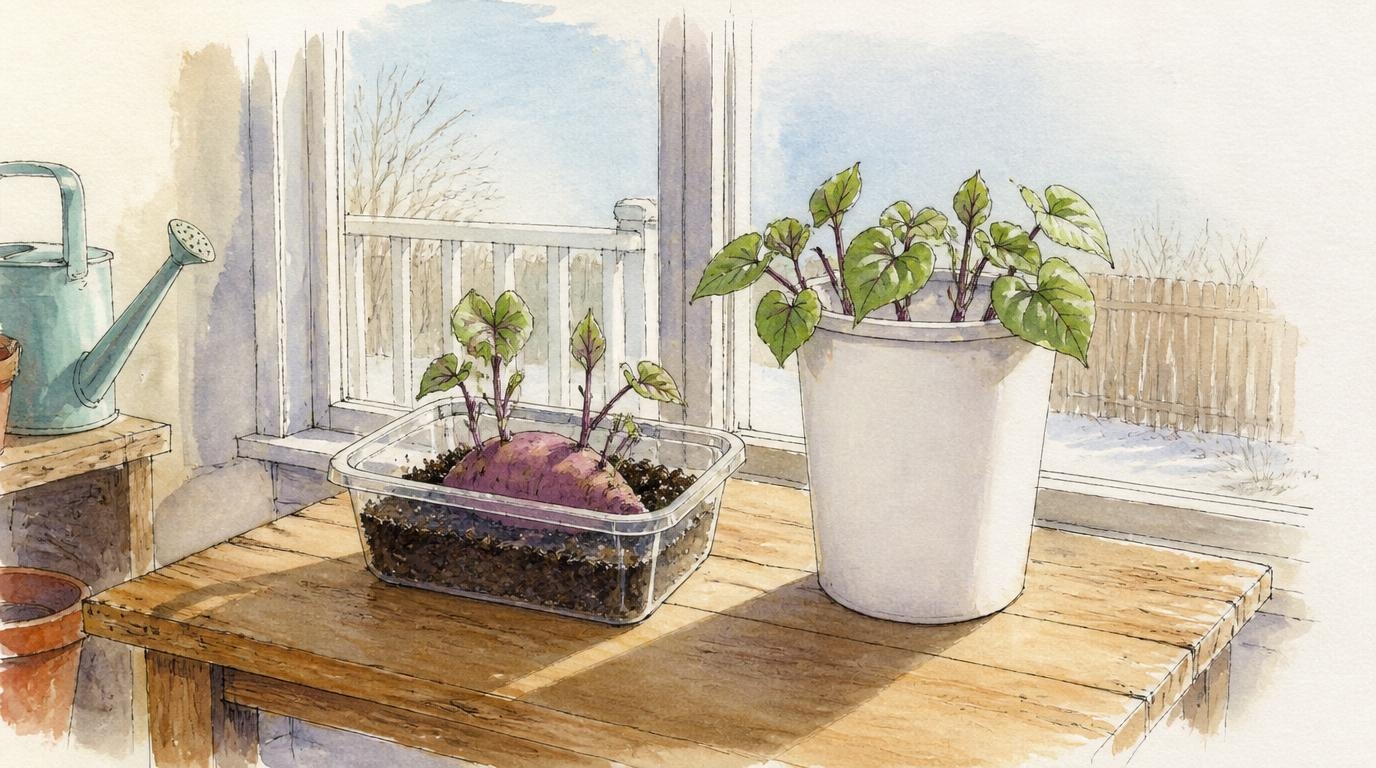 One sweet potato, a dollar store container, and a yogurt tub. That's the whole setup.
If you've heard you can grow sweet potatoes from one you bought at the store, and you're wondering whether that really works, it does. And if you're wondering whether you have room for it, that's the right question to ask.
Every purple sweet potato we grow comes from one Stokes Purple I bought at the grocery store in the fall of 2020. I forgot about it in a dark corner of our damp basement. When I found it, it had a very tiny sprout. I'd watched my dad grow sweet potato slips before (he grows orange ones), so I decided to try. That one forgotten sweet potato's family is still going. We love purple sweet potatoes.
Here's the smallest version that works, how I start the slips now, and the honest part about how much room the vines take.
Does a store-bought sweet potato really work?
It did for me. Our first one sprouted on its own, with no help at all, because I'd forgotten it in the basement.
Not every store sweet potato will sprout, though. The University of Maryland Extension says market sweet potatoes are fine to use, but suggests washing them first to remove anti-sprouting chemicals. If one hasn't sprouted after a few weeks, try another. Starting two is a good habit anyway. I always do, because sometimes one gets moldy instead of sprouting.
It's not like planting regular potatoes
Sweet potatoes are a different species from regular potatoes, and you start them differently. With regular potatoes, you cut them into pieces with eyes and plant the pieces. With sweet potatoes, you grow and root slips, and you keep the sweet potato whole.
I've grown both. Sweet potatoes are more involved to get started, and they take longer until they're ready to harvest. But they're also hardier plants, and less prone to insects and diseases.
Do you have room? The slips start small, but the vines don't stay that way
Starting the slips takes a little spot on a sunny table. Growing them out is a different story. Our vines grow like crazy every summer.
Here's how much room they've needed for us:
- A raised bed is where ours do best. I let the vines run, and I only trim them when they take over the walkway. Our sheep and chickens are happy to eat the trimmings.
- A single 4x4 bed is too small. I wouldn't put sweet potatoes in one, the same as pumpkins. See Square Foot Gardening for Beginners.
- A GreenStalk planter got taken over. The first year we had our GreenStalks, I planted sweet potatoes near the top of one. The vines grew down over the whole planter, so it wasn't useful for anything else that season. The sweet potatoes were a little smaller than the ones from our raised beds, too.
If you're short on ground, the University of Maryland Extension's Jon Traunfeld suggests training the vines up a trellis to save space. I let ours sprawl because they will put out extra roots wherever the vines touch the soil to absorb more water.
If you rent or only have containers
I haven't grown sweet potatoes in pots or grow bags, so I can't tell you how it goes. I'm sure you can grow them in a large pot or grow bag. I just prefer raised beds.
If you try it, go big. Jon Traunfeld usually suggests one plant per 10-gallon container. Big pots also hold water longer, which matters for any container in summer. See Container Gardening for Beginners.
How to grow sweet potato slips: My shallow soil method
I do it the way my dad does, with one change. He lays his sweet potatoes in an old frying pan with about 2 inches of soil. I use a small plastic food storage container from the dollar store.
One year I tried the jar-of-water method instead, with each sweet potato propped on toothpicks in a jar so its bottom end sat in water. One grew roots and one didn't. You have to be careful to put the right end in the water, and poking holes in the side for the toothpicks makes the sweet potato more likely to get moldy and fail. My slips came out stronger and more plentiful with the shallow soil, so that's what I stick with.
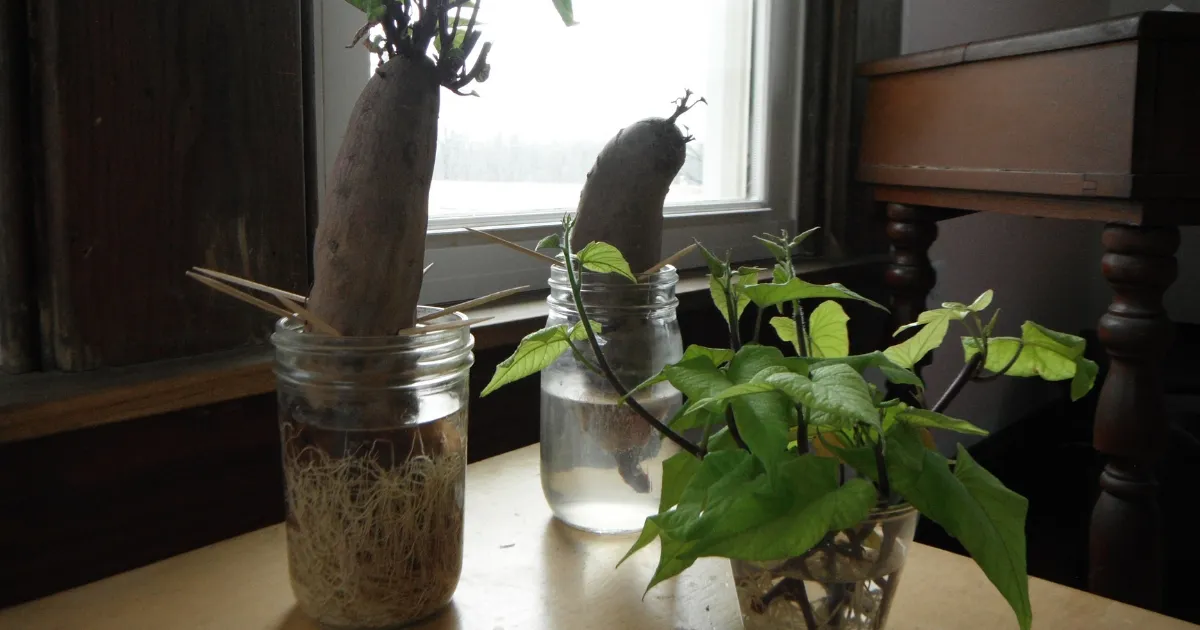 The year I tried water instead of soil. The sweet potato on the left grew roots; the one in the middle never did.
What you need
- One or two sweet potatoes (two is safer, in case one goes moldy)
- A small, shallow plastic container, like a dollar store food storage container
- Potting soil, about 2 inches deep
- A big yogurt container and two pipe cleaners, for rooting the cuttings
- A table by a sunny window
Step by step
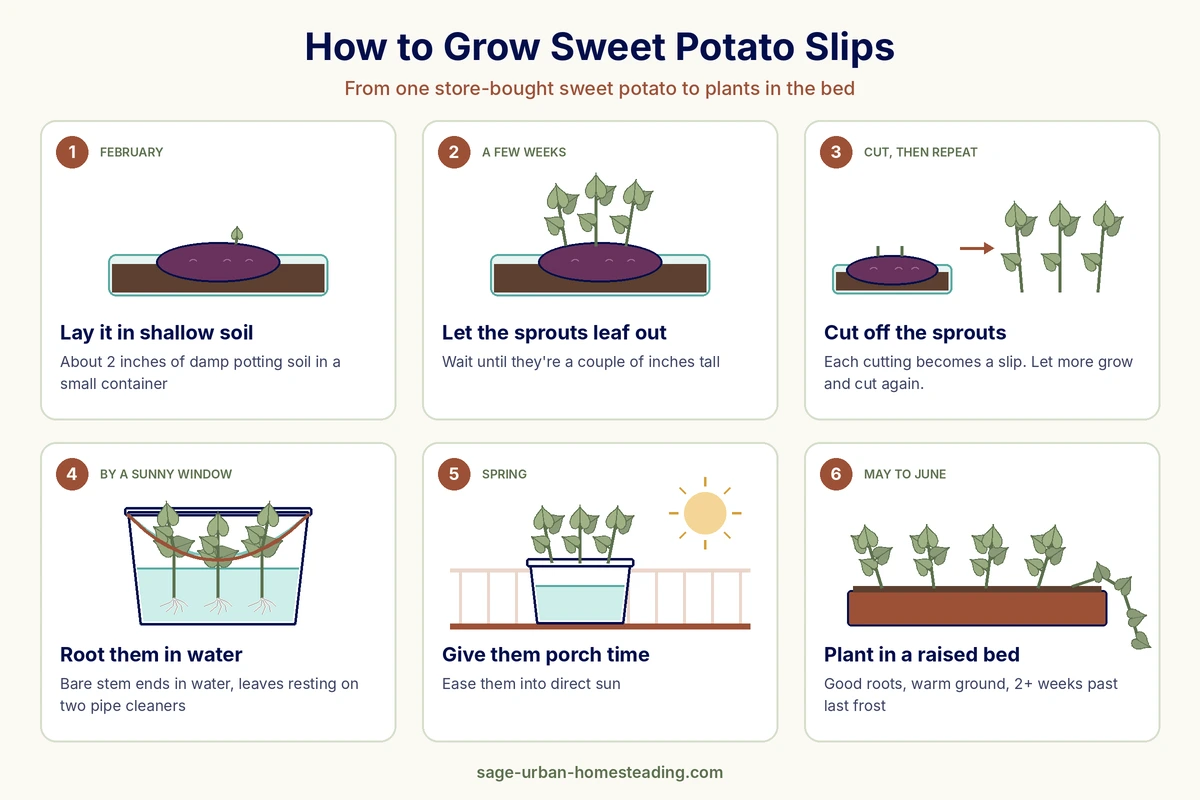
- Lay the sweet potato in the soil in February. I don't wait for it to sprout on its own anymore. I lay the whole sweet potato on its side on top of about 2 inches of damp potting soil, set it on the sunny table, and keep the soil damp.
- Let the sprouts grow leaves. Wait until they're a couple of inches tall.
- Cut the sprouts off. These cuttings become your slips. I follow the biodynamic calendar, so I take my cuttings on a root day. Then I let the sweet potato grow more sprouts and take another round, until I have enough slips to fill a raised bed.
- Root the cuttings in water. I pull off any leaves that would sit in the water, so the bottom 2 inches of each stem is bare. That bare end goes in a big yogurt container of water, and two pipe cleaners across the top hold the leaves up above the water. It sits on a table by a sunny window. I don't change the water. Once a week, when I water the houseplants, I check the level and add more if it's low.
- Give them time on the porch. As the weather allows, I set them out on the porch so they can get used to direct sun.
- Plant them out once they have good roots and the ground is warm. For us that's at least two weeks past our last frost date, in May, and on another root day. Later rounds go in as they root, but I don't plant any more after the end of June.
For the technical details, like soil temperature and how long each stage takes, the University of Maryland Extension's guide on growing sweet potatoes in a home garden covers it well.
My pipe cleaner holder
The holder is just two pipe cleaners stretched across the top of a big yogurt container, side by side like parallel lines. I hook them over the rim on each side and let them dip lower in the middle, so they sit close to the water but stay above it.
Before a cutting goes in, I pull off any leaves that would end up underwater, so the bottom 2 inches of the stem is bare. That bare end goes down into the water, and the leaves rest against the pipe cleaners. They're held up, and they don't fall into the water.
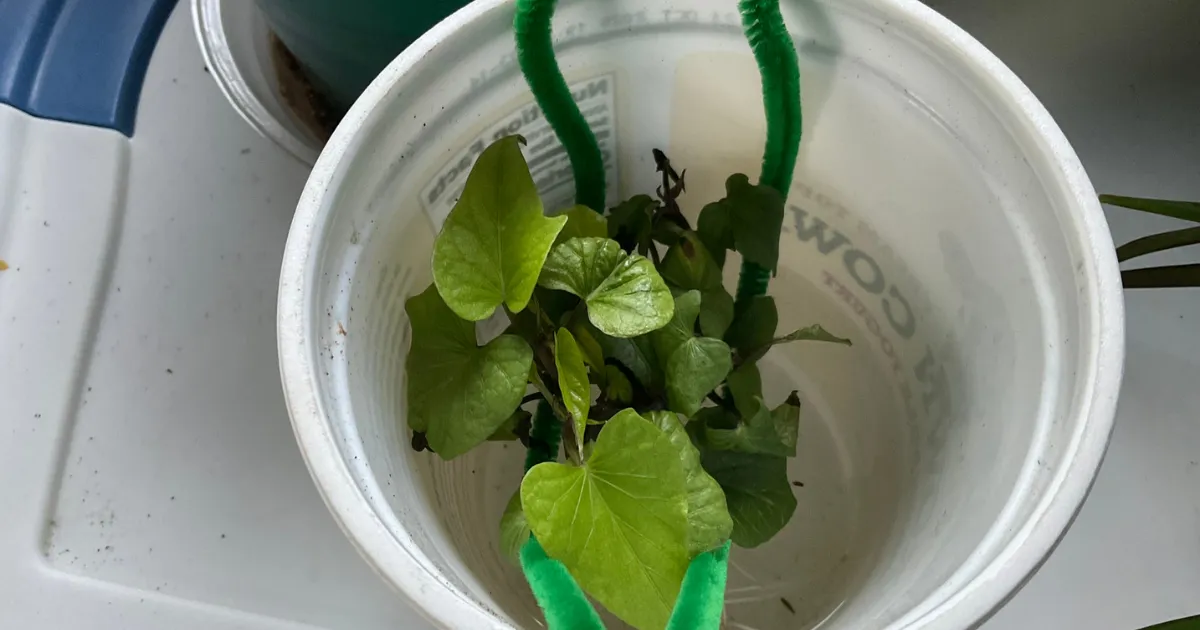 Two green pipe cleaners hold the leaves up, so only the bare stem ends sit in the water.
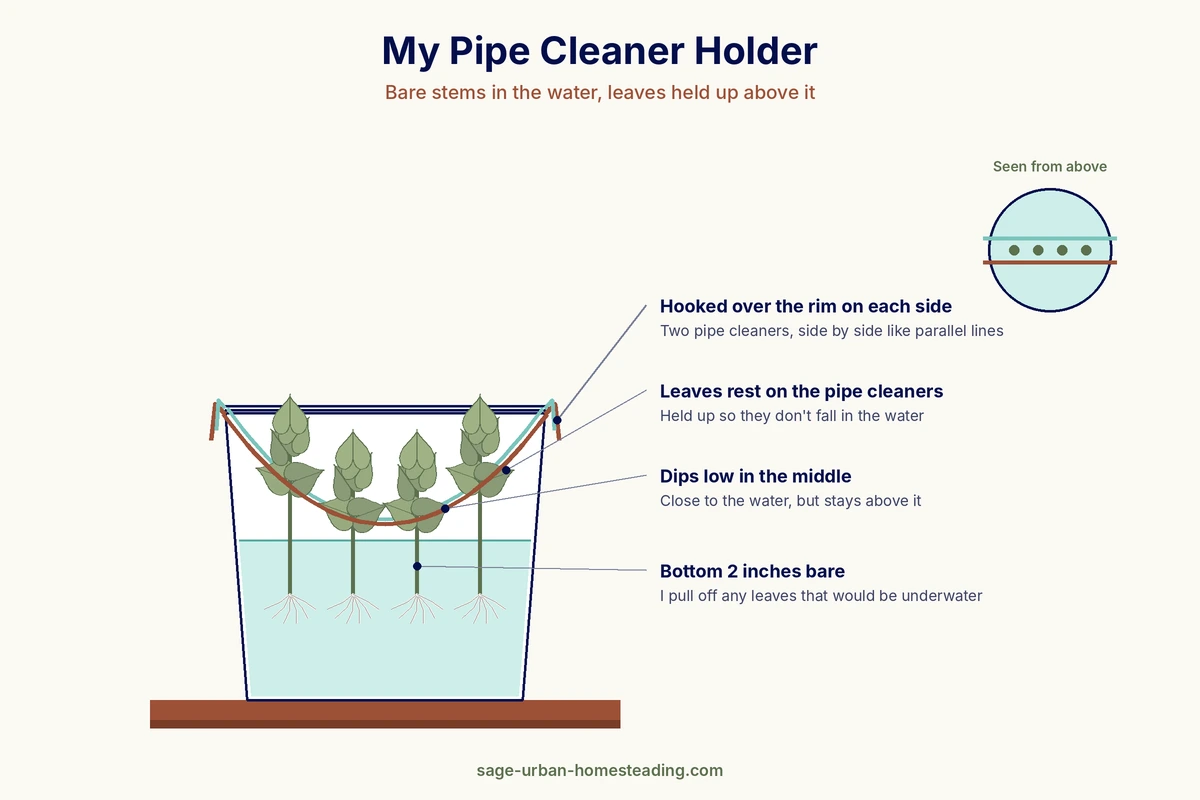 Hook the pipe cleaners over the rim, let them dip just above the water, and pull off any leaves that would end up underwater.
You can start other seedlings on the same sunny table. See How to Start Seeds (and When to Just Buy Plants).
Why I take cuttings on a root day
I follow the biodynamic calendar, which marks some days as root days. I take my cuttings and plant my slips on those days. I haven't done my own controlled experiments to see whether it makes a difference. The calendar's authors say they have, it doesn't hurt anything, and it's easy to try. Mostly, I like the idea of being in tune with the rhythms of nature.
Planting: How to grow sweet potatoes from slips in a raised bed
I only grow ours in raised beds now. One year I planted them in the ground, and rabbits ate the greens right off. I almost lost my whole line that year. I had time to start few more cuttings, secured them inside electric netting, and they're the reason we still have our line of sweet potatoes.
My goal each year is to fill one raised bed with slips. We also put netting around the bed to discourage deer. We haven't had any other pests in the raised bed.
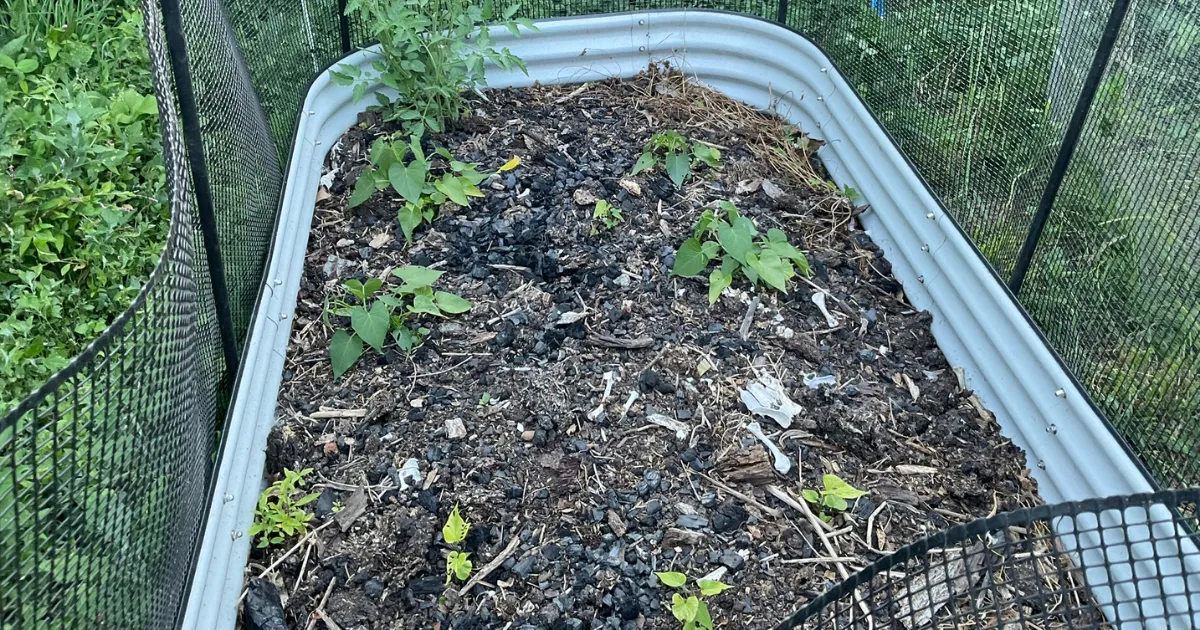 Our raised bed in June. The first slips (back) are green and starting to grow. The second round of cuttings (front) are just getting started and still a little yellowish.
Watering
Right after planting, I water them well every day until they start to grow bigger. After that, I only water them during a dry spell. The University of Maryland Extension notes that sweet potatoes are most sensitive to drought in their first 50 to 60 days, and established plants handle dry weather fairly well. See How to Save Time Watering Your Garden.
Feeding
I feed them with compost and rabbit manure. That's it. See the Compost Pile for Beginners.
Harvesting, drying, and saving next year's sweet potato
When and how I dig them
I bring ours in in late October, before frost, once it's getting cold and some of the leaves are drooping.
Our raised bed soil is loose enough that I pull them out by hand. I don't use a fork or a shovel, because tools make it easier to stab or scrape the sweet potatoes. If your soil is heavier, you can loosen it with a garden fork and lift gently.
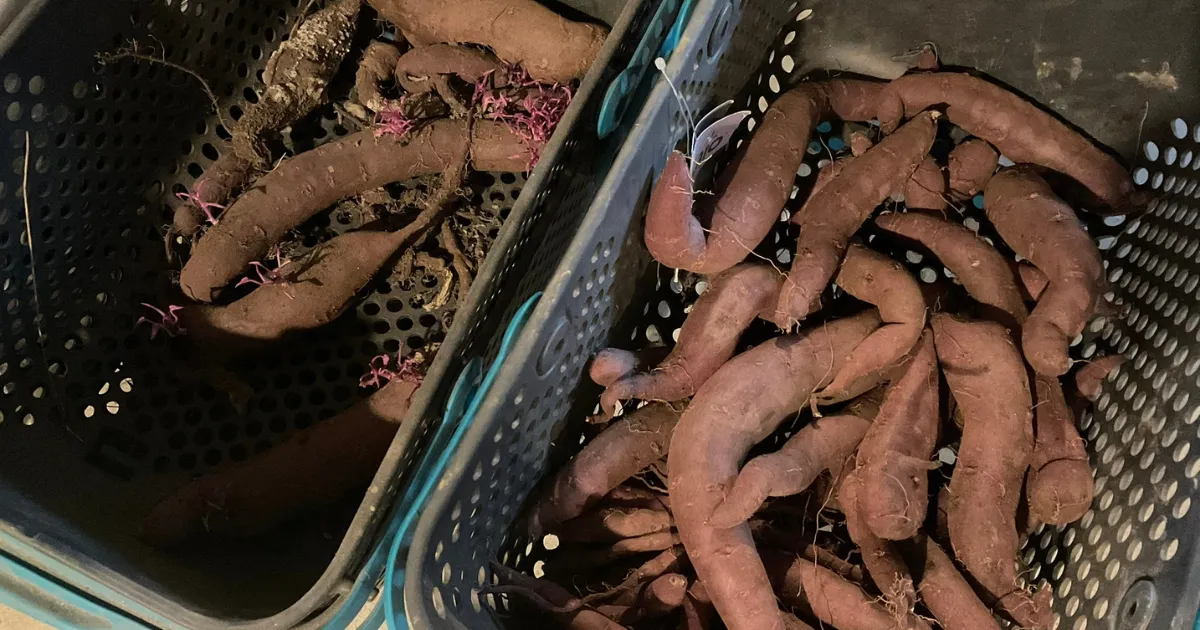 This year's harvest (right), about half a basket, next to last year's (left), which sprouted in the basement over the summer. I'm saving the sprouted ones to see if they'll grow next year.
Drying them before storage
I brush off the dirt, but I don't rinse them. Then I set them on the porch in a protected spot, in the same baskets I harvest them in. They stay there until they're dry, or until the weather is about to change. I don't want them to get damp or freeze. Then they go down to the basement. The strong ones keep for over a year.
That lines up with what University of Maryland Extension suggests for home gardeners: don't wash them before storing, cure them for about a week somewhere like a covered porch, then store them somewhere cool, like a basement.
Saving a sweet potato for next year's slips
This is how one store-bought sweet potato turned into years of them. We don't eat the biggest and best-looking ones. In February, I look them over and pick the one that looks best.
I usually start two. Sometimes one gets moldy and goes bad instead of sprouting, and having a backup means the line keeps going. This year I'm also saving some of last year's sweet potatoes that sprouted in the basement over the summer, to see if they'll grow.
What I use
The Maria Thun Biodynamic Almanac (affiliate link). A new edition comes out each year, and it's on my Amazon Christmas wish list every year. It's how I know which days are root days for taking cuttings and planting.
Skip it if you'd rather not plan around a calendar. Warm soil and well-rooted slips will carry you a long way.
What to try next
Pick the next small step that fits your space.
- You want to start other plants on the same sunny table. See How to Start Seeds (and When to Just Buy Plants).
- You have one small sunny spot and want to plan a raised bed. See Square Foot Gardening for Beginners.
- You only have a patio, steps, or a balcony. See Container Gardening for Beginners.
- You're eyeing a vertical planter but don't want to waste money. See my GreenStalk Review.
- Your garden fizzles by July because watering takes too long. See How to Save Time Watering Your Garden.
- You'd like to make your own compost to feed your beds. See the Compost Pile for Beginners.
- You'd like free water for the garden. See the Water Collection hub.
- You want to see every small-space garden page in one place. See the Urban Gardening in Small Spaces hub.
One sweet potato on a sunny table is one small system. If you're wondering what your next one should be, whether it's food, water, or home comfort, my free 2-page guide helps you pick one place to start. It's called Which Urban Homestead System Should You Start First?, and it's built for small spaces and busy lives.
Sweet potato slips FAQ
Can you grow sweet potato slips from a store-bought sweet potato?
Can you grow sweet potato slips from a store-bought sweet potato?
Yes. All of ours come from one organic Stokes Purple I bought at the grocery store in 2020 or 2021. Some store sweet potatoes won't sprout, so start two if you can.
Should I start slips in water or soil?
Should I start slips in water or soil?
I've tried both. A jar of water worked for one of my two sweet potatoes, but I got stronger slips laying the sweet potato on about 2 inches of damp soil. Then I root the cuttings in water.
Can I cut up a sweet potato and plant the pieces, like regular potatoes?
Can I cut up a sweet potato and plant the pieces, like regular potatoes?
No. Sweet potatoes are a different species, and they don't grow from cut pieces with eyes the way regular potatoes do. You grow and root slips from a whole sweet potato. It's more involved to start and takes longer to harvest, but in my experience the plants are hardier and less prone to insects and diseases.
When should I start sweet potato slips?
When should I start sweet potato slips?
I start mine in February and plant the first ones out in May, at least two weeks after our last frost date, once the ground is warm. I keep taking cuttings until I have enough, but I stop planting at the end of June. Count back from your own planting date.
How much room do sweet potato vines need?
How much room do sweet potato vines need?
More than you'd think. I wouldn't put them in a single 4x4 bed, and the year I planted them near the top of a GreenStalk, they grew down over the whole planter. Ours get a raised bed, and I trim them when they take over the walkway.
Can I grow sweet potatoes in a container?
Can I grow sweet potatoes in a container?
I haven't tried it, but I'm sure you can in a large pot or grow bag. Jon Traunfeld of University of Maryland Extension usually suggests one plant per 10-gallon container.
When do I harvest sweet potatoes?
When do I harvest sweet potatoes?
I pull ours in late October, before frost, when it's getting cold and some leaves are drooping. In our loose raised bed soil, I pull them out by hand.
Can you eat sweet potato leaves?
Can you eat sweet potato leaves?
The University of Maryland Extension says the young leaves and shoots are edible, raw or sautéed. Our trimmed vines go to the sheep and chickens, who are happy to eat them.
Your sweet potato slips checklist
- Start two sweet potatoes in February, laid on about 2 inches of damp soil.
- Cut the sprouts once they're a couple of inches tall, and take more rounds until you have enough.
- Strip the bottom leaves and root the bare stem ends in water by a sunny window, with two pipe cleaners holding the leaves up. Top up the water once a week.
- Give them porch time to get used to direct sun.
- Plant them once they have good roots and the ground is warm, after your last frost date. Stop by the end of June.
- Give them a whole raised bed, not a corner of one.
- Water daily until they start growing bigger, then only in dry spells.
- Pull them before frost, brush off the dirt, and let them dry somewhere protected before storing, so they don't get damp or freeze.
- Save the best-looking one for next year's slips.
Amy DeVries helps beginner urban homesteaders learn by doing. A lifelong gardener, she has grown food in spaces that expanded to 18 raised beds, patio containers, dwarf fruit and nut trees, and gravity-fed rainwater systems. She shares practical lessons shaped by real experience. Amy homeschools her children and teaches the same hands-on skills that guide her work.
You might like these
How to Garden and Love It
Learn how to garden and grow your own food through easy urban farming techniques.
Composting Worms and How They Can Help You Save the World
EGrow even more in your garden when you raise composting worms to turn your food waste into a rich soil supplement.
Compost Bins and How to Use Them
Learn about the different types of compost bins and decide on the best way to use composting as part of your urban farming.


More Information
Disclosure
All information found on this website is editorial in nature and intended to motivate and inspire rather than be used as medical advice or legal advice.
As an Amazon Associate, I earn from qualifying purchases. I also use Google Ads and cookies as described in the Privacy Policy.
Thank you for your support!
By Amy DeVries, Copyright © 2011-2026 Sage-Urban-Homesteading.com All rights reserved.
