FYI: This website contains affiliate links. As an Amazon Associate I earn from qualifying purchases.
Urban Homesteading for Real Life: Start Small, Right Where You Are
Urban homesteading doesn’t have to mean acreage, a garage full of gear, or hours you don’t have. Here it means small, simple systems that save food, water, energy, or money in the space you already live in. Renting or short on time? You only need one good place to start, and my free 2-page guide helps you find it.
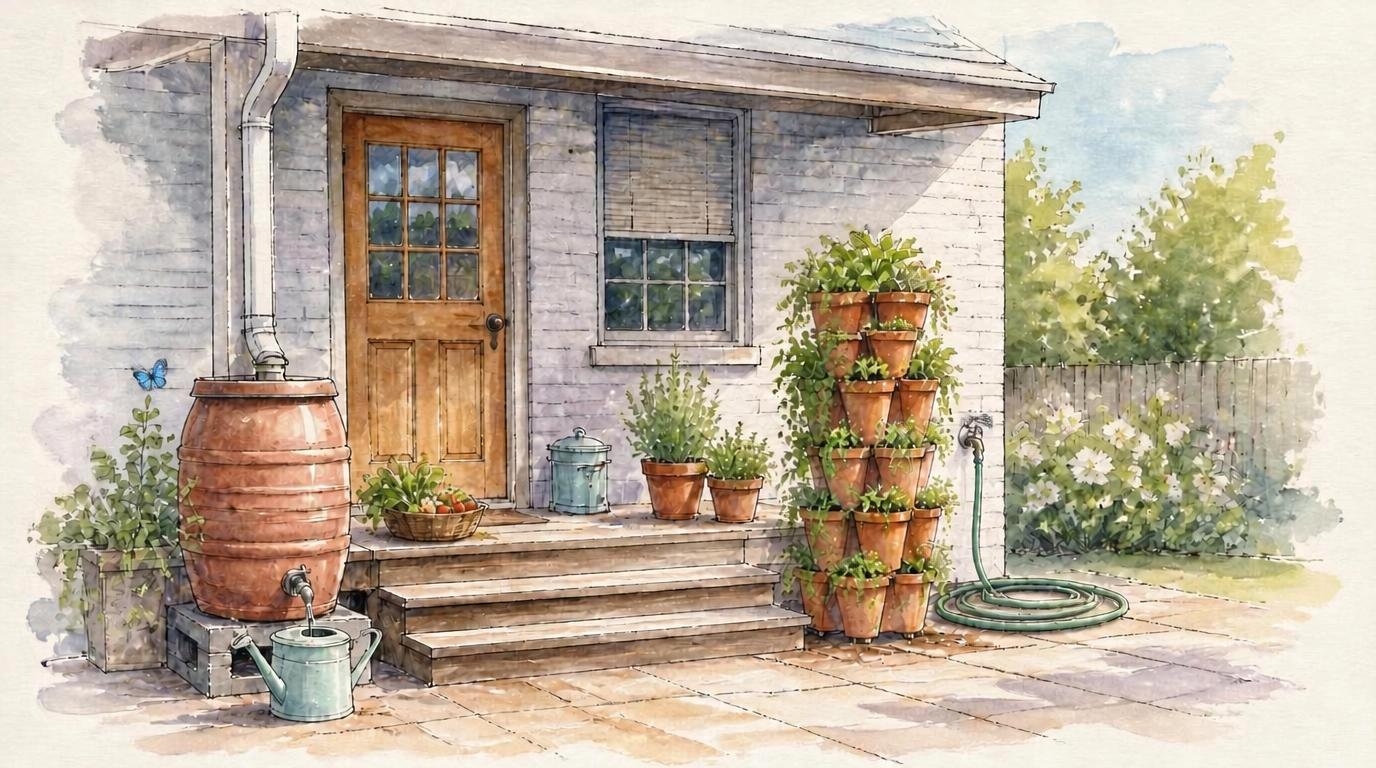 Small systems, close to the door: containers, rainwater, window shades, and using what’s ready first.
Find your starting point
Each hub starts with the smallest version of a system and builds from there. Pick the one that matches what you'd most like to save first.
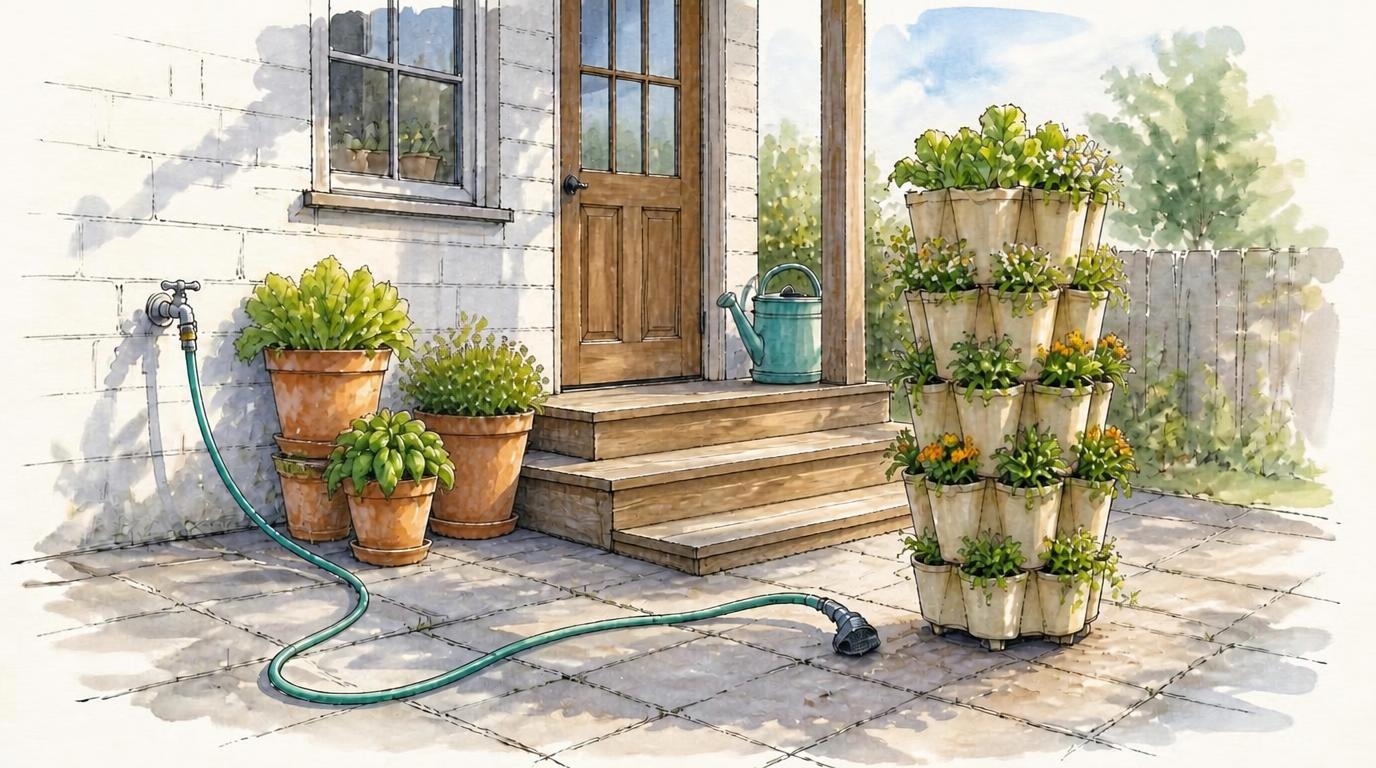
- Urban gardening in small spaces: Grow a little food in the space and sun you have. Start with an herb pot or a few containers close to the door, where watering is easy to keep up. You'll also find honest reviews, like whether a vertical planter is worth it.
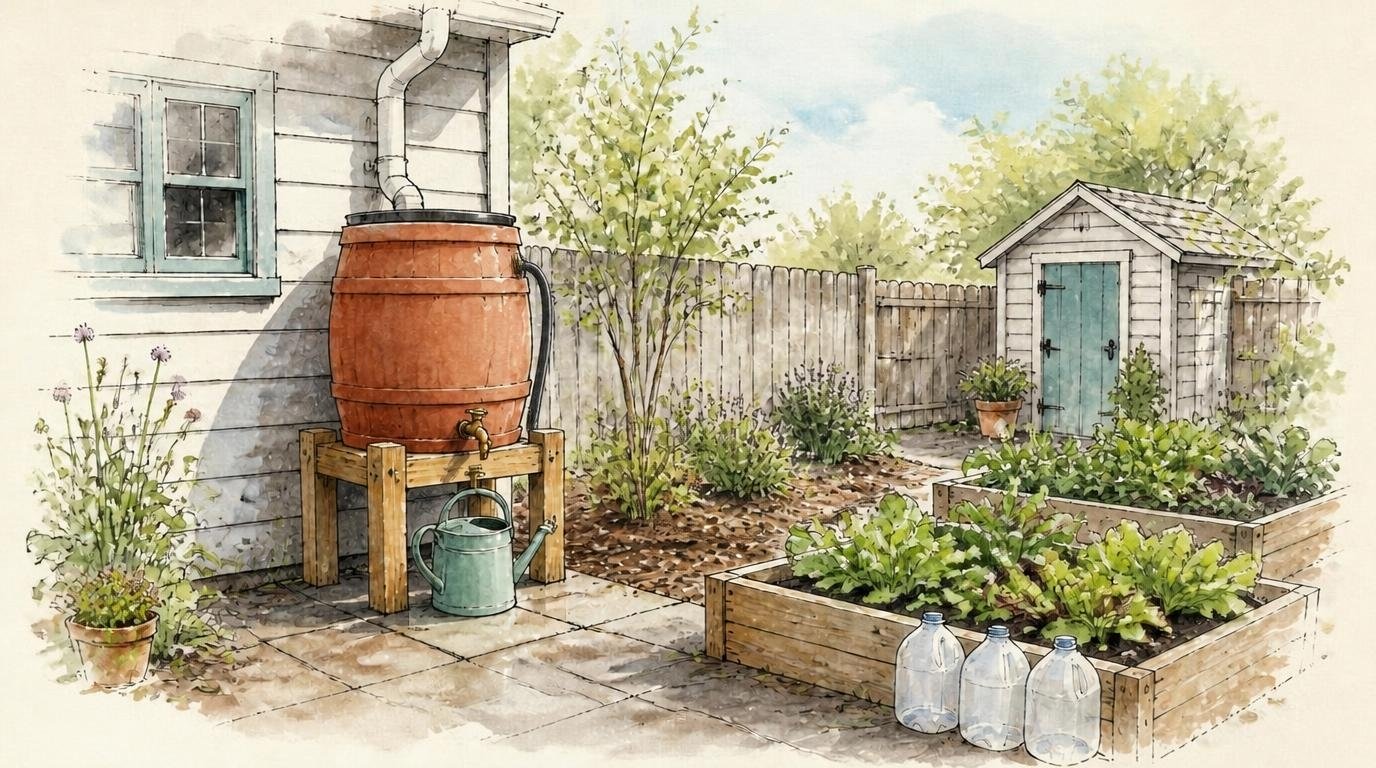
- Water collection: Catch rainwater with one barrel and a simple setup. Then learn the small fixes (overflow, mosquitoes, winter) that keep it low-maintenance. Renting or not ready for a barrel? Start with simple ways to use water more wisely at home.
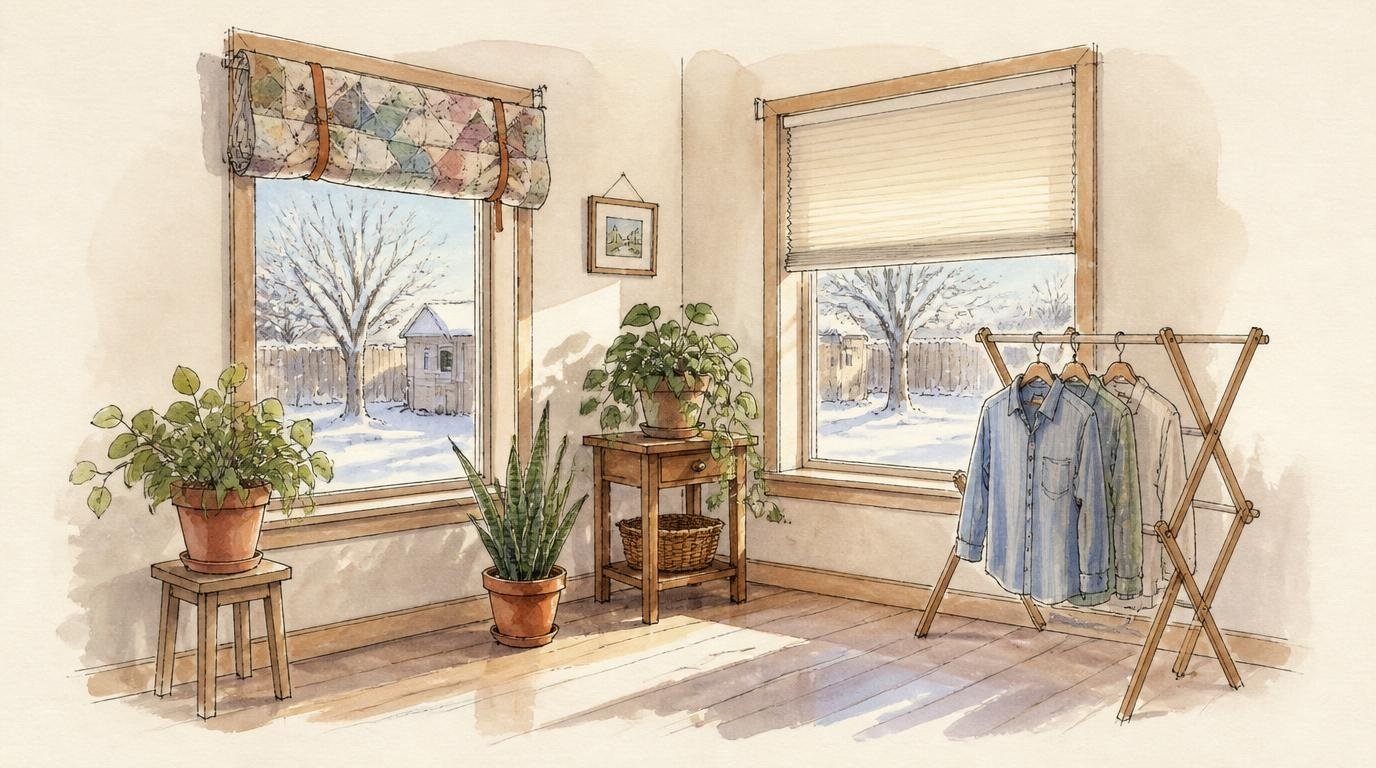
- Home efficiency: Make your home more comfortable and use less energy with renter-friendly draft fixes, a simple shade routine, and line drying indoors. Most of these fixes cost little or nothing and work in a rental.
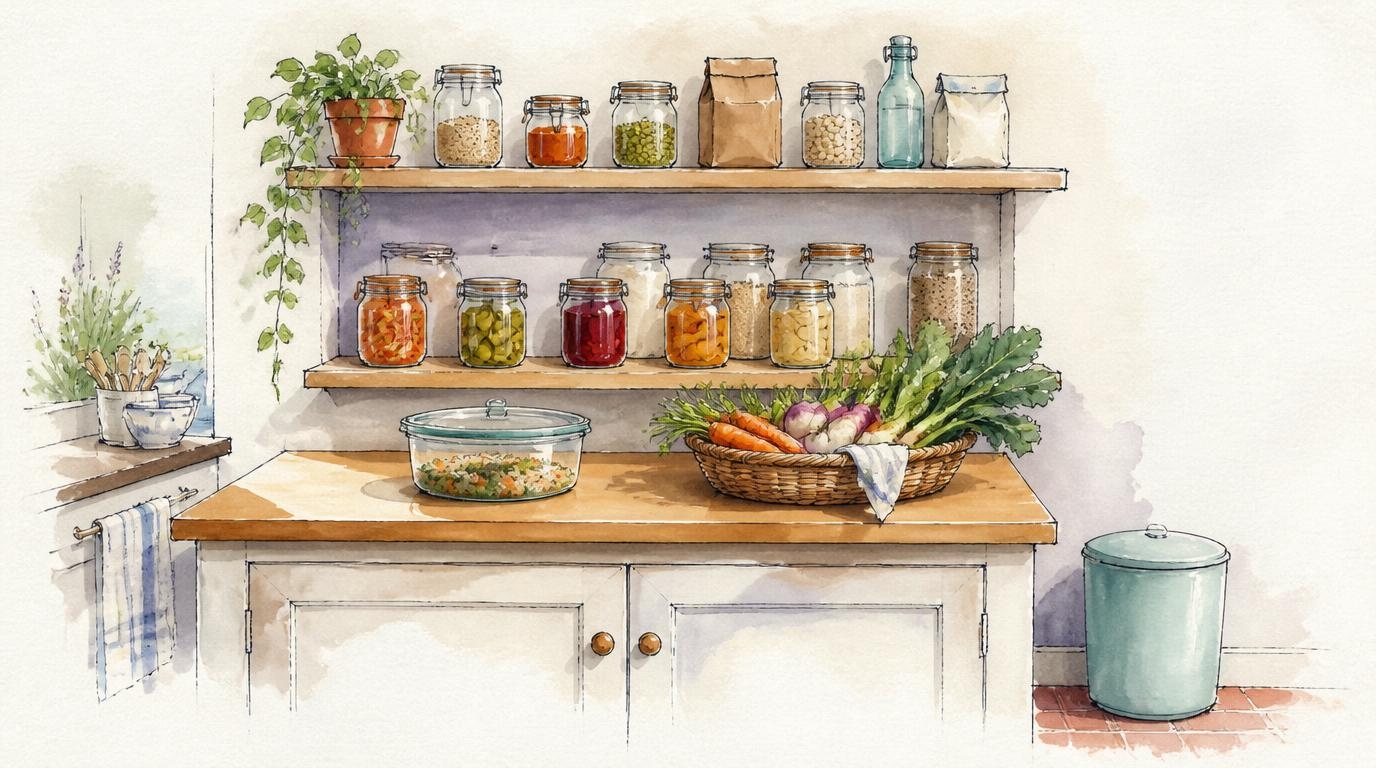
- Reduce food waste at home: Waste less food with simple kitchen habits, like a use-first shelf and cooking once to eat twice. These habits fit busy weeks and save money at the grocery store, too.
Can't decide between two? That's exactly what the free guide is for. Get the guide and pick the one that fits this season. If two still fit, choose the one that costs less to start and takes less time each week. The other can be your next step.
How starting small works here
Most beginners don't stall because they aren't capable. They stall because they try to start everything at once, buy the gear before the habit, and burn out by midsummer. I've done it too, more than once. So every page on this site follows the same simple pattern:
- Start with your real life. Look at the space, sun, time, and energy you have now, not the setup you hope to have someday.
- Choose the smallest version. One herb pot instead of a whole garden. One barrel instead of a water system. One shelf instead of a pantry overhaul.
- Keep it close. The systems you walk past every day are the ones you keep up.
- Let one win lead to the next. Once a system runs without much thought, it shows you what to try next.
If you rent, you'll find renter-friendly options throughout, because I rent too. And when I recommend something to buy, I'll tell you who it's for and when I'd skip it.
Popular places to start
Not sure which hub fits? These pages are where many readers begin.
- Insulated Window Quilts: Three homemade versions I’ve made over the years, plus thermal camera photos showing how much warmer a covered window stays.
- Draft Fixes for Renters: Simple ways to stop cold air, sorted by how easy each fix is to undo.
- Rain Barrels: A Beginner’s Guide: How to choose, place, and set up your first barrel.
- GreenStalk Review: What grew well in our vertical planters over three seasons, and who should skip one.
- Eat Me First Bin? Try a Use-First Shelf Instead: The smallest food waste habit I know, and the first step in my free guide.
Ready to plan more than one urban homesteading system?
Once one system is working, the next question is usually "what now?" The Small-Space Self-Sufficiency Starter Map ($12) walks you through a reality check of your space, time, and energy. Then it helps you choose your first three systems (start now, start next, save for later) and gives you a 30-day action map. It's a printable PDF with checklists and fill-in pages.
If you're still choosing your very first step, start with the free guide instead.
Meet Amy
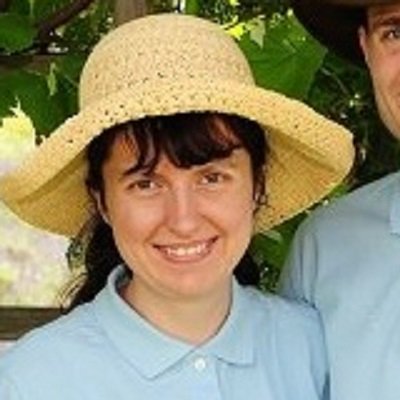
Hi, I'm Amy. I started homesteading on a quarter acre inside the Baltimore Beltway, and over the years it grew into 18 raised beds, rain barrels, quail, and rabbits. When we moved to a rented 1920s house on 3 acres, I tried to do it all at once again, and by the end of that first summer the garden had gotten away from me.
What finally worked was starting small and keeping systems close: plants the hose can reach, rain tanks by the garden, and habits that fit a busy homeschooling week. That's what I share here, along with the lessons from what didn't work. I've been writing this site since 2011.
New on the site
-
Home Efficiency for Beginners: Start Small, Stay Warm
Nov 15, 26 07:50 AM
 Home efficiency for beginners: small habits and removable fixes that make your home warmer and cheaper to run, even if you rent.
-
Water Collection for Beginners: Simple Home Systems
Nov 14, 26 09:43 PM
 Start collecting rainwater at home with one barrel. Find every water collection step here, from stands and diverters to overflow, and drip watering.
-
Insulated Window Quilts: How to Make 3 Homemade Versions
Nov 06, 26 12:33 PM
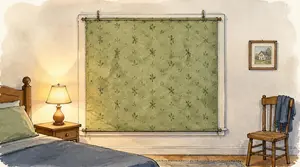 How to make insulated window quilts, 3 homemade versions tested over 10 years, plus thermal camera photos showing how much warmer a covered window stays.
Looking for older crafts, recipes, or homeschool posts? You'll find them in the Article Archive.
More Information
Disclosure
All information found on this website is editorial in nature and intended to motivate and inspire rather than be used as medical advice or legal advice.
As an Amazon Associate, I earn from qualifying purchases. I also use Google Ads and cookies as described in the Privacy Policy.
Thank you for your support!
By Amy DeVries, Copyright © 2011-2026 Sage-Urban-Homesteading.com All rights reserved.
