FYI: This website contains affiliate links. As an Amazon Associate I earn from qualifying purchases.
- Home
- Water Collection
Water Collection for Beginners: Simple Home Systems
By Amy DeVries
Short answer: The easiest way to start water collection is to set a few sturdy containers outside to catch rain, then use it on your plants within a few days. When you're ready for a system that fills itself, put one rain barrel under one downspout on a sturdy, level stand, and send the overflow away from your house. Each step has its own page below.
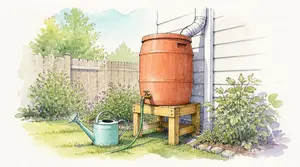
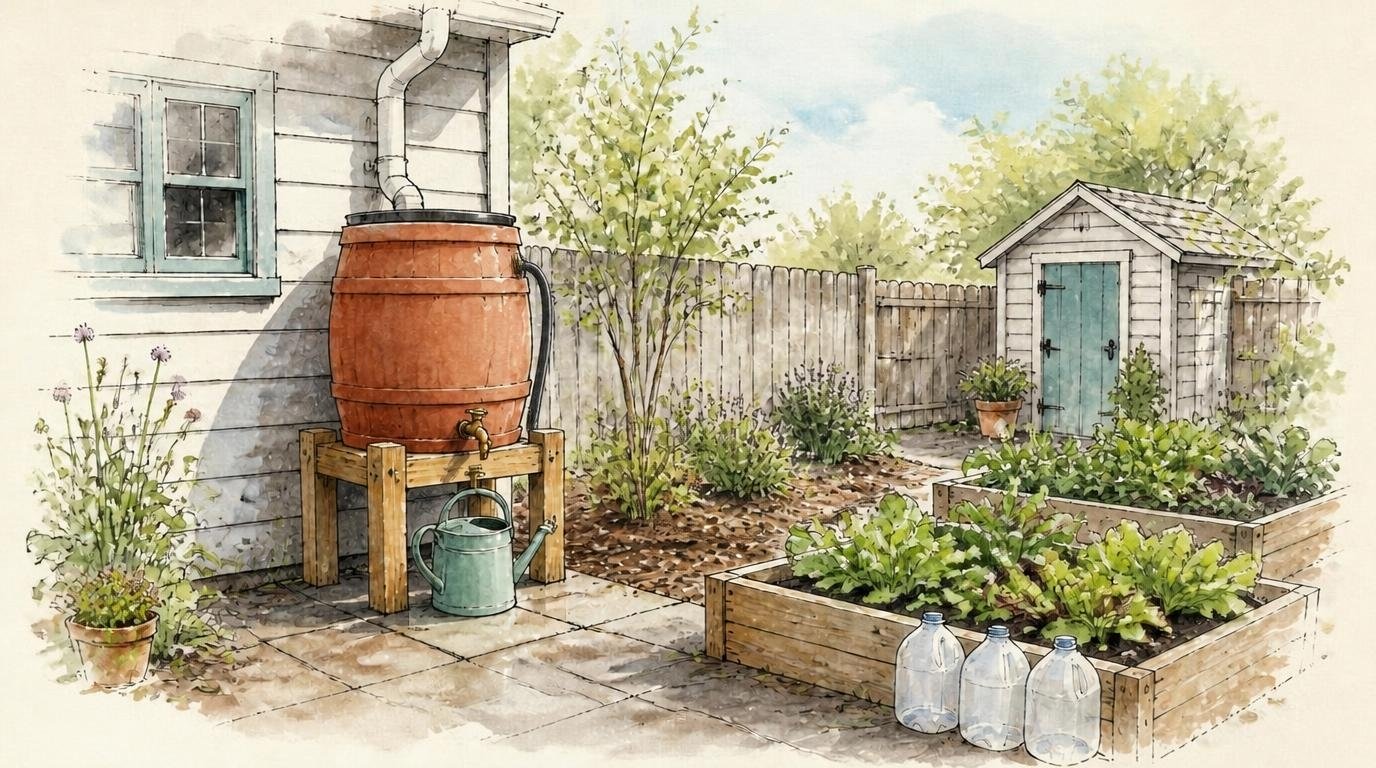 A simple water system grows one step at a time: a barrel, a stand, a way in, and a place for the extra to go.
Water collection was one of the first systems we set up when I started homesteading on a quarter acre inside the Baltimore Beltway. It started with plain rain barrels under the downspouts. Today we collect rain in 200-gallon tanks under the metal roof of a shed near the garden and animals.
The tanks didn't come first, and they didn't need to. Everything we use now grew out of lessons those first barrels taught us, including a few we learned the soggy way.
Water collection isn't an all-or-nothing project. This page is your map: start with the smallest system that works, then add pieces as your space, budget, and bandwidth allow. You don't have to read every page before you begin.
The smallest system that works
You don't need tanks, pumps, or a big budget to start. A complete beginner system has just five pieces:
- A rain barrel with a screened lid, a spigot, and an overflow port. Most hold 50 to 55 gallons.
- A sturdy, level stand that can hold a full barrel.
- A downspout connection, either cut short over the lid or with a diverter.
- An overflow route that sends extra water away from your house.
- A watering can or jugs to carry water to the garden.
That's it. Set it up once, and it collects water every time it rains. For a step-by-step walkthrough of choosing, placing, and setting up each piece, see How to Set Up a Rain Barrel.
Not ready for a barrel? Start even smaller. Set a few sturdy tubs or buckets out before a rain, or catch the cold water while your shower warms up. Use it on your plants within a few days, before mosquitoes find it. If you're renting or your rules are unclear, this is a great place to begin.
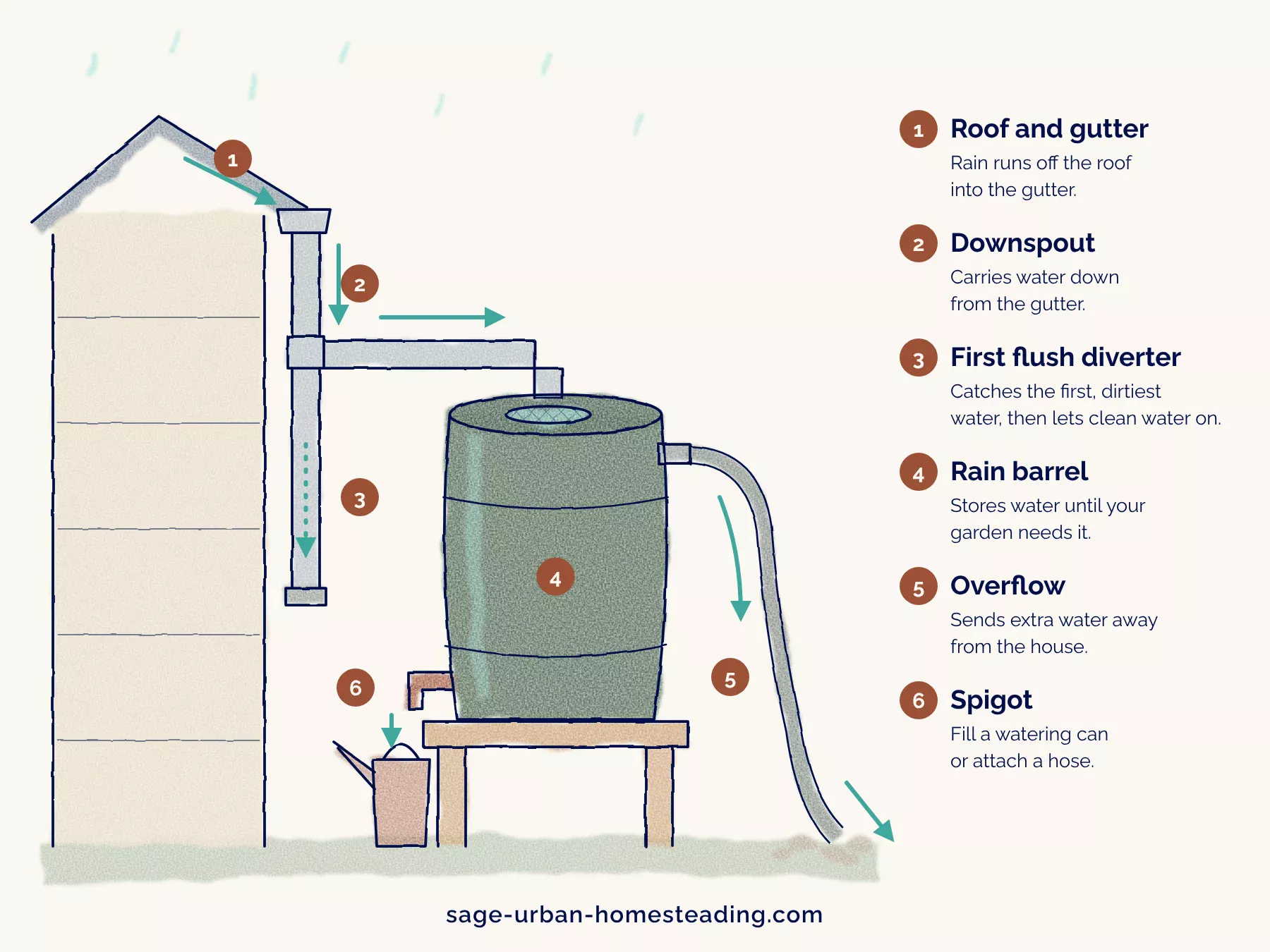
Setup and parts
These pages go deeper on each part of the system. Start with the basic version, and upgrade a piece when it solves a problem you actually have.
Rain barrel stand design
A full 55-gallon barrel weighs around 460 pounds, so the stand matters more than the barrel. A sturdy, level stand keeps it from tipping. It also lifts the spigot high enough for a watering can and adds a little water pressure. Compare simple stand designs and what each one can safely hold. See Rain Barrel Stand Design.
Downspout diverter options
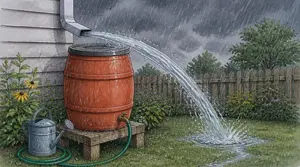
Our first barrels sat under open downspouts. In a heavy downpour, the water shot right past the barrel and into the yard. A diverter sends water into the barrel through a hose, and many send it back down the downspout once the barrel is full. If you see overshoot like ours, a diverter is a good first upgrade. To figure out which type fits your downspout, see Downspout Diverter Options.
First flush diverter basics
The first rain after a dry spell carries the most dirt, pollen, and debris off the roof. A first flush diverter catches that water before it reaches your barrel. We use one on our tanks now, and it needs regular cleaning to keep working. It's optional for a first barrel. See First Flush Diverter Basics.
Overflow routing
A full barrel has to send extra water somewhere, and next to your foundation is the worst place for it. A hose from the overflow port can carry water to a garden bed, a second barrel, or a drain. Near our house, a buried overflow hose runs to a gravel French drain. Plan the route before the first big storm. See Rain Barrel Overflow Routing.
Using the water
Collecting rain is only half the job. The other half is getting it to your plants without hauling heavy cans all summer.
Gravity drip irrigation
We filled old gallon milk jugs at the spigot and set them around the garden, then turned some into slow drippers for individual beds. Our yard slopes, and our gutters drained to the low end. The lower beds were easy to reach by hose, but we carried jugs up to the higher ones. If you can, set your barrel uphill from what it waters and let gravity do the work. See Gravity Drip Irrigation from Rain Barrels.
Rain barrel water is for the garden or rinsing tools and boots, not for drinking. Untreated rainwater picks up whatever debris and microscopic critters are on your roof and gutters.
Water Collection Maintenance
A rain barrel runs itself most of the year. It needs a few minutes of attention each season, and these three pages cover the problems beginners run into most.
Mosquito-proofing
Still water with an open top is an invitation for mosquitoes. A screened, sealed lid keeps them out, and so does fixing small gaps around the inlet and overflow. See Mosquito-Proof Rain Barrel.
Preventing algae
Algae needs sunlight and food. An opaque, dark barrel blocks the light, and a screen or first flush diverter keeps out most of the debris that feeds it. See Preventing Algae in Rain Barrels.
Winterizing
Ice can warp plastic and crack fittings, and you won't find the leaks until spring. Before freezing weather, empty the barrel, remove the spigot, and reconnect your downspout. See Winterizing Rain Barrels.
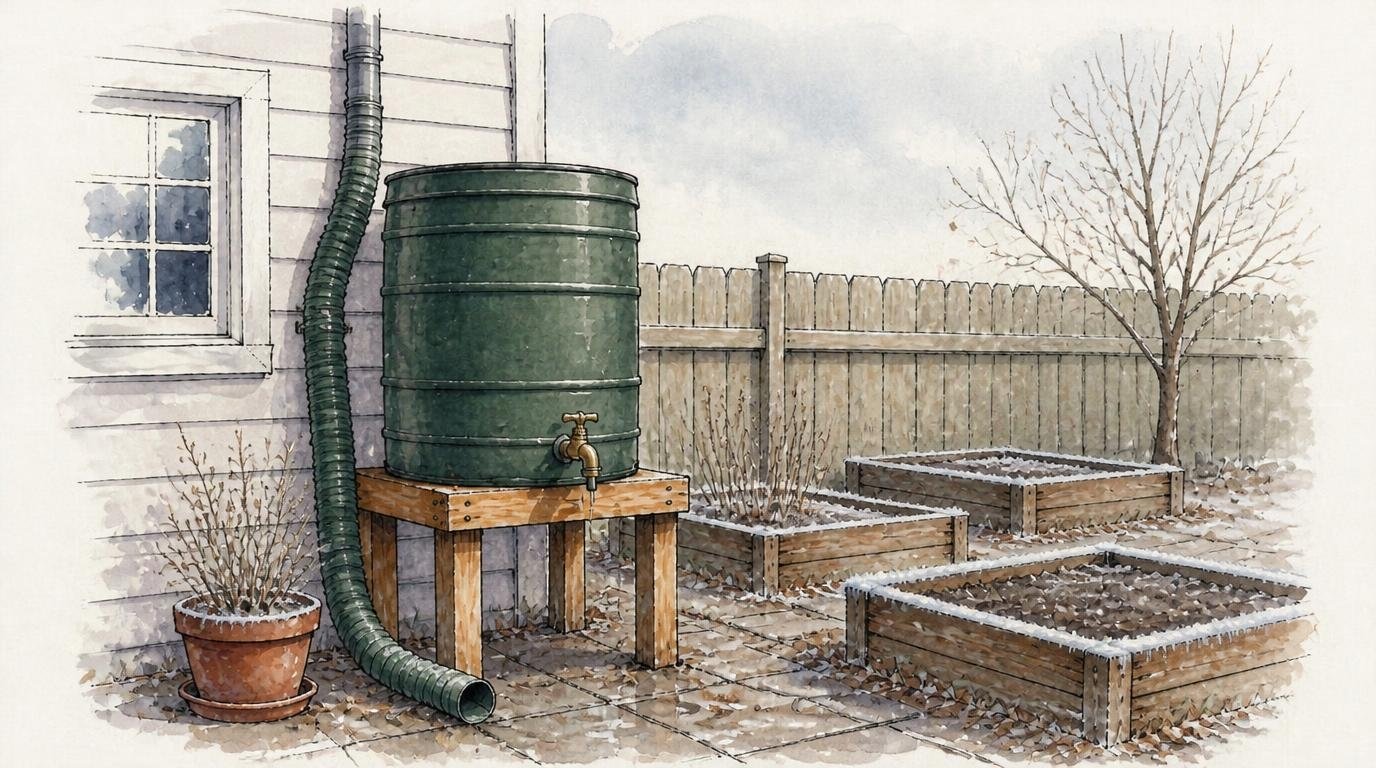 A few minutes of fall care keeps your barrel ready for spring rain.
Not sure water collection is the right place to start? My free 2-page guide, Which Urban Homestead System Should You Start First?, helps you pick the system that fits your space and your time.
Having trouble? Start here
If something already isn't working, find your problem below and jump straight to the fix.
- Water shoots past the barrel in a downpour. Downspout Diverter Options
- The barrel wobbles or leans. Rain Barrel Stand Design
- The spigot is too low for a watering can. Rain Barrel Stand Design
- Water pools by the house when the barrel is full. Rain Barrel Overflow Routing
- The water looks dirty or full of grit. First Flush Diverter Basics
- The water is turning green. Preventing Algae in Rain Barrels
- There are wigglers in the water. Mosquito-Proof Rain Barrel
- Carrying water to the garden is wearing you out. Gravity Drip Irrigation from Rain Barrels
- Freezing weather is on the way. Winterizing Rain Barrels

Amy DeVries helps beginner urban homesteaders learn by doing. A lifelong gardener, she has grown food in spaces that expanded to 16 raised beds, patio containers, dwarf fruit and nut trees, and gravity-fed rainwater systems. She shares practical lessons shaped by real experience. Amy homeschools her children and teaches the same hands-on skills that guide her work.
You might like these
Rain Barrels: A Beginner's Guide
How to choose, place, and set up your first rain barrel, with real lessons from our own rain barrels and links to every next step.
Rain Barrel Stand Designs for Real Yards and Setups
Choose the best rain barrel stand designs for your yard, barrel, and skill level, with practical guidance on height, base prep, materials, and safety.
Downspout Diverter Options: What Happens When It Overflows
Compare downspout diverter options by what they do when your rain barrel fills up, and what each setup can realistically water.

More Information
Disclosure
All information found on this website is editorial in nature and intended to motivate and inspire rather than be used as medical advice or legal advice.
As an Amazon Associate, I earn from qualifying purchases. I also use Google Ads and cookies as described in the Privacy Policy.
Thank you for your support!
By Amy DeVries, Copyright © 2011-2026 Sage-Urban-Homesteading.com All rights reserved.
