FYI: This website contains affiliate links. As an Amazon Associate I earn from qualifying purchases.
- Home
- Water Collection
- Mosquito-Proof
Mosquito Proof Rain Barrel: Simple Fixes That Keep Wigglers Out
By Amy DeVries
Short answer: To create a mosquito proof rain barrel, cover every opening with fine 1/16-inch mesh screen, including the inlet, the overflow port, and any gaps, and keep the lid sealed. Check the screens every week or two, and use the water often. If you already see wigglers, add a Bti mosquito dunk or empty the barrel onto the garden where it can soak in. Open buckets and tubs need emptying within a few days.
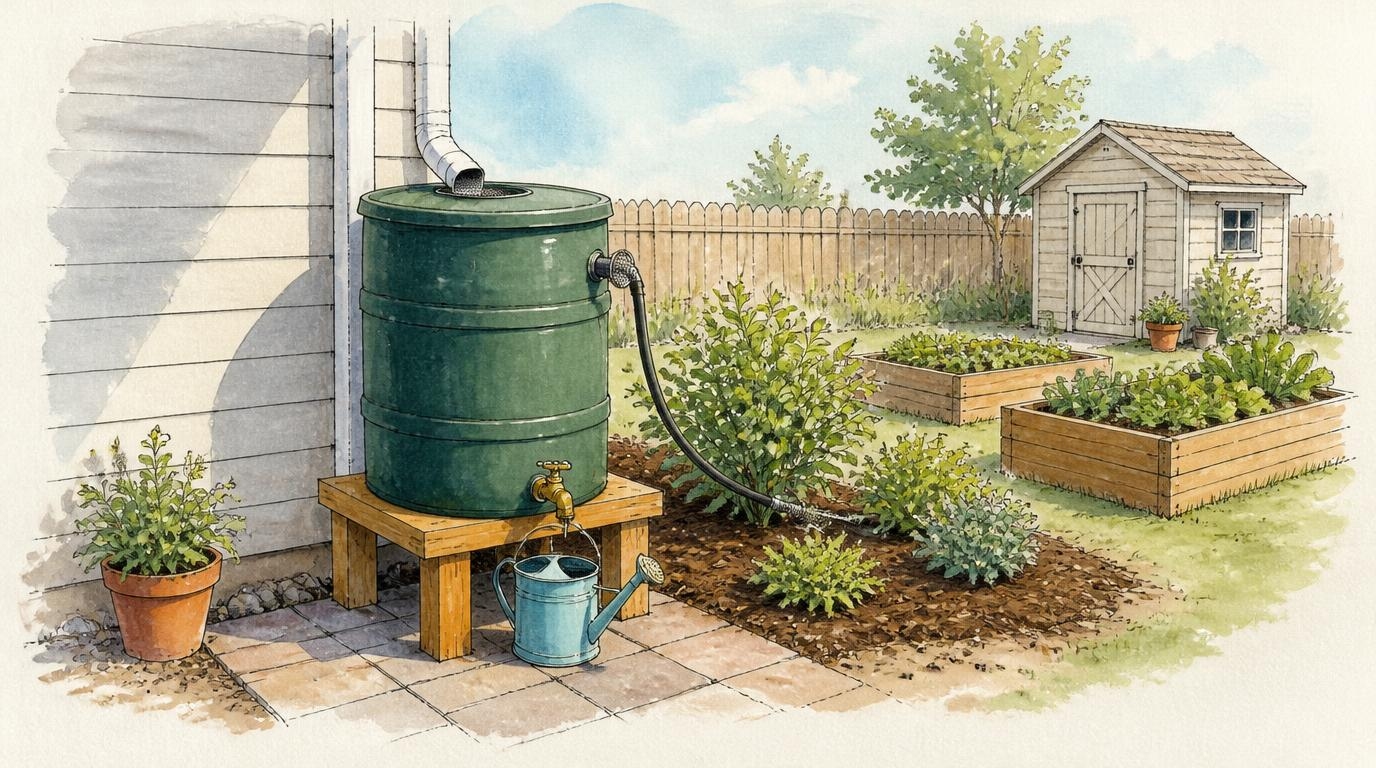 A sealed lid and a fine screen on every opening is most of what keeps mosquitoes out of a rain barrel.
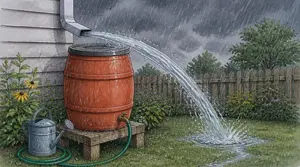
Our first rain barrels sat under open downspouts with a screen on top. The screen did its job most of the time. But I learned pretty quickly that any water left sitting outside gets visitors.
Our honeybees liked to visit and use any drips. They drank from the little puddles that collected in the folds of tarps, too. If the bees could find those spots, so could mosquitoes.
If you've spotted wigglers in your barrel, you haven't failed at this. It happens to almost everyone, and the fix is small. A fine screen, a snug lid, and a habit of using the water will handle most of it. Start with that, and add more only if you still see a problem.
Why rain barrels attract mosquitoes
To a mosquito, a rain barrel is close to perfect. The water is still, shaded, and a little dark, and the bits of leaf and pollen that wash off the roof feed the larvae.
A female only needs a small gap to get in. She lays a raft of 100 to 300 eggs right on the water's surface. Most hatch within two days, and in warm weather they can go from egg to flying adult in about 7 to 10 days.
That means two things:
- Wigglers can show up within a few days of a single mosquito slipping in.
- You have about a week to catch them before they fly off and start the cycle again.
The good news is that the fix doesn't need to be clever. If mosquitoes can't reach the water, they can't lay eggs in it.
Start with the simple fixes for a mosquito proof rain barrel
Most barrels only need two things: a fine screen over every opening and a lid that stays sealed. Do these first. They work all season without you having to remember anything.
A fine screen over every opening
It's easy to screen the big opening on top and miss the small ones. Mosquitoes will find any gap you miss. For a mosquito proof rain barrel, walk around it and check each of these:
- The inlet. This is where water comes in, whether it's an open downspout over the lid or a diverter hose. Screen it right where the water enters.
- The overflow port. It's open to the air on the outside end, so it needs a screen too. A small piece of mesh held on with a hose clamp works.
- Linking ports or extra holes. If your barrel has a second port you aren't using, cap it or screen it.
- Gaps around the lid and fittings. Look for a warped lid edge, a loose seam, or a hairline gap around a fitting. Seal small gaps with outdoor-rated silicone.
What mesh to use: Look for 1/16-inch mesh or finer, sometimes sold as no-see-um screen. Some older or bargain screens have larger holes than that, so check before you trust one. You can find a fine mesh no-see-um screen roll on Amazon (affiliate link). One roll will cover several barrels. Skip it if your barrel came with fine mesh already fitted over every opening and the screens are still in good shape.
To hold patches of screen in place, small stainless steel hose clamps grip well and don't rust (Amazon affiliate link). Skip them if you're screening only one or two openings; a sturdy outdoor zip tie can do the job.
Using a diverter? A closed diverter that feeds the barrel through a hose leaves fewer open spots than an open downspout over the lid. You'll still want a screen where the hose enters and on the overflow. See Downspout Diverter Options.
A sealed lid
A lid that fits snugly keeps mosquitoes out, and it keeps curious kids and pets out too. Make sure it sits flat all the way around, and that any screened opening in it is the only way in.
If your lid has warped or cracked in the sun, replace it rather than patching it every season. Many barrel makers sell replacement lids.
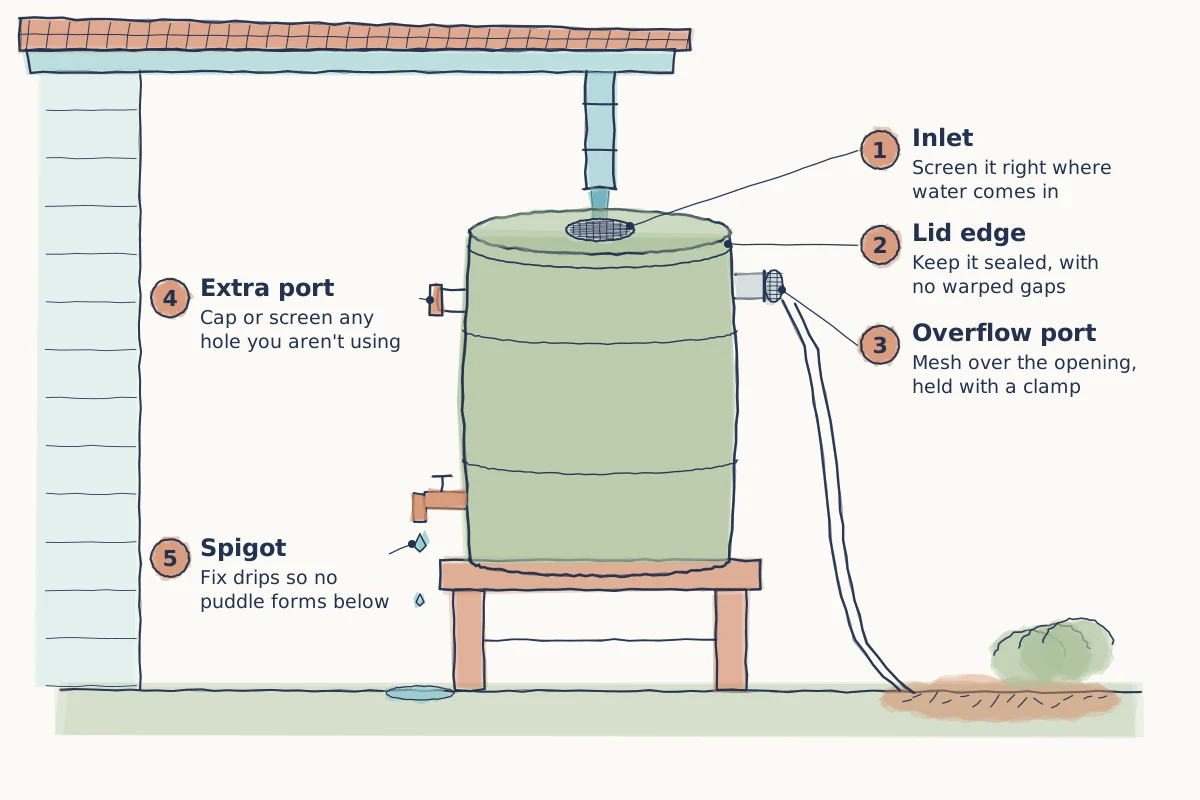 Mosquitoes only need one gap. Check the inlet, the lid edge, the overflow port, and any extra holes, and fix spigot drips so no puddle forms underneath.
Checking and cleaning your screens
Screens only work if they stay clear and whole. A quick look every week or two during mosquito season is enough, plus a check after big storms.
- Brush off leaves and debris. A clogged screen slows water down and can make the barrel spill over the top.
- Look for tears and loose edges. A screen that has pulled away at one corner is an open door.
- Rinse the screen with a hose if it's coated in pollen or grit.
- Replace any screen that's torn or brittle. Sun breaks some mesh down over time.
Debris that sits on the screen also feeds algae once it washes in. Keeping screens clean helps with both problems. See Preventing Algae in Rain Barrels.
If your screens clog every time it rains, a first flush diverter can catch the dirtiest water before it reaches the barrel. It's an optional upgrade, not a first step. See First Flush Diverter Basics.
If you already see wigglers
Wigglers are mosquito larvae. They're thin, about a quarter inch long, and they twitch up and down in the water, then hang just under the surface. Tumblers are the next stage. They look like tiny commas and roll away when you disturb them.
If you see either one, you have about a week, so don't panic. Pick one of these, then go back and find the gap that let them in.
Option 1: Empty the barrel onto the garden
This is the fastest fix, and it costs nothing. Drain the barrel through the spigot or a hose onto a garden bed or lawn where the water can soak in within a day. Larvae can't survive once the water soaks into the soil.
- Pick a spot that drains well. Don't empty it onto a low spot that stays puddled, or you've just moved the problem.
- Keep it on your side of the property line, away from your foundation and walkways.
- Fix the gap before it rains again, so the barrel refills clean.
Option 2: Add a Bti mosquito dunk
Bti is a natural bacteria that kills mosquito larvae. The EPA considers it safe for people, pets, birds, honeybees, and food crops, so you can still water the garden with the barrel water. Follow the package directions; a small barrel often needs only part of a dunk. Each one lasts about a month.
We used mosquito dunks for a while, and they worked. The hard part was remembering to check on them. A month goes by fast, and a used-up dunk looks a lot like a working one. If you use them, put a monthly reminder on your phone, or tie it to something you already do, like the first of the month.
You can buy Bti mosquito dunks on Amazon (affiliate link). These are worth keeping on hand as a backup. Skip them if your screens are tight and you use the water every week. A dunk doesn't replace a screen, and it's one more thing to remember.
I'd skip the oil or soap tricks you may see online. A film on the water can harm the bees and birds that stop to drink, and you don't want either one on your plants.
Not sure if water collection is the right first step for you? My free 2-page guide, Which Urban Homestead System Should You Start First?, helps you pick the system that fits your space and your time.
Use the water often
The less time water sits, the less time larvae have to grow. If you water the garden from your barrel at least once a week in summer, you're also breaking the mosquito cycle.
A barrel that gets drawn down and refilled every week or so stays fresher, too. That's one more reason to set up the mosquito proof rain barrel close to what it waters, so using it is easy. See How to Set Up a Rain Barrel.
If your barrel is always full and you rarely use it, it's still doing a job, as long as the overflow carries extra water somewhere it can soak in. See Rain Barrel Overflow Routing.
Open buckets, tubs, and hidden puddles
If you collect rain in open buckets, tubs, or watering cans, they don't have a screen to protect them. Use the water or empty it within a few days. Eggs hatch in about two days, so a few days is your safe window.
It's also worth a walk around the yard for standing water you've stopped noticing. We always had a lot of mosquitoes around our side patio. We didn't realize a large puddle formed under there regularly until we redid the decking. It was likely where many of them were coming from, right under our feet.
Places to check:
- Under decks, steps, and patios, especially after a rain.
- Tarps and covers, where water sits in the folds. That's where our bees found theirs.
- Under the spigot, if it drips. Tighten or replace a leaky spigot so no puddle forms.
- Plant saucers, wheelbarrows, buckets, and toys left out in the rain.
- Where your overflow ends. If water pools there for days, the outlet needs a better spot. See Rain Barrel Overflow Routing.
You don't have to find every puddle in one afternoon. Fix the mosquito proof rain barrel first, then knock out one hidden spot at a time.
Ready to plan more than one system? The Small-Space Self-Sufficiency Starter Map helps you choose your first 3 homestead systems and decide what to start now, what to start next, and what to save for later, with a 30-day action map.
Mosquito-proofing checklist
Here's everything on this page in one place. Work through it once at the start of the season, then come back to the weekly part.
Seal every opening
- Screen the inlet right where water comes in.
- Screen the overflow port with mesh and a clamp.
- Cap or screen any linking port or extra hole you aren't using.
- Make sure the lid sits flat and snug, with no warped edges.
- Seal small gaps around fittings with outdoor-rated silicone.
- Fix a dripping spigot so no puddle forms underneath.
Screen specs
- Use 1/16-inch mesh or finer, sometimes sold as no-see-um screen.
- Hold it tight with stainless steel hose clamps or sturdy outdoor zip ties.
- Check screens every week or two in mosquito season, and after big storms.
- Replace any screen that's torn, brittle, or pulling loose.
If you see wigglers (pick one)
- Empty the barrel onto a garden bed or lawn that soaks it up within a day, then fix the gap.
- Or add a Bti mosquito dunk, following the label for small containers, and replace it about once a month.
- Skip oil and soap tricks.
Every week
- Use the water on your garden.
- Empty open buckets and tubs within a few days.
- Glance around the yard for hidden puddles.

Amy DeVries helps beginner urban homesteaders learn by doing. A lifelong gardener, she has grown food in spaces that expanded to 16 raised beds, patio containers, dwarf fruit and nut trees, and gravity-fed rainwater systems. She shares practical lessons shaped by real experience. Amy homeschools her children and teaches the same hands-on skills that guide her work.
You might like these
Rain Barrels: A Beginner's Guide
How to choose, place, and set up your first rain barrel, with real lessons from our own rain barrels and links to every next step.
Rain Barrel Stand Designs for Real Yards and Setups
Choose the best rain barrel stand designs for your yard, barrel, and skill level, with practical guidance on height, base prep, materials, and safety.
Downspout Diverter Options: What Happens When It Overflows
Compare downspout diverter options by what they do when your rain barrel fills up, and what each setup can realistically water.

More Information
Disclosure
All information found on this website is editorial in nature and intended to motivate and inspire rather than be used as medical advice or legal advice.
As an Amazon Associate, I earn from qualifying purchases. I also use Google Ads and cookies as described in the Privacy Policy.
Thank you for your support!
By Amy DeVries, Copyright © 2011-2026 Sage-Urban-Homesteading.com All rights reserved.
