FYI: This website contains affiliate links. As an Amazon Associate I earn from qualifying purchases.
- Home
- Home Efficiency
- Line Drying Indoors
Line Drying Clothes Indoors: Our Year-Round Drying Rack Routine
By Amy DeVries
Short answer: Line drying clothes indoors works all year if the rack gets sun or moving air. Set a folding drying rack near a sunny window, spread the clothes out so air can reach them, and give them a day or two. Keep the rack well away from a woodstove or space heater. At our house, everything dries this way except our sheets and towels.
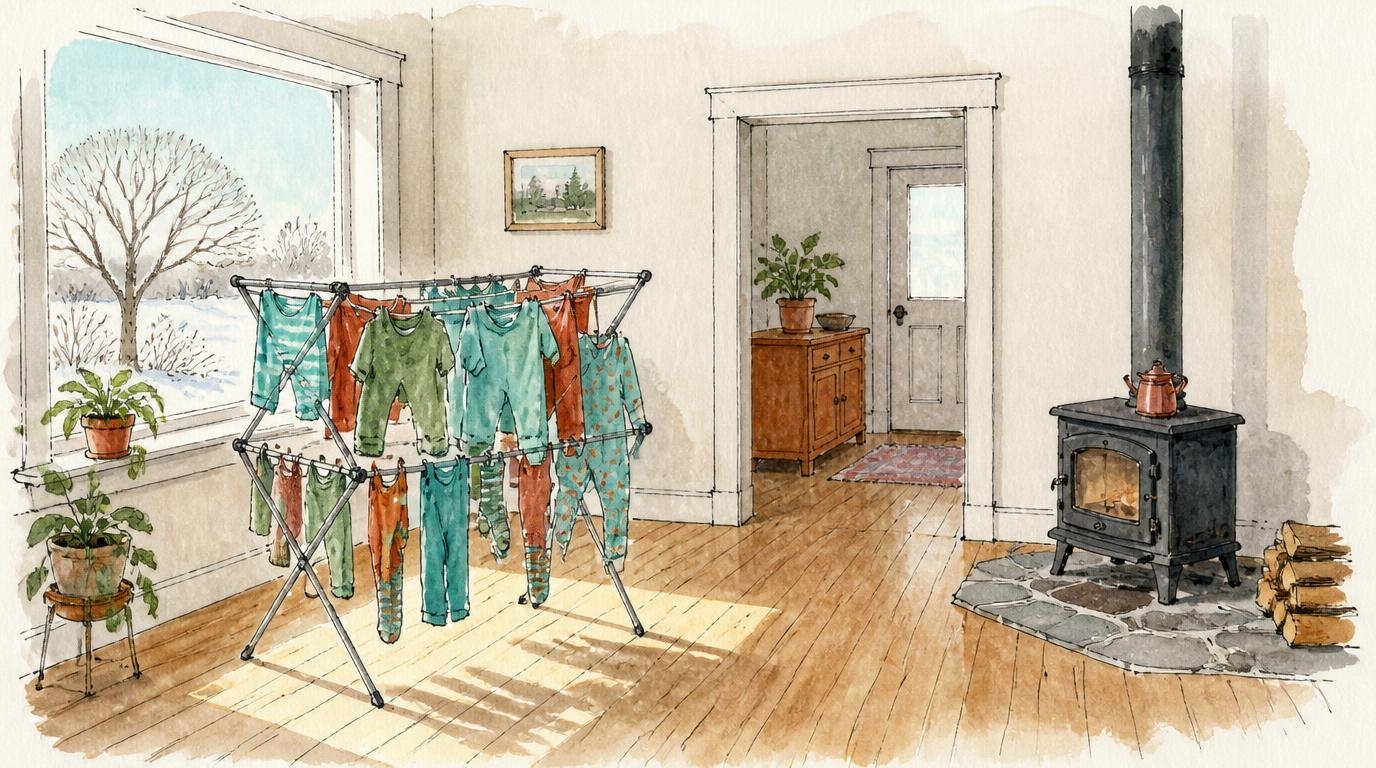
We've line dried in two houses: the 1960s house we owned on a quarter acre inside the Baltimore Beltway, and the 1920s house we rent now, with enough land for roosters (they're worth it). At the first house, we had a clothesline outside. At this one, everything dries inside.
We really got into drying racks when we were washing cloth diapers every day. The diapers are long gone, but the racks stayed. Now I wash in cold water, hang almost every load on a rack, and the dryer runs for one load of sheets and towels.
You don't need a yard, a clothesline, or a laundry room for this. You need a spot with some sun or moving air, and something to hang clothes on. Small counts here, even one load a week.
Why we dry indoors instead of outside
At the Beltway house, we had an outdoor clothesline that spins like an umbrella. It only worked at certain times of year. Because of allergies, I didn't want our pajamas or bedding hanging outside, either.
The part that wore me down was the rain. I'd spend time pinning up a whole load, then rush back out to pull it all down when an unexpected shower rolled in. We also tried a retractable line in the basement. It sagged too much, and the basement was too damp for anything to dry well.
Inside, none of that applies. There's no weather to watch. And hanging clothes on a rack is quicker than a clothesline, because you drape things over the bars and skip the clothespins.
Our setup: Three racks that never get folded
We have three folding drying racks:
- One big rack. Most of the time, a whole load fits on it. It stands near a sunny window in the room with our woodstove, so it works there summer and winter.
- One sturdy rack. When a load won't fit on the big one, the extra goes here.
- One tall, narrow rack. It was great for cloth diapers. That model isn't sold anymore.
The two smaller racks live upstairs near sunny windows. All three fold up, but honestly, we use them so much that they're up all the time. They're furniture at this point.
We do laundry about every other day, so there's almost always something on a rack. That's the system: wash, hang, and take things down whenever they're dry.
I sort the clothes by who they belong to as I hang them, too. It makes it even easier to put them away.
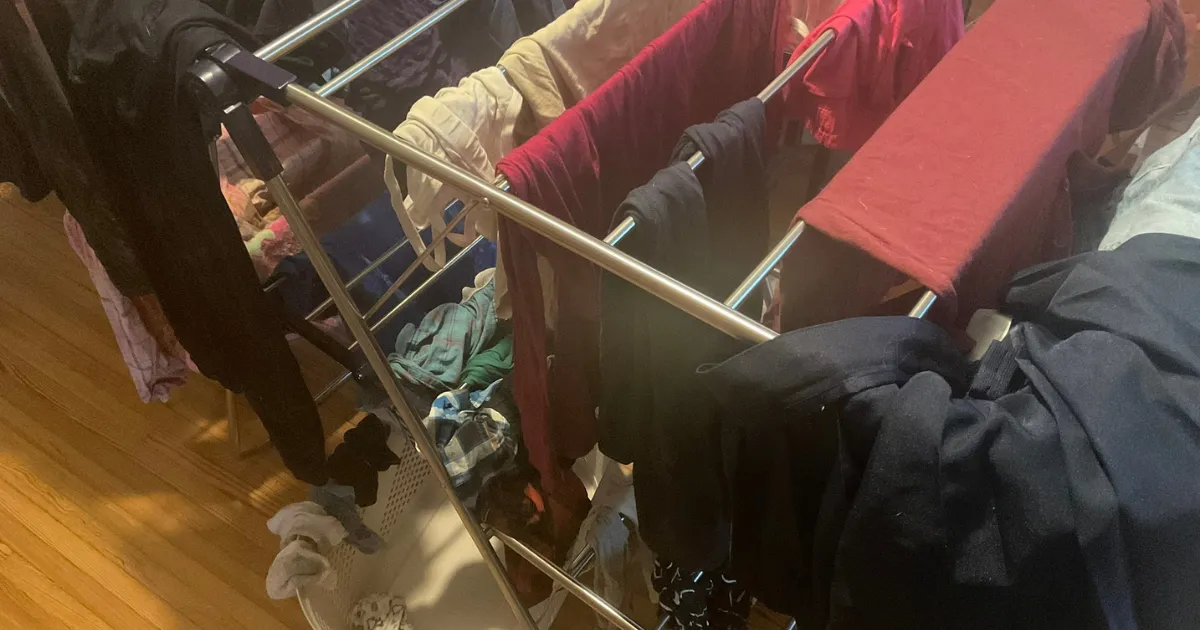 Our big rack holds most of a load. It hasn't been folded up in a long time.
Where to put a drying rack
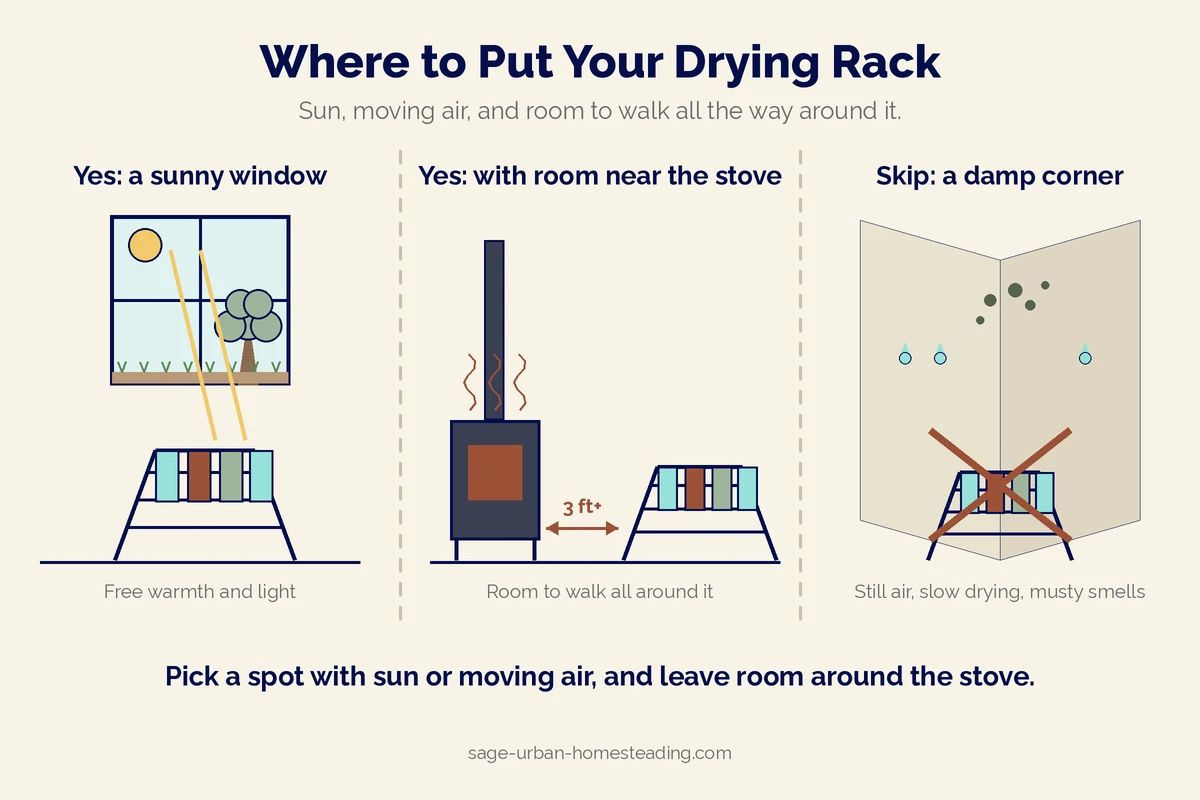
The spot matters more than the rack. Look for three things:
- Sun. A sunny window adds free warmth and light. All three of our racks stand near one.
- Moving air. Air that moves carries moisture away from the clothes. Our heating and cooling system's fan does this for us.
- Space around it. You should be able to walk all the way around the rack, especially near a heat source.
Skip closed-up, damp spots, like a basement corner. That's where our retractable line failed at the Beltway house.
Drying near a woodstove
Our big rack is in the same room as the woodstove, and clothes dry faster when the stove is going. It stands far enough away that we can walk all the way around the rack while the stove is hot. Carroll County's wood stove safety sheet says to keep anything that can burn at least 3 feet from the stove. Wet laundry counts, and it won't stay wet for long.
Never drape clothes on the stove, the stovepipe, or a space heater. If you have a woodstove or any fuel-burning appliance, my renter page covers the other safety basics we follow. See Draft Fixes for Renters.
How long does it take for clothes to dry inside?
At our house, a load takes one to three days. It's faster when the woodstove is going. In summer, clothes dry faster than I expected, thanks to the sunny window and the air conditioning keeping the air moving.
That's slower than a dryer, and it's fine. If you need something tomorrow, wash it today. A few things help it along:
- Spread things out. Clothes touching each other dry slower. If the rack is crowded, start a second rack or wait to hang the rest.
- Hang thick things where the air moves most. Jeans and sweatshirts take longest, so give them the outer bars or the sunniest side.
- Turn heavy items once. Flipping jeans or a sweatshirt partway through helps the side that was facing in.
Does drying clothes indoors cause mold?
It can add to damp if the moisture has nowhere to go. Every wet load gives off water as it dries. The U.S. Environmental Protection Agency says high indoor humidity can cause mold to grow, even on clothing and furniture, and recommends keeping indoor humidity below 60%, ideally between 30% and 50%. It also notes that condensation on windows can be a sign of high humidity.
We haven't had any dampness or condensation from drying clothes inside. Our forced-air system's fan circulates the air every so often, even when the heat and air conditioning aren't running, and that keeps things moving. See Should You Turn the Heat Down at Night?
If you notice condensation on your windows, a musty smell, or clothes that stay damp for days, try these before buying anything:
- Move the rack to a sunnier or airier room.
- Run a fan near it, or set your system's fan to circulate.
- On a day that isn't humid outside, open a window for a while.
- Hang fewer things at a time.
The Beltway house was a different story. Its basement was damp enough that we ran a dehumidifier down there. My husband emptied it and used the water on the trees in our yard.
When the air is too dry, wet laundry helps
In winter, our woodstove makes the house so dry that it isn't good for our piano. The wet laundry actually helps.
One year, we tried ultrasonic humidifiers, and we all ended up coughing. We switched to an evaporative humidifier and added an aquarium tank, and the laundry does the rest. The EPA notes that ultrasonic and "cool mist" humidifiers can spread minerals and microorganisms from their tanks into the air, while evaporative humidifiers generally spread less, if any.
What still goes in the dryer
One load: sheets and towels, washed and dried together. Line-dried towels come out too stiff and scratchy for us. Everything else, including our pajamas, dries on a rack.
You don't have to give up the dryer to make a difference. ENERGY STAR says dryers typically use over 900 kilowatt-hours a year, about twice what a typical refrigerator uses. Every load you hang instead is one less run.
Our dryer here is electric, and our dryer at the Beltway house was gas. Either way, the dryer that runs less costs less to run. I won't promise you a number, because it depends on your dryer, your rates, and how many loads you hang.
Should you buy a drying rack?
Not right away. For your first week or two, hang clothes over what you already have: chair backs, the shower rod, hangers on a door frame. If you find yourself doing it most weeks, and things keep landing in a damp pile, that's when a rack solves a real problem.
When you do buy one, a folding rack is the most flexible. You can move it to the sunniest spot each season, and fold it if you need the floor back. Pick one big enough for most of a load, so you're not juggling three racks.
You can buy the large folding drying rack we use the most on Amazon (affiliate link). Skip it if you're still testing whether line drying fits your week, or if you don't have floor space near a sunny window. Measure the spot first. A big rack takes up more room than it looks like online.
You can also find the other sturdy folding drying rack we use for overflow on Amazon (affiliate link). Skip it until one rack is regularly overflowing. Most weeks, our big rack is enough on its own.
What to try next
Once hanging laundry feels automatic, pick the next small step that fits your house.
- You want a free habit that helps with heating and cooling too. See Should You Close Blinds?
- You'd like to know what your thermostat fan setting is doing. See Should You Turn the Heat Down at Night?
- A room still feels chilly, even with the stove or heat on. See How to Find Drafts.
- You rent and want removable fixes. See Draft Fixes for Renters.
A drying rack is one small system. If you're wondering what your next one should be, whether it's home comfort, water, or food, my free 2-page guide helps you pick one place to start. It's called Which Urban Homestead System Should You Start First?, and it's built for small spaces and busy lives.
Line drying clothes indoors FAQ
Do I need clothespins?
Do I need clothespins?
Not for a drying rack. Drape shirts and pants over the bars, and lay socks and underwear across the rungs. Clothespins only come out for a line, especially if it's windy outside.
Can I line dry if I rent?
Can I line dry if I rent?
Yes. A folding rack doesn't attach to anything, so there's nothing to ask permission for. If you want to mount a line or a wall rack, check your lease and ask first.
Why do my clothes smell musty after drying inside?
Why do my clothes smell musty after drying inside?
Usually, they dried too slowly. Try a sunnier spot, more air movement, or fewer things on the rack at once. If a load stays damp for several days, it's crowded or the room is too damp.
What about sheets and blankets?
What about sheets and blankets?
Big, heavy things take the most room and the longest time. That's why our sheets go in the dryer with the towels. If you want to hang them, drape them over two racks or a couple of chair backs so air reaches both sides.
Your line drying checklist
- Pick a spot with sun or moving air, not a damp corner.
- Try chair backs or a shower rod for a week or two before buying a rack.
- Spread clothes out so air can reach them.
- Keep the rack at least 3 feet from a woodstove, and never hang clothes on a heater.
- Watch for condensation or musty smells, and move the rack if they show up.
- Choose your dryer loads on purpose, like our sheets and towels.
Want help deciding which small system to set up next, for the space you actually have? My Small-Space Self-Sufficiency Starter Map ($12) lays out your next steps.

Amy DeVries helps beginner urban homesteaders learn by doing. A lifelong gardener, she has grown food in spaces that expanded to 16 raised beds, patio containers, dwarf fruit and nut trees, and gravity-fed rainwater systems. She shares practical lessons shaped by real experience. Amy homeschools her children and teaches the same hands-on skills that guide her work.
You might like these
How to Make Window Quilts
Learn how to make homemade window quilts the quick and easy way for more window insulation and the health benefits of sleeping in the dark.
Home Efficiency for Beginners: Start Small, Stay Warm
Home efficiency for beginners: small habits and removable fixes that make your home warmer and cheaper to run, even if you rent.
Draft Fixes for Renters: How to Stop Drafts in a Rental
Easy draft fixes for rentersl, sorted by how removable each fix is: no-trace fixes, small-hole fixes, and what to ask your landlord about first.




More Information
Disclosure
All information found on this website is editorial in nature and intended to motivate and inspire rather than be used as medical advice or legal advice.
As an Amazon Associate, I earn from qualifying purchases. I also use Google Ads and cookies as described in the Privacy Policy.
Thank you for your support!
By Amy DeVries, Copyright © 2011-2026 Sage-Urban-Homesteading.com All rights reserved.
