FYI: This website contains affiliate links. As an Amazon Associate I earn from qualifying purchases.
- Home
- Home Efficiency
- Draft Fixes for Renters
Draft Fixes for Renters: How to Stop Drafts in a Rental
By Amy DeVries
Short answer: For easy draft fixes for renters, start with fixes that leave no trace, like a draft stopper on a door you rarely use or a curtain over cold glass. Next come fixes that leave small holes or light marks, like cardboard stapled over a drafty door. For anything you'd screw in, spray, or caulk for good, ask your landlord first.
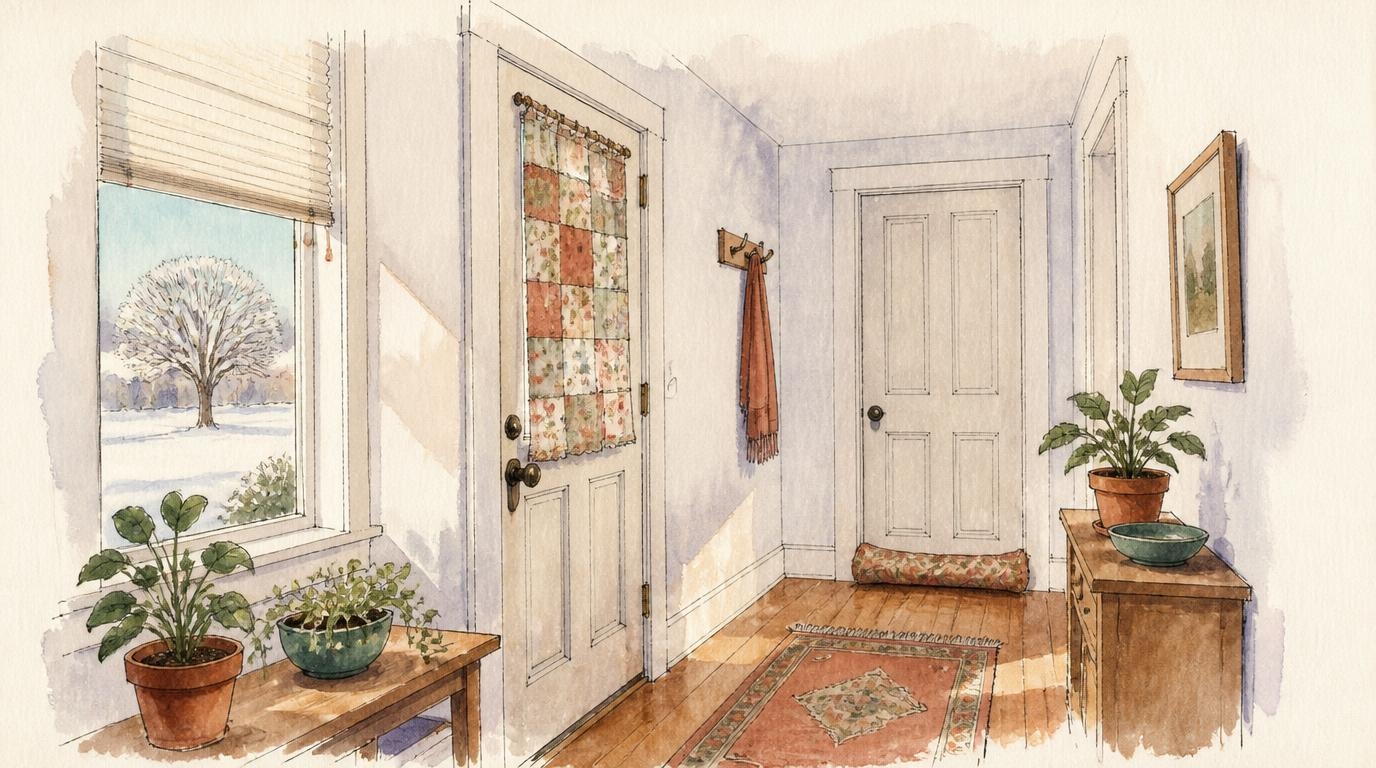 You don't need to own the house to make it less drafty. Start with fixes you can take with you.
We used to own a 1960s house on a quarter acre inside the Baltimore Beltway. We sold it and now rent a 1920s house with enough land for roosters (they're worth it). So I've gone from the owner who could fix whatever bugged her to the renter who has to ask before changing much.
Our worst draft at this house comes up through a door to the basement. Our fix is a piece of cardboard and a handful of staples. It isn't pretty, but it's exactly the kind of fix a renter can make: cheap, small, and easy to undo.
This page sorts draft fixes by how removable they are, so you can tell what's safe to try tonight and what needs a conversation first. If you're stuck in a place that isn't yours, inside the Beltway or anywhere else, small fixes still count.
Start with the draft you can feel
You don't have to seal the whole house. Pick the one draft that bothers you most, usually the one you notice from your favorite chair or from bed. If you're not sure where the cold air is getting in, the damp hand test is free and takes a few minutes. See Finding Drafts and Cold Spots.
It helps to know what these fixes can and can't do. The Maryland Energy Administration says blocking drafts around doors and windows won't save much energy by itself, but it does make a house feel a lot more comfortable, which can mean you don't reach for the thermostat as often. That's the goal here: a warmer room first, with any savings as a bonus.
Sort fixes by how removable they are
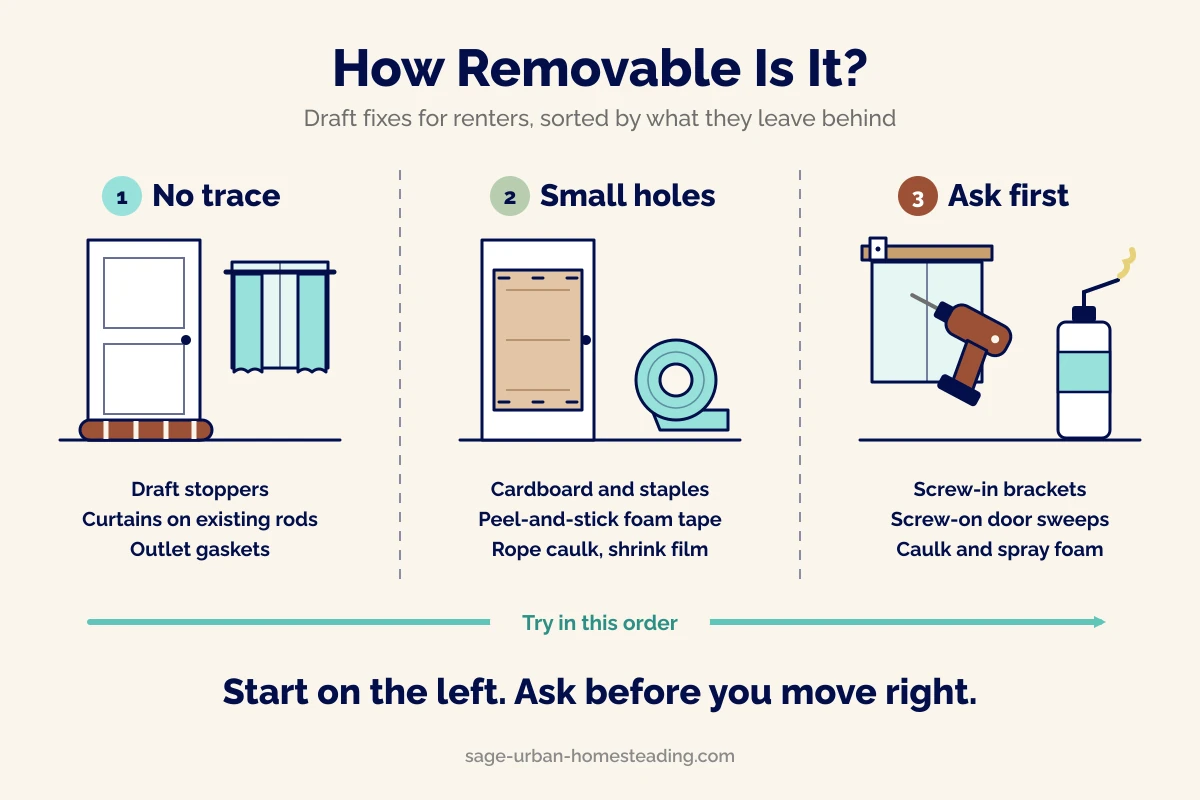
Every fix on this page fits into one of three groups. Start with the first group, and only move to the next one if you still feel the draft.
No trace: try these tonight
- A rolled towel or fabric draft stopper along the bottom of a door you rarely open
- Curtains or quilts over cold glass, hung on rods that are already there or on a tension rod
- Nano tape to hold up a lightweight curtain on door glass
- Moving your favorite chair away from the drafty window
- Foam gaskets behind outlet and switch plates on outside walls. They go on with the plate's own screws. Turn off the power at the breaker first, or ask maintenance if you'd rather not.
- Something heavy against a door that won't stay latched (our vacuum has a second job)
Small holes or light marks: usually fine, but check your lease
- Cardboard stapled over a drafty interior door
- Peel-and-stick foam weatherstripping, which can pull paint if it stays up too long
- Shrink film window kits, whose tape can lift paint
- Rope caulk, a soft putty you press into gaps and peel off in spring
- Replacement bottom strips on storm doors
Ask first: Anything that changes the house
- Screwing in brackets for shades or curtain rods
- Screw-on door sweeps
- Caulk, spray foam, or anything meant to stay for good
- Repairs, like a door latch that doesn't catch or a cracked window. Report those instead of fixing them yourself. It's the landlord's house.
Doors you rarely use: A rolled towel works
Growing up at my parents' house, we tried rolled-up towels and a long decorative dog along the bottoms of drafty doors. They work fine on a door that stays shut most of the winter.
On a door you use every day, they're a pain. The towel slides out of place, gets in the way, and once you've walked through, you can't put it back from the other side. If that sounds familiar, the problem isn't you. It's the wrong fix for that door.
For a door you use often, the fix needs to move with the door. One option is a slide-on twin draft stopper, which tucks under the door with a foam tube on each side, so it travels with the door when you open it.
You can buy a slide-on twin door draft stopper on Amazon (affiliate link). Skip it if a rolled towel already works on a door you rarely open, or if you have thick carpet or a raised threshold, since it can drag. Measure your door's width and the gap underneath before buying.
Doors you use every day
Interior doors to cold spaces
Our worst draft is the door to the uninsulated part of the basement. We go through it several times a day, all year, so a towel on the floor was never going to last. Instead, we stapled a piece of cardboard to the door itself. It moves with the door, it cost nothing (other than staples), and if we ever take it down, we'll be left with a few staple holes.
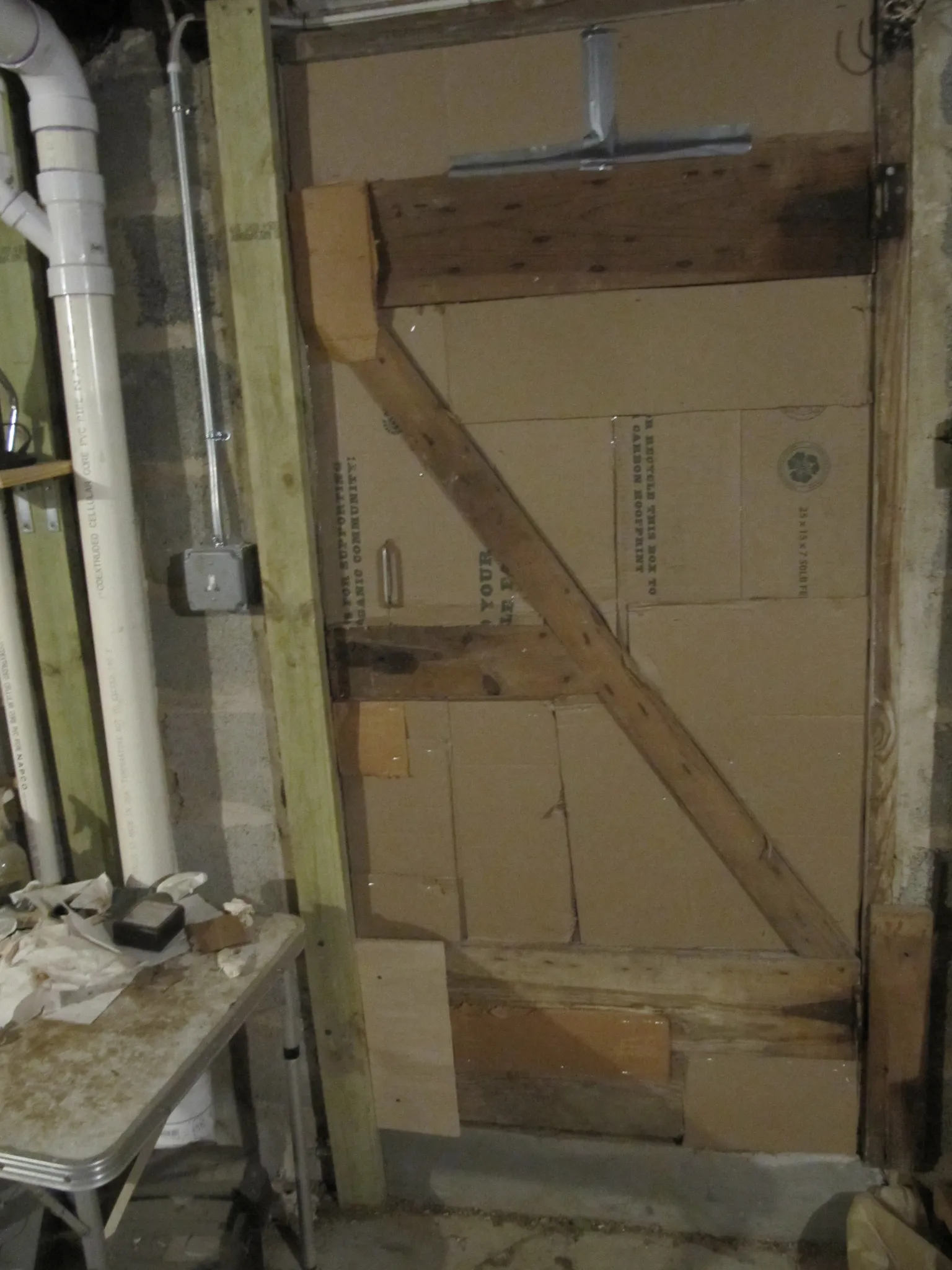 Not pretty, but it works: Cardboard on the basement door we use every day.
Our attic has a full door and stairway, and that door doesn't latch properly. When someone opens a door somewhere else in the house, the change in air pressure pops it open. For now, the vacuum lives against it. A latch that won't catch is a repair, though, so that's one to mention to your landlord rather than live with forever.
At our old Beltway house, the pros who worked on our attic sealed the attic hatch with a well-insulated zippered cover. That was part of a bigger job we paid for as owners. It's a great fix, but it belongs on the top rung of the comfort ladder, not the first one. See the Home Efficiency hub.
Storm doors
The strips on the bottoms of our storm doors keep coming loose. A new one lasts a while, and then it's time again. That's normal upkeep, not a sign you did something wrong. Check them each fall when you start feeling cold air around your ankles.
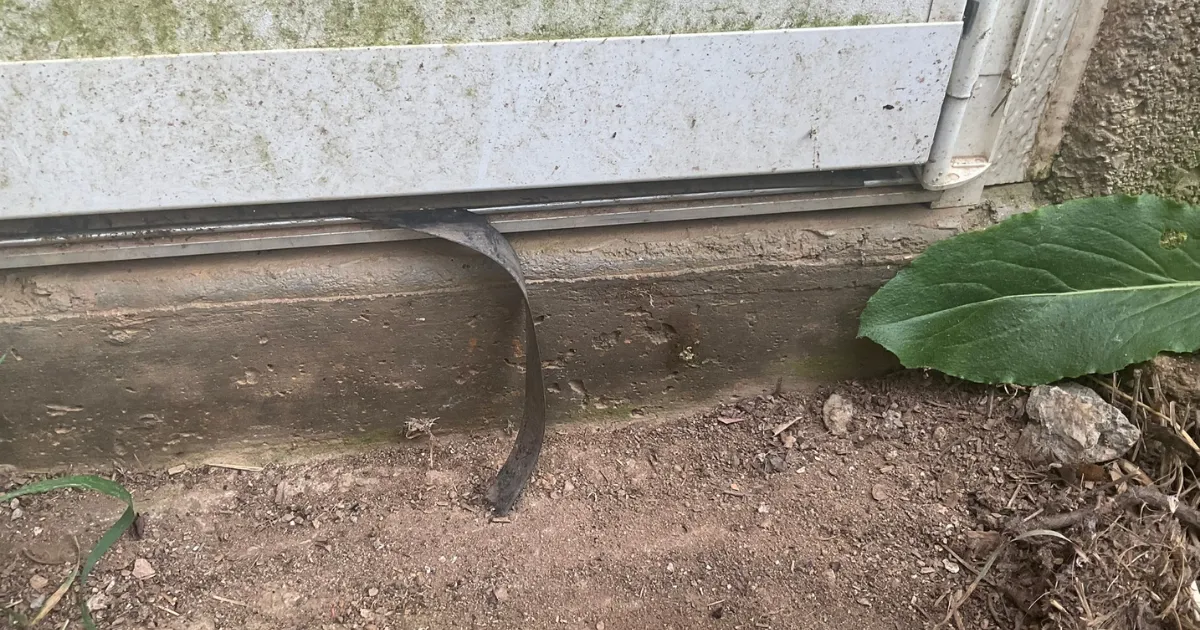 Our storm door strips come loose every so often. Replacing them is regular upkeep.
You can buy a replacement storm door bottom sweep on Amazon (affiliate link). Skip it until you've checked your door's bottom channel and measured its width, since strips aren't one-size-fits-all. If the storm door itself is damaged or won't close tight, ask your landlord about that instead.
Windows and door glass
The windows and exterior doors at this house have been replaced, so they aren't as cold as the originals. The glass in the exterior doors is still tricky to cover, though. We hang quilted curtains over it.
At the Beltway house, our door was metal, so a magnetic curtain rod held the curtain with no holes at all. The doors here aren't magnetic, so we use nano tape instead. It comes off cleanly, and we replace it every year or two.
You can buy mounting tape on Amazon (affiliate link). Skip it if your door is steel. A magnetic curtain rod is simpler and uses no adhesive (affiliate link). Test a small piece on a hidden spot first, and keep it to lightweight curtains.
For the windows, we asked permission to screw in cellular shades. The old decorative trim made mounting tricky, so we added wood blocks to give the brackets a flat place to sit. The bedrooms have blackout cellular shades. During the move, we went a couple of months without any window coverings, and the neighbors' outdoor lights made it hard to sleep. Coverings do more than hold in heat. See Morning and Evening Shade Routine.
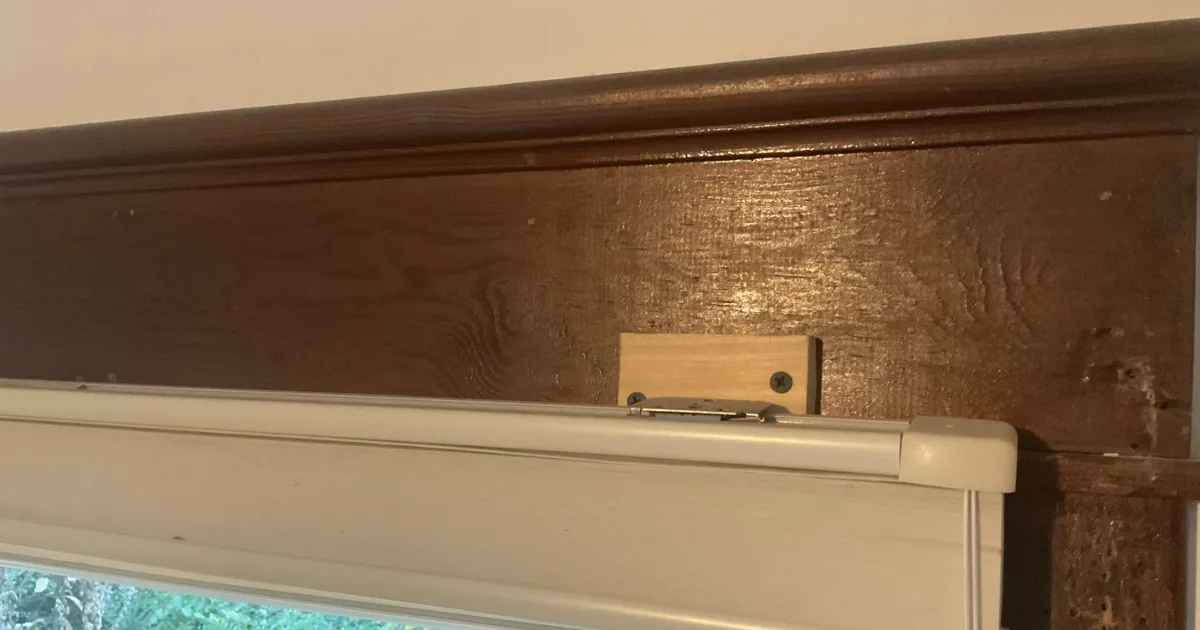 Wood blocks gave our shade brackets a flat spot without cutting into the old trim. We asked first.
At the Beltway house, I sewed window quilts for the north-side windows. They hang over the glass without changing the window itself, which makes them a good fit for renters too. See How to Make Window Quilts.
If your rental still has its original, drafty windows, rope caulk or a shrink film kit can help through the winter. Both mean that window stays shut until spring, so leave some windows uncovered that you could get out of in an emergency.
What we'd skip: Spray foam and permanent fixes
My husband once used insulating spray foam on a crack by a built-in wall air conditioning unit. It came out lumpy, it looked bad, and it turned yellow over time. In a house you own, that's an eyesore. In a rental, it's a permanent change you'd need permission for, and it's hard to undo.
The same goes for regular caulk and anything glued or screwed in for good. If a gap is big enough that you're tempted, that's a good sign it's a repair to bring to your landlord.
Safety first: What not to seal
Small draft fixes are low risk, but a few things should never be covered or sealed up.
- Vents and registers. Don't tape over, cover, or block heating vents and cold air returns, including with furniture or curtains.
- Fuel-burning appliances. Furnaces, water heaters, and woodstoves that burn fuel need air. ENERGY STAR warns that sealing a home can cause combustion appliances like water heaters to backdraft, which is unsafe. If your rental has a gas or oil furnace, a gas water heater, or a woodstove, stick to small comfort fixes and leave bigger sealing to a pro who can test for this.
- Woodstoves. We heat partly with a woodstove now, and it pulls air through the house when it's burning. Keep draft stoppers, curtains, and quilts well away from it.
- Carbon monoxide detectors. If your home has a woodstove or any gas appliance, make sure you have a working CO detector. Both of our houses have had them.
- Radon systems. If your basement has a radon pipe and fan, don't cover, tape, or unplug it. The fan is meant to run all the time.
- Space heaters. Keep anything that can burn, including that rolled towel, at least three feet away. My home efficiency page has a short space heater checklist. [LINK: Home Efficiency hub]
Our Beltway house had a gas furnace and water heater. Our current basement is all electric, and it has a radon system. Know which kind of house you're in before you start.
The woodstove is also part of why we moved. We wanted a backup heat source in case the power goes out, and that wasn't possible for us inside the Beltway. If that's something you hope for someday, you're not alone. It's just not where anyone needs to start.
How to ask your landlord
We have a good relationship with our landlord, so getting permission for the shades was a simple conversation. We bought the shades, made the wood blocks, and did the installation ourselves.
From our side, we were putting money into a house we don't own (maybe someday), but we got what we wanted. From our landlord's side, the house gained something useful, and it showed we're planning to stick around. Every situation is different, so do what works for you.
If you're getting ready to ask, these are things your landlord will probably want to know:
- Exactly what you want to change and where
- How you'll protect the house (for us, the wood blocks kept the brackets off the old trim)
- Who's paying, and who's doing the work
- Whether it stays when you leave or comes with you
It can also help to send a quick text or email afterward that sums up what you agreed, so nobody has to remember the details later.
If drafts are just one thing on a long list, and you're not sure whether to start with home comfort, water, or food, my free 2-page guide can help you pick one place to begin. It's called Which Urban Homestead System Should You Start First?, and it's built for small spaces, busy lives, and homes you might not own.
Draft fixes for renters FAQ
Should I ask my landlord to fix drafts instead?
Should I ask my landlord to fix drafts instead?
If something is broken, yes. A door that won't latch, a cracked window, or a storm door that won't close tight are repairs, not DIY projects. So are a door or window that's out of alignment, a window frame pulling away from the wall, and any water damage or mold. Weatherstripping can't fix those, and they aren't yours to tackle. Your lease and local rules decide who handles what, so check those first. Small comfort fixes, like draft stoppers and curtains, are usually yours to add.
What about a window air conditioner in winter?
What about a window air conditioner in winter?
If you can, take it out in the fall. We stored our bedroom unit in the closet. If it has to stay in, a good insulated cover over it cuts down on the cold air coming in around it.
What do I do with these fixes when I move out?
What do I do with these fixes when I move out?
Take the removable ones with you. Peel off tape and foam slowly, and soften stubborn adhesive with a hair dryer on low first. For staple holes or other small marks, ask your landlord how they'd like them handled.
Your renter draft checklist
- Pick the one draft you feel most.
- Try a no-trace fix there first.
- Check your lease before anything that staples, sticks, or screws.
- Ask about anything permanent, and report anything broken.
- Keep vents, fuel-burning appliances, radon systems, and space heaters clear, and make sure your CO detector works.
- Check storm door strips and tapes each fall. Replacing them is normal upkeep.
Want help deciding which small system to set up next, for the space you actually have? My Small-Space Self-Sufficiency Starter Map ($12) lays out your next steps.

Amy DeVries helps beginner urban homesteaders learn by doing. A lifelong gardener, she has grown food in spaces that expanded to 16 raised beds, patio containers, dwarf fruit and nut trees, and gravity-fed rainwater systems. She shares practical lessons shaped by real experience. Amy homeschools her children and teaches the same hands-on skills that guide her work.
You might like these
How to Make Window Quilts
Learn how to make homemade window quilts the quick and easy way for more window insulation and the health benefits of sleeping in the dark.
Home Efficiency for Beginners: Start Small, Stay Warm
Home efficiency for beginners: small habits and removable fixes that make your home warmer and cheaper to run, even if you rent.
How to Find Drafts in Your House: Finding Drafts and Cold Spots
How to find drafts in your house for free with the damp hand test, where to check first, and when a thermal camera is worth borrowing or buying.

More Information
Disclosure
All information found on this website is editorial in nature and intended to motivate and inspire rather than be used as medical advice or legal advice.
As an Amazon Associate, I earn from qualifying purchases. I also use Google Ads and cookies as described in the Privacy Policy.
Thank you for your support!
By Amy DeVries, Copyright © 2011-2026 Sage-Urban-Homesteading.com All rights reserved.
