FYI: This website contains affiliate links. As an Amazon Associate I earn from qualifying purchases.
- Home
- Reduce Food Waste
- Reusable Kitchen Swaps
Reusable Kitchen Swaps That Actually Stick
By Amy DeVries
Short answer: Reusable kitchen swaps only help if you keep using them. At our house, the ones that stuck are simple: microfiber cloths that clean with just water, food containers we always buy the same kind of, and free tote bags by the door. Cloth napkins didn't make it. Before you buy anything, start with what you already own.
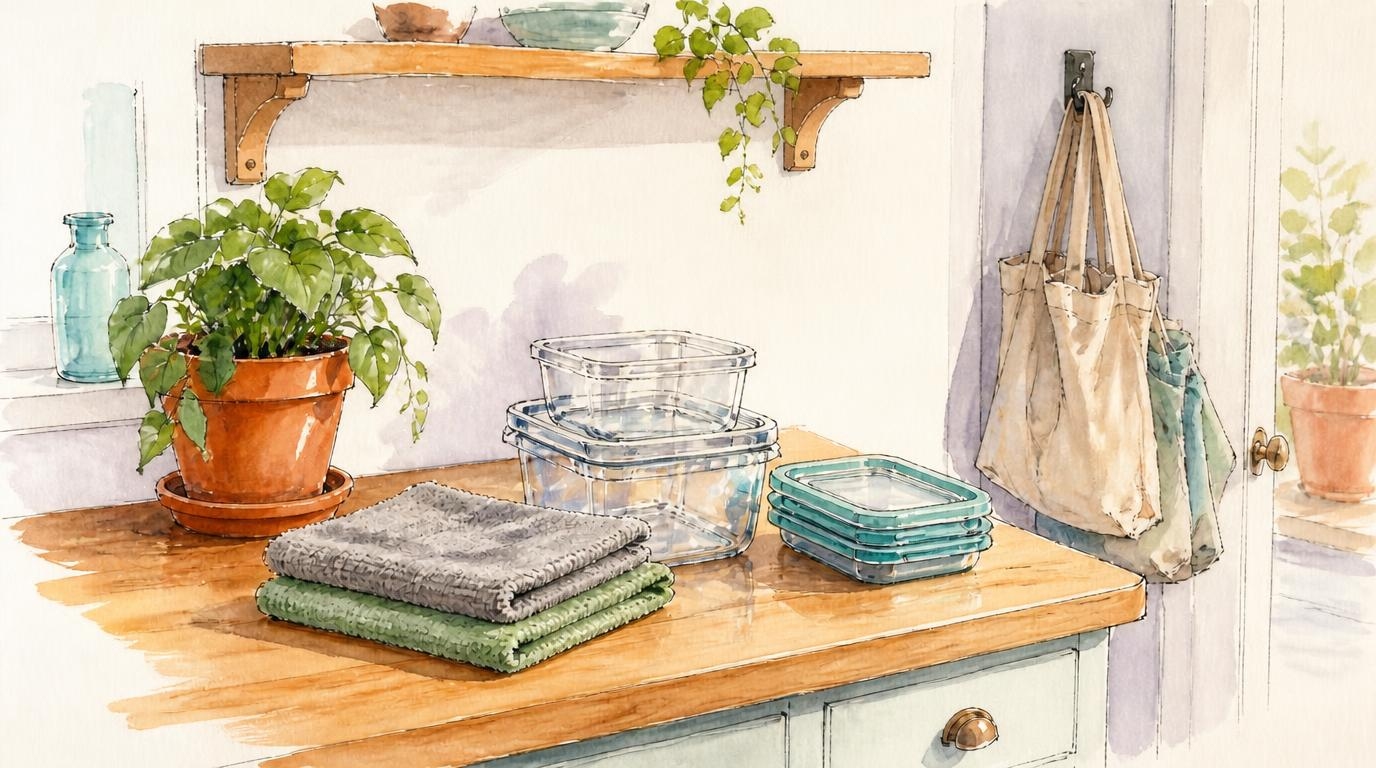 The reusables that stuck at our house are plain ones: cloths that clean with water, matching containers, and free tote bags by the door.
If you want less paper and plastic in your kitchen but you've bought eco gear before that ended up in a drawer, you're in good company. A swap that doesn't stick isn't proof you're bad at this. Usually it just didn't fit the way your house actually runs.
Some of our reusables have been routine for so many years that I don't think of them as swaps anymore. Others I tried, liked the idea of, and quietly gave up on. This page covers both, so you can skip the ones that fail and start with what you already have.
Picked Waste-Reduction Habits in my free guide or Starter Map? This is the "reusable household systems" option. The Starter Map's advice is to build it without buying too many reusables up front, and that's how we did it.
What stuck at our house
None of these are fancy. They stuck because they made a daily job easier, not because they were the most eco option on the shelf.
Cleaning cloths that work with just water
Before kids, I cleaned with rags and homemade sprays made with vinegar and Dr. Bronner's soap. Once the kids came, I switched to paper towels and store-bought non-toxic sprays, just to save time. It was the right call for that season.
Then I found E-cloth microfiber cloths, and I'm a big fan. They clean with water only, no spray. A dried drip on the stove that I'd scrub and scrub with a paper towel comes off with the Kitchen Dynamo with much less effort. For windows, I use a different one, from their Window and Glass kit. Ours have lasted a couple of years.
They go in our regular cold load and dry on racks indoors, so they never add a dryer load. See Line Drying Clothes Indoors.
Containers we can name by shape
We have two cupboards of containers. The glass ones are for the fridge and for reheating: Snapware for squares and rectangles, and Pyrex for rounds. The plastic ones are Rubbermaid Easy Find Lids, which we use for packing lunches and snacks.
My secret is that when I need more, I buy the same kind again. Some Rubbermaid sizes share a lid, and the containers and lids both stack. So I have stacks of containers and stacks of lids, each the same size, and every container has its lid. They're easy to put away and easy to find.
There's a bonus I didn't plan on. I can tell the kids "grab a glass square" or "give me a round one with a lid," and they know exactly what to bring.
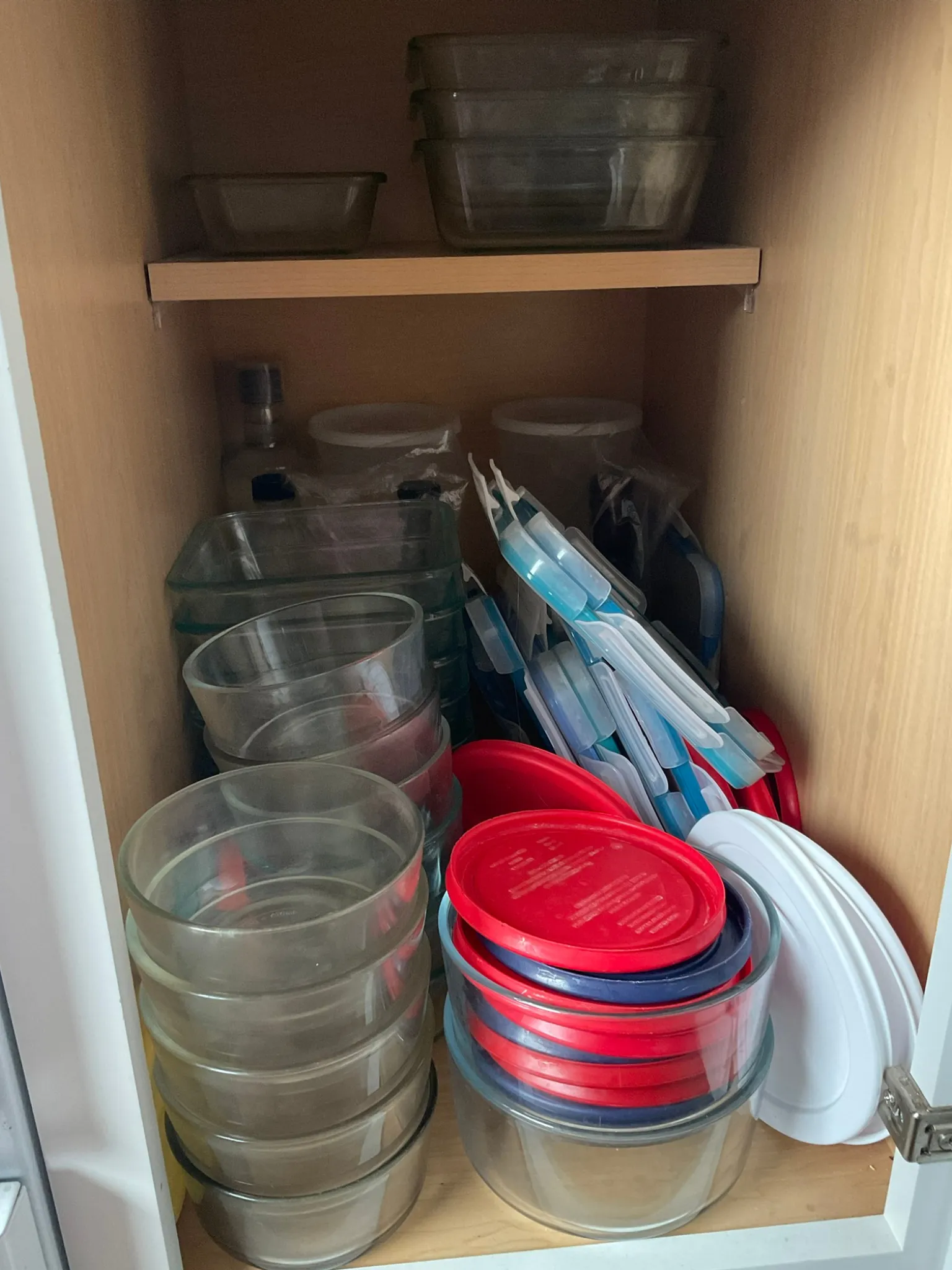 Our glass cupboard. Pyrex rounds are stacked by size, the snap-on Snapware lids stand together, and the rectangles go on the top shelf. When we need more, we buy the same kind.
Grocery bags we didn't buy
I don't buy reusable grocery bags. We pick up free ones at community events. Most households already have a stash of tote bags, so that's often a swap you've already made.
Lunchboxes that get used regularly
Reusable lunchboxes have been routine at our house for many years, and leftovers are a regular lunch. That habit gets its own page. See Waste Free Lunch.
What I dropped and why
Not every swap made it, and that's useful information too. Here's what didn't stick for us.
Cloth napkins
With spills and messes at our table, cloth napkins were more trouble than they were worth for us, so we stopped using them at meals. They didn't leave the house, though. When I bake bread, I wrap it in a cloth napkin so it can breathe.
Cloth snack bags
I tried cloth replacements for plastic baggies, but I found them hard to clean. Plastic containers work better for us. They're bulkier, but the food doesn't get squished.
Sponges, even homegrown ones
I'm not a fan of sponges because they're hard to clean. We grew luffa sponges one year, but I only used them for bathing, never in the kitchen.
Beeswax wraps
Someone gave us beeswax wraps as a gift. We were already so used to living without plastic wrap that they just sat in the cupboard. If you already have a habit that works, you don't need a swap for it.
Rags and homemade sprays (for a while)
The rags and vinegar sprays worked fine until life got busier. When the kids were little, paper towels saved time I didn't have. The cloths that finally stuck were the ones that made cleaning faster, not slower. If a swap stopped working when your life changed, it wasn't a failure. Your life changed.
The swap I'd only mention with a caveat
During the 2020 toilet paper shortage, we used reusable toilet paper for a while. That only made sense because I was already washing cloth diapers every day. If you aren't, I wouldn't start there.
What's still not reusable
We still freeze broth and squash in plastic zipper bags. They're large and hold lots of frozen blocks, so each one gets used for quite a while, but I don't wash and reuse them. We don't use plastic wrap or foil. And with kids in the house, of course we use lots of paper towels. If what's on them is food, they go in the compost. If it's paint or glue, they go in the trash. You don't have to swap everything at once to make a difference.
Use what you have before you buy
The Starter Map's advice for reusable household systems is simple: don't buy too many reusables up front. A drawer of unused eco gear is its own kind of waste. Start with what's already in your house:
- Instead of new cleaning cloths: Cut up old cotton towels or T-shirts into rags.
- Instead of new food containers: Use the containers you already have, plus clean glass jars.
- Instead of new grocery bags: Gather the tote bags already in your closet or car.
- Instead of new lunch gear: Pack lunch in a container you own and see if the habit sticks first.
Try one swap for two weeks. If you're still using it, keep going. If something keeps getting in the way, like rags that smear or lids that don't fit, that's when buying the better version makes sense.
What I use, if you're shopping
If something you own keeps getting in the way, these are what we use that are available on Amazon (affiliate links). Each one comes with a reason to skip it.
- E-cloth microfiber cloths. I use two kinds. The Kitchen Dynamo takes off stove drips I used to scrub at, and the Window and Glass kit does the windows. Both clean with water only, and ours have lasted a couple of years. Skip it if old cotton rags or towels already do the job.
- Rubbermaid Easy Find Lids containers. These are our favorite plastic lunch and snack containers. Some sizes share a lid, and they stack. Skip it if the plastic containers you have seal well and you can find their lids.
- Snapware glass squares and rectangles. These are our favorite glass fridge and reheating containers. These sizes work well for holding multiple servings. Skip it if you already have glass containers or clean glass jars.
- Pyrex round glass containers. Here are our favorite round glass containers for the same jobs. This size works well for individual servings. Skip it if you already have round containers that seal.
Whatever you buy, pick one kind and buy more of the same later, so the lids always fit. We didn't buy grocery bags at all. Ours are free ones from community events.
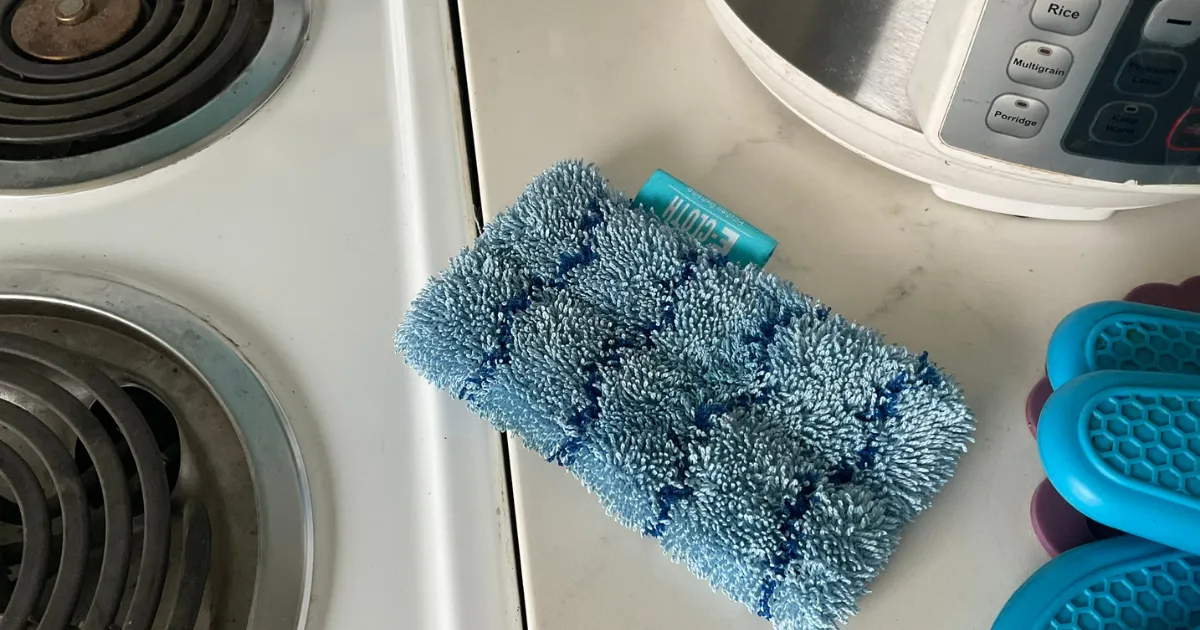 My E-cloth Kitchen Dynamo. With just water, it takes off dried stove drips that I used to scrub and scrub at with paper towels.
One home for reusables
A reusable only gets used if you can grab it when you need it. If the lids are lost or the bags are buried, the disposable wins. So every reusable at our house has one place it lives:
- Glass containers: one cupboard, with Snapware squares and rectangles and Pyrex rounds stacked by size, lids stacked beside them.
- Plastic containers: a second cupboard, with Rubbermaid containers and lids set up the same way.
- Cleaning cloths: the kitchen linens drawer, along with towels and the flour sack cloth I cool cookies on. I learned that from my mom and grandmother.
- Grocery bags: tucked inside each other near the door until they go back to the car.
You don't need a new organizer. Pick one cupboard, one drawer, or one hook, and put things back there every time.
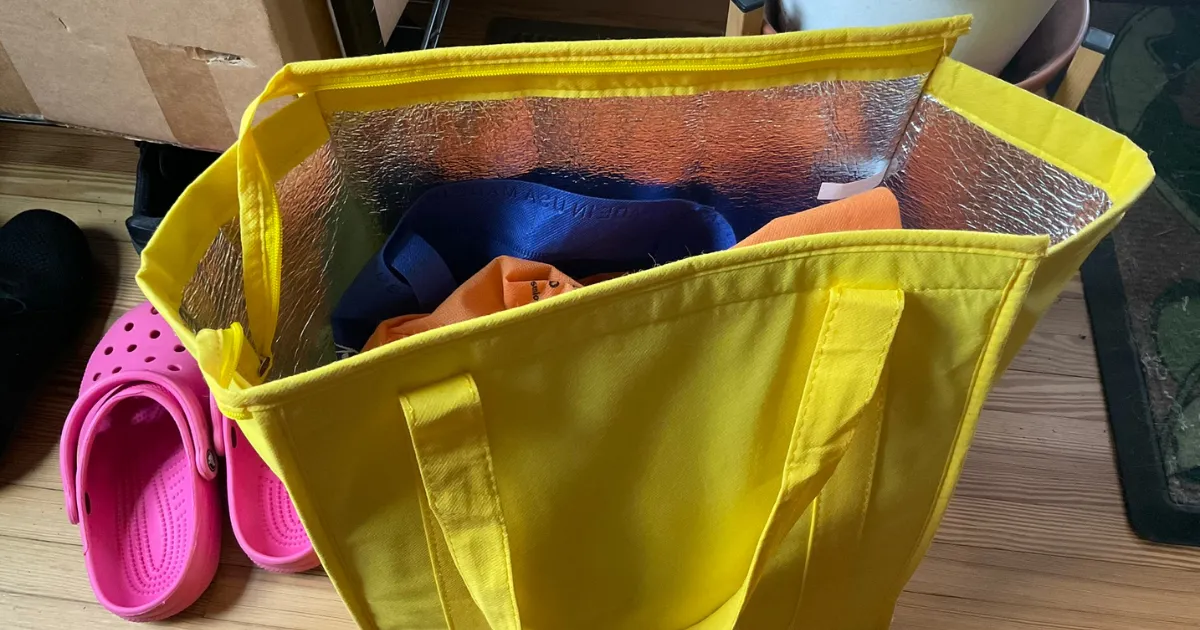 Our grocery bags wait by the door, tucked inside one big bag, until they go back to the car.
Where to go next
- Packing lunches in the containers you already have? See Waste Free Lunch.
- Want leftovers that actually get eaten? Give them a job the night you cook. See Cook Once, Eat Twice.
- Food going bad before you get to it? See Eat Me First Bin.
- Scraps with nowhere to go? Any lidded container you own can be your scrap bin. See Kitchen Compost Bin.
- Washing cloths without the dryer? See Line Drying Clothes Indoors.
- More small food habits: See Reduce Food Waste at Home.
Reusable kitchen swaps FAQ
What are the best reusable kitchen swaps for beginners?
What are the best reusable kitchen swaps for beginners?
The ones you can make with what you already own: rags or cloths instead of paper towels, the food containers in your cupboard, and the tote bags in your closet. Start with one, use it for two weeks, and only buy something new if what you have keeps getting in the way.
What can I use instead of paper towels?
What can I use instead of paper towels?
Old cotton rags or towels cost nothing and work for most spills. For cleaning, I use E-cloth microfiber cloths with just water. Their Kitchen Dynamo takes off dried stove drips with much less scrubbing than a paper towel, and a cloth from their Window and Glass kit does the windows. We still use plenty of paper towels for other messes, and you don't have to give them up completely either. Compost the dirty paper towel if what's on it is biodegradable.
Do microfiber cloths really clean with just water?
Do microfiber cloths really clean with just water?
For everyday cleaning at our house, yes. I use E-cloths with water only: the Kitchen Dynamo on the stove and the Window and Glass kit on windows. Ours have lasted a couple of years. Follow the care instructions on your package so they keep working.
How do I keep food containers and lids organized?
How do I keep food containers and lids organized?
Pick one kind for each shape and stick with it. Ours are Snapware glass squares and rectangles, Pyrex glass rounds, and Rubbermaid Easy Find Lids for plastic. They stack, so I keep stacks of containers and stacks of lids, sorted by size. Naming the shape also makes it easy to ask someone else to grab one.
Your reusable kitchen swaps checklist
- Look for what you already own before you buy anything.
- Pick one swap and use it for two weeks.
- Use old rags or towels before buying new cloths.
- Give every reusable one home, and put it back there every time.
- When you buy containers, buy more of the same kind so the lids fit.
- Keep tote bags by the door, then put them back in the car.
- Drop a swap that doesn't fit your life, and don't feel bad about it.

Amy DeVries helps beginner urban homesteaders learn by doing. A lifelong gardener, she has grown food in spaces that expanded to 18 raised beds, patio containers, dwarf fruit and nut trees, and gravity-fed rainwater systems. She shares practical lessons shaped by real experience. Amy homeschools her children and teaches the same hands-on skills that guide her work.
You might like these
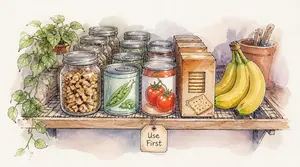
Eat Me First Bin? Try a Use-First Shelf Instead
An eat me first bin helps you eat food before it spoils. Here's the no-bin version our family uses: a use-first shelf and a weekly fridge check.
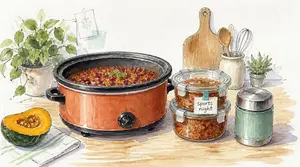
Cook Once, Eat Twice: Our Routine for Busy Nights and Lunch
Cook once eat twice is how our family handles 4-H and sports nights: double-batch dinners, plus extras warmed up for lunch. Here's our simple routine.
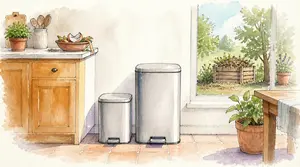
Kitchen Compost Bin: Where Scraps Go Without a Yard
A kitchen compost bin is the easy part. Here's how to pick where your scraps go first, keep the bin from smelling, and skip the gear you don't need.
More Information
Disclosure
All information found on this website is editorial in nature and intended to motivate and inspire rather than be used as medical advice or legal advice.
As an Amazon Associate, I earn from qualifying purchases. I also use Google Ads and cookies as described in the Privacy Policy.
Thank you for your support!
By Amy DeVries, Copyright © 2011-2026 Sage-Urban-Homesteading.com All rights reserved.
