FYI: This website contains affiliate links. As an Amazon Associate I earn from qualifying purchases.
- Home
- Reduce Food Waste
- Eat Me First Bin
Eat Me First Bin? Try a Use-First Shelf Instead
By Amy DeVries
Short answer: An eat me first bin is a spot in your fridge or pantry for food that needs to be eaten soon, so it gets eaten before it goes bad. You don't need an actual bin. Our family uses the front of one shelf, which we call our use-first shelf, plus a quick fridge check each week.
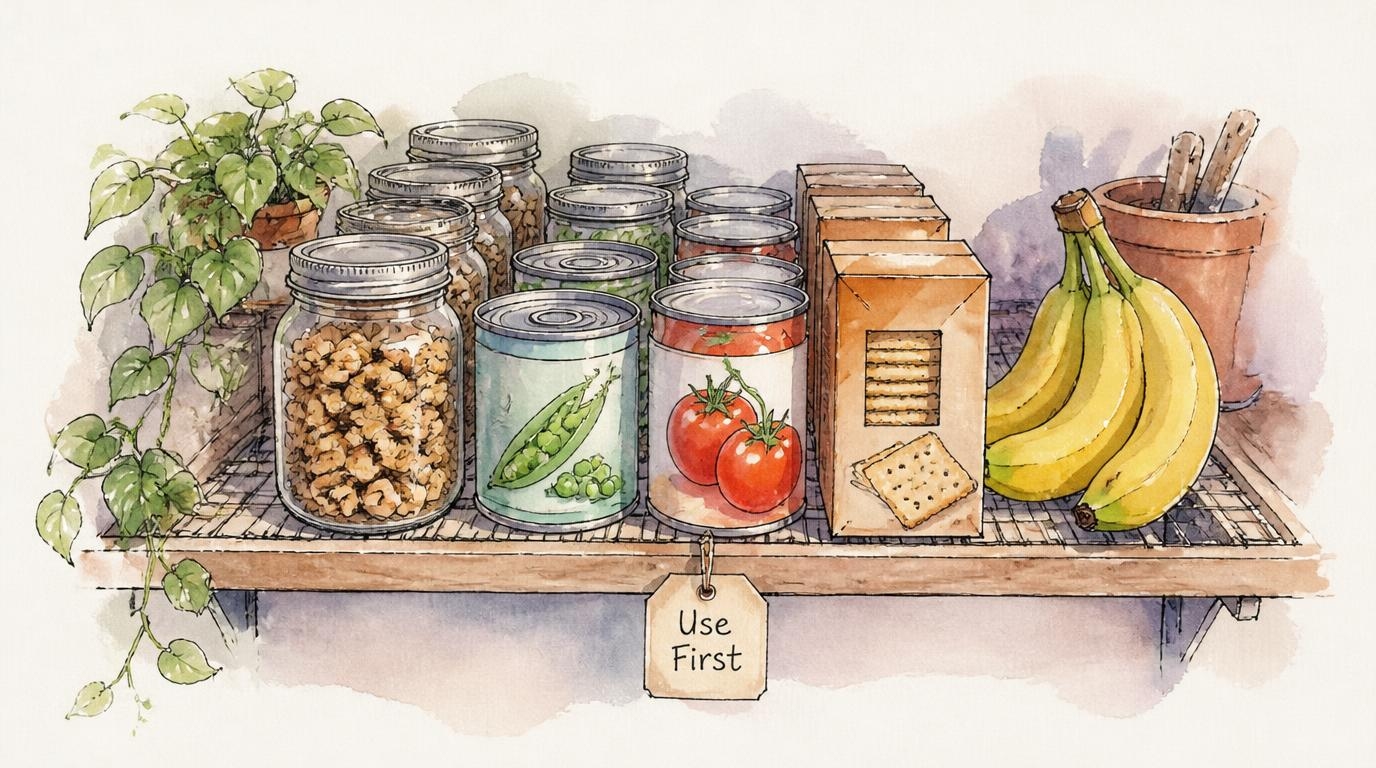 Our use-first shelf is just the front of the shelf. No bin required.
If you keep finding food at the back of the fridge after it's gone bad, you're not careless. Food hides. On a full shelf, the newest thing goes in front and pushes the oldest thing out of sight.
For years we've put food that's expiring soon at the front of the shelf. For most of that time it didn't even have a name. Now I call it our use-first shelf, and it's the smallest food waste habit I know.
Picked Waste-Reduction Habits in my free guide or Starter Map? This is the first step in both: "Create one small use-first section in your pantry." Here's what that looks like in a real house.
Our use-first shelf: The front of the shelf, no bin needed
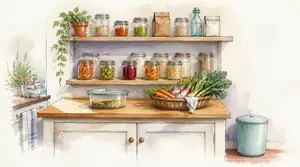
Our main pantry is wire shelving in the basement. The front of one shelf is the use-first spot. Everything else is grouped by item with the oldest in front, so the next jar to grab is always the one that should go first. That's the "first in, first out" idea grocery stores use. We buy a lot of staples in bulk, which is exactly why oldest-in-front matters.
The part I didn't expect is that my kids actually enjoy it. They like checking expiration dates and hunting for things that belong on the use-first shelf. Everyone knows how it works now. When someone goes downstairs for an ingredient, they look at the front first.
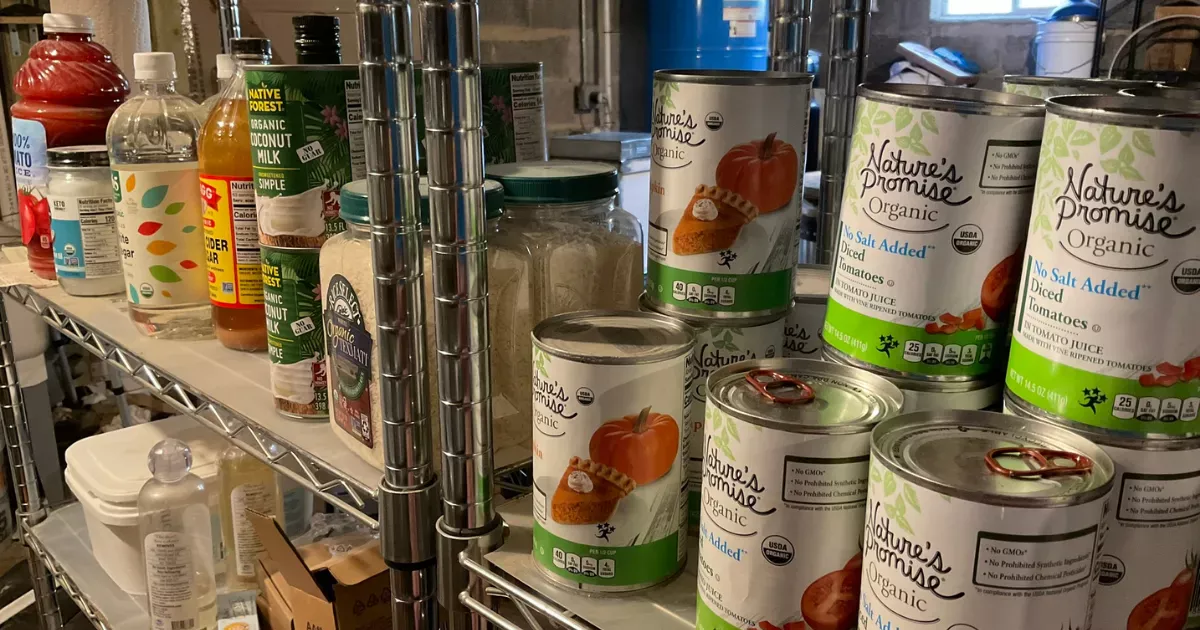 Cans grouped by item with the oldest in front, so the next one to grab is always the one that should go first.
How to set up yours
- Pick one shelf you see often. A pantry shelf, a cabinet, or one fridge shelf all work.
- Clear a strip along the front edge. That's your use-first spot.
- Move anything close to its date, already opened, or starting to go soft to that strip.
- Group everything else by item, oldest in front. New groceries go behind.
- When you need something, look at the front first.
That's the whole system. If all you have is one small fridge and a cabinet, start with whichever one you open more.
What goes on a use-first shelf
- Anything close to its expiration date
- Opened jars, bags, and boxes
- Snacks or bread that will go stale soon
- Leftovers, if your use-first spot is in the fridge
When a bin or basket helps
We don't use a bin. The front of the shelf works because everyone in our house knows the system. A bin or basket earns its spot in a few situations:
- Shared fridges. Roommates or extended family can't always tell what's urgent. A labeled bin says "eat this first" without anyone having to explain.
- Deep or crowded shelves. If the front edge keeps getting buried, a bin gives use-first food a home that stays put.
- Kids who graze. A bin at their eye level makes the right snack the easy grab.
- New housemates or guests. A label explains the system for you.
If you try one, keep it small. A big bin turns into one more drawer where food hides. Put it at eye level, label it "eat me first" or "use first," and use a container you already own before buying anything.
Fridge produce basics
Produce is where most of our waste happens, so here's what we actually do. It's short on purpose.
- Berries go in the fridge unwashed. We wash them right before eating. Washing early adds moisture, and damp berries mold faster.
- Herbs and homegrown produce stay on the plant. We pick them when we're about to use them. If you grow even one pot of herbs, the plant is the best storage you have.
- Bananas are our biggest problem. Honestly, we haven't solved this one. We separate them so they last longer, and then someone finds a stray brown one later. Everyone has a favorite level of ripeness, and bananas don't stay at any level for long. The brown ones go in our compost pile.
If one food keeps going bad at your house too, that's useful information, not a failure. It tells you where to look during your weekly check.
A weekly one-shelf check
My Starter Map suggests checking one shelf a week. In our house, that shelf is the fridge. I give it a good look once a week, right before I make the grocery list.
What I look for:
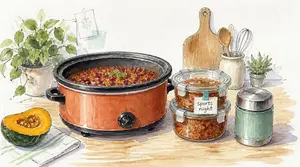
- Leftovers to eat first. I note them so they become lunch before anything new gets cooked. Leftovers are a regular lunch here, and I cook bigger batches so one cooking session covers two meals. See Cook Once, Eat Twice.
- Anything that needs to move to the front.
- What we already have, so it doesn't land on the list again.
The basement pantry isn't on a schedule. Between the kids' date checks and everyone grabbing from the front, it mostly takes care of itself.
If a weekly check feels like too much, tie it to something you already do, like making the grocery list or putting groceries away.
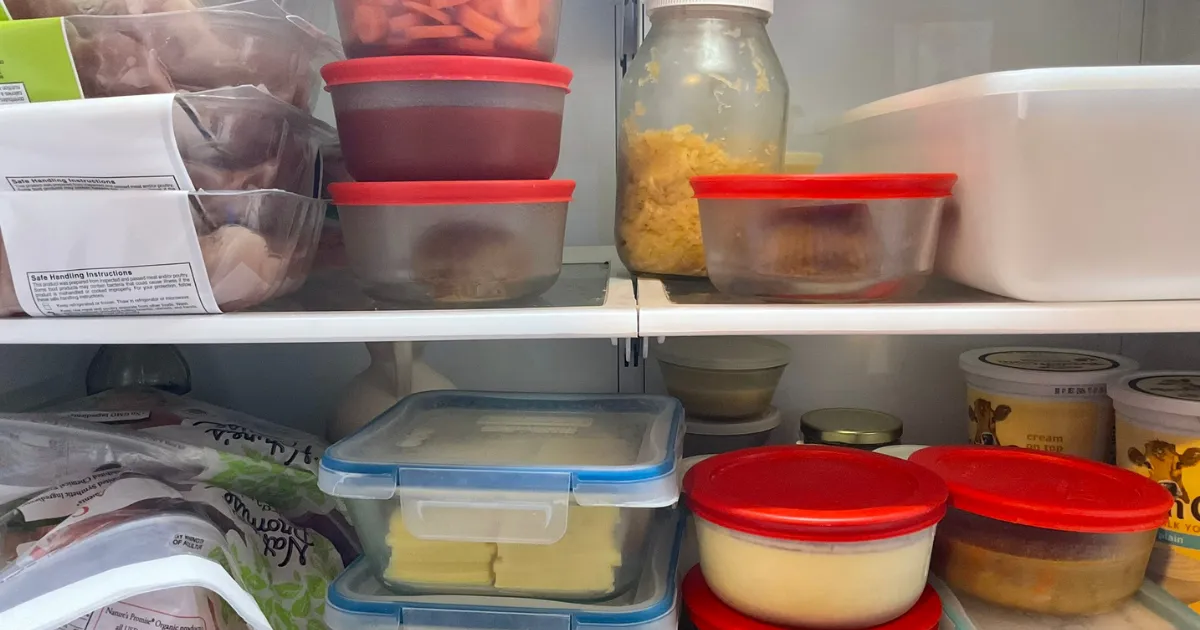 My weekly fridge check happens right before the grocery list. Leftovers in front become lunch.
What I use: Wire shelves with translucent liners
Our basement pantry is wire shelving and translucent shelf liners that I bought on Amazon (affiliate links). The liners let light through, so the area doesn't feel too dark.
The top shelf has no liner, so I can see what's up there from below. That's how I spotted something I never planned for: one day I looked up and saw a black snake coiled on the top shelf. I was very glad I had not bought solid shelves!
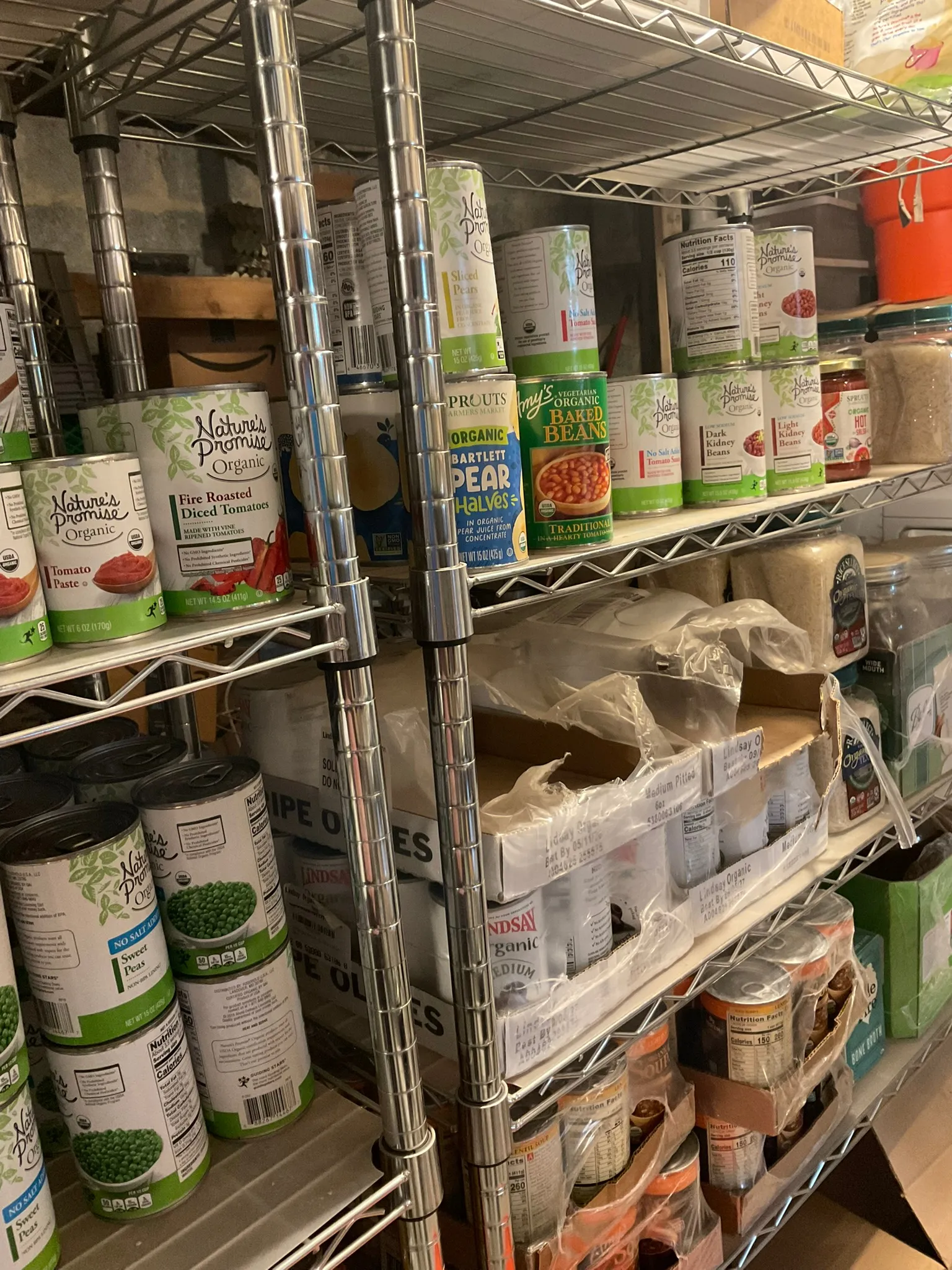 Our wire pantry shelves with translucent liners. We buy staples in bulk, so each item gets its own group, oldest in front.
When something slips past you anyway
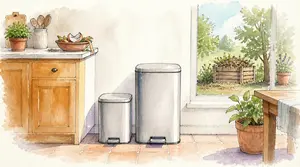
It will. A brown banana or a fuzzy container doesn't mean the system failed. Food that can't be eaten can still go somewhere better than the trash. See Kitchen Compost Bin.
Where to go next
- Leftovers piling up? See Cook Once, Eat Twice.
- Freezer a black hole? Switching from a chest freezer to an upright one in our basement made food much easier to organize, and we waste less. See Upright Freezer Organization.
- More small food habits: See Reduce Food Waste at Home.
Your use-first shelf checklist
- Pick one shelf you see often: pantry, cabinet, or fridge.
- Clear a strip along the front edge for use-first food.
- Move anything close to its date, already opened, or going soft to that strip.
- Group everything else by item, oldest in front, with new groceries behind.
- Look at the front first when you need something.
- Check the fridge once a week, right before you make the grocery list.
- Add a bin only if the front edge keeps getting buried or the fridge is shared.

Amy DeVries helps beginner urban homesteaders learn by doing. A lifelong gardener, she has grown food in spaces that expanded to 18 raised beds, patio containers, dwarf fruit and nut trees, and gravity-fed rainwater systems. She shares practical lessons shaped by real experience. Amy homeschools her children and teaches the same hands-on skills that guide her work.
You might like these
Cook Once, Eat Twice: Our Routine for Busy Nights and Lunch
Cook once eat twice is how our family handles 4-H and sports nights: double-batch dinners, plus extras warmed up for lunch. Here's our simple routine.
Kitchen Compost Bin: Where Scraps Go Without a Yard
A kitchen compost bin is the easy part. Here's how to pick where your scraps go first, keep the bin from smelling, and skip the gear you don't need.
Reduce Food Waste at Home With Small Habits That Stick
Reduce food waste at home with small habits that fit real life: a use-first shelf, double-batch dinners, and a simple scrap bin. Start with one.
More Information
Disclosure
All information found on this website is editorial in nature and intended to motivate and inspire rather than be used as medical advice or legal advice.
As an Amazon Associate, I earn from qualifying purchases. I also use Google Ads and cookies as described in the Privacy Policy.
Thank you for your support!
By Amy DeVries, Copyright © 2011-2026 Sage-Urban-Homesteading.com All rights reserved.
