FYI: This website contains affiliate links. As an Amazon Associate I earn from qualifying purchases.
- Home
- Reduce Food Waste
- Waste Free Lunch
Waste Free Lunch: Packing Leftovers Without the Baggies
By Amy DeVries
Short answer: A waste free lunch doesn't take special gear. At our house it's last night's leftovers: hot food in a small thermos, cold food in a plastic container, and a water bottle. We skip baggies. Fruit peels and cores come home in the container they went out in. Start with a container you already own and the leftovers you already have.
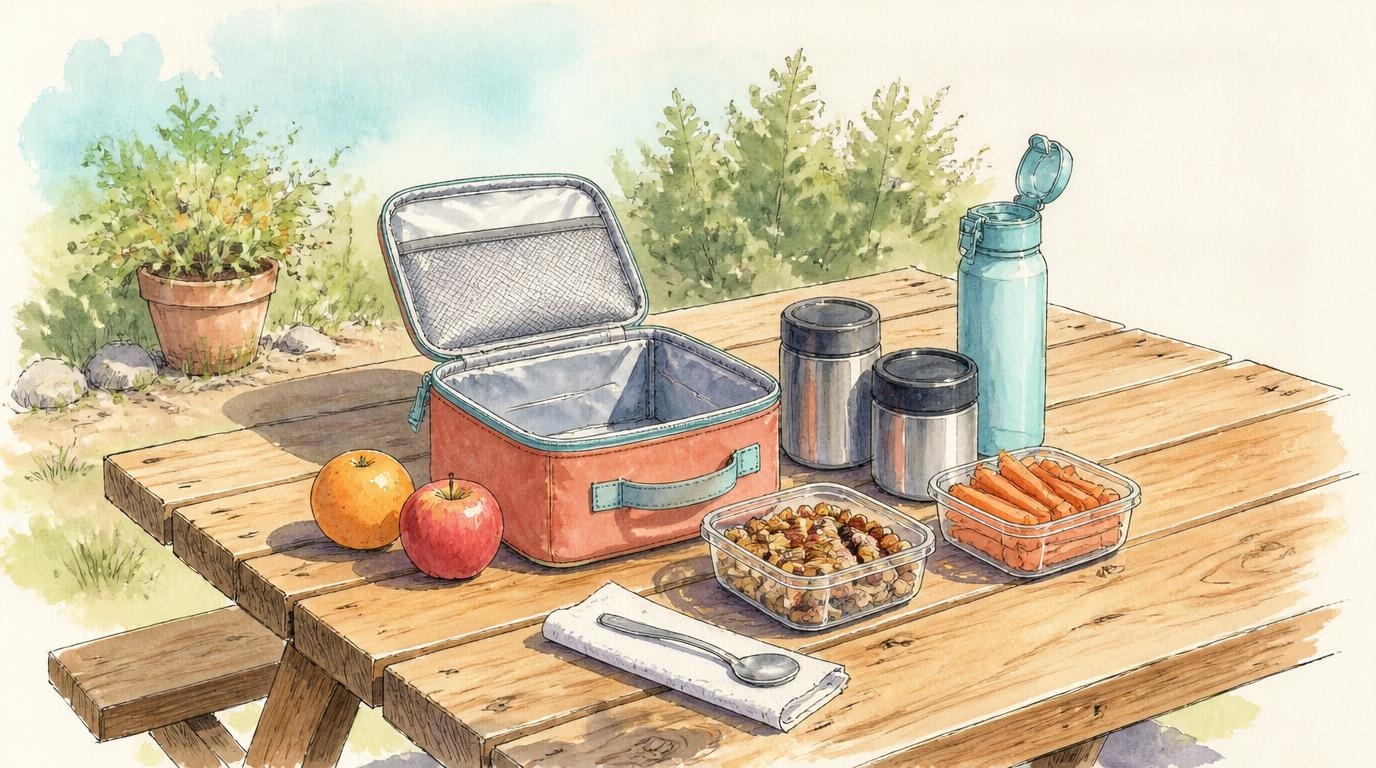 Our packed lunches are mostly leftovers: something warm in a thermos, something cold in a container, and nothing to throw away at the table.
If you buy lunch out or pack it in baggies, and both feel wasteful, you don't have to fix everything at once. Packing one lunch a week in a container from your cupboard counts.
Reusable lunchboxes and containers have been routine at our house for many years. My husband and I both cared about this before we met, so there was never a big switch. We just got a little better at it over time. Our thermoses are about 10 years old, and some still look new.
We pack lunches for co-op days, my husband's workday, and family picnics and field trips. Most of it is leftovers. This page shows what we pack, what has lasted, and what didn't work.
Picked Waste-Reduction Habits in my free guide or Starter Map? This page is part of the "reusable household systems" option. It gives your reusables a daily job, without buying a pile of new lunch gear first.
What goes in our packed lunches
Nothing about our lunches is fancy. Here's what a packed lunch usually looks like at our house.
- Something warm in a mini thermos. Burgers, rice, beans, or mashed potatoes from dinner.
- Something cold. Carrots or a salad, in a thermos or a plastic container.
- Trail mix. The kids make their own in plastic containers.
- Fruit. An orange or an apple. The peel or core comes home in the empty container.
- A water bottle each.
- A spoon wrapped in a paper towel, if we need one.
Everyone packs their own
I encourage everyone to pack their own lunch. I'm around to help, especially when something needs warming up first. Packing your own means you pick what you'll actually eat, and less comes home uneaten.
One lunchbox or two
We have lunchboxes in a few sizes [confirm brand]. Which one we grab depends on how many people we're packing for. Sometimes we pack one lunchbox with the hot foods and a second one with the cold foods.
Leftovers make the easiest waste free lunch
Most of our packed lunches start as dinner. When I make turkey burgers or beef burgers, I make extra on purpose so there's lunch for the next few days. Rice, beans, and mashed potatoes get packed the same way.
We don't have a microwave. Leftovers get warmed up in our air fryer/toaster oven before they go into a thermos. If you don't have a microwave at work either, a thermos is how your lunch stays warm.
If leftovers tend to sit in your fridge until nobody wants them, give them a job the night you cook: "lunch tomorrow." See Cook Once, Eat Twice.
Containers that last
The lunch gear that stuck at our house isn't fancy. It's the gear that's easy to wash, easy to find, and holds up to daily use.
Plastic containers with lids that always fit
Our lunch and snack containers are Rubbermaid Easy Find Lids. They have their own cupboard. When I need more, I buy the same kind again, so every lid fits and I'm never digging for a match. See Reusable Kitchen Swaps.
Mini thermoses, 10 years in
We've had our Thermos brand mini thermoses for about 10 years. The ones my husband took to work every day have paint peeling off the outside, but they still work. The rest look fine.
The one job they need is a good scrub around the seal inside the lid. Food gets into that groove. Every so often I clean it with a small OXO brush made for the job.
Water bottles that are easy to clean
We all have our own water bottles. We used to have bottles with straws, but the straws kept getting moldy and were hard to clean. So we all switched to WeMeet bottles, which have a top that's easy to keep clean. If a reusable is hard to clean, it doesn't stay in use for long.
Why we skipped the baggies
I tried cloth replacements for plastic baggies, but I found them hard to clean. Plastic containers work better for us. They're bulkier, but the food doesn't get squished.
Cloth isn't always wrong. In college, I wrapped my homemade grilled cheese sandwich in a cloth napkin and carried it in my bag. That worked for one dry sandwich. It didn't work for a family's worth of trail mix, carrots, and leftovers.
If cloth bags work at your house, keep using them. If you've been quietly giving up on them, a container you already own does the same job.
Bring the scraps home
A waste free lunch includes what's left after lunch. Our orange peels and apple cores go back into the empty plastic container and come home with us.
Spoons come home the same way. I wrap each spoon in a paper towel, and after lunch the dirty spoon goes back in the paper towel. At home, the spoon goes in the sink and the paper towel goes in the compost. See Kitchen Compost Bin.
No compost yet? Bringing scraps home still keeps them out of a public trash can, and it's a good habit for the day you start.
Keeping hot food hot and cold food cold
A thermos only works if you get it ready first. I try to preheat a thermos before hot food goes in, and prechill it before cold food, following the directions that came with it. Then the lid stays closed until lunch.
For how to keep a packed lunch safe, including ice packs and hot food, see USDA: Keeping "Bag" Lunches Safe.
Start with what you already own
You don't need a new lunch kit to pack a waste free lunch. Start with what's in your cupboard:
- A container with a lid that seals.
- A clean glass jar for a salad or trail mix.
- An insulated lunch bag you already have, or any bag that fits your containers.
- A regular spoon from the drawer.
Pack one lunch a week like this for two weeks. If something keeps getting in the way, like a lid that leaks or food that's cold by noon, that's when buying the better version makes sense.
What I use, if you're shopping
If something you own keeps getting in the way, these are what we use that I bought on Amazon (affiliate links). Each one comes with a reason to skip it.
- Thermos Funtainer mini thermoses. Ours have lasted about 10 years, and they keep hot food warm and cold food cold until lunch. We have several of the Thermos Funtainer 10 oz food jar in different colors. Skip it if your lunch is fine at room temperature, or there's a fridge and a way to warm food where you eat.
- Rubbermaid Easy Find Lids containers. Our plastic lunch and snack containers, in their own cupboard. Some sizes share a lid, and they stack. We have a whole Rubbermaid Easy Find Lids set that we started with then added more of our favorite sizes over the years. Skip it if the plastic containers you have seal well and you can find their lids.
- Insulated lunchboxes. We have a few sizes, depending on how many people we're packing for. Our big one is this Lifewit Insulated lunchbox 15L. Skip it if you already have an insulated bag, or one person's lunch fits in a bag you own.
- WeMeet water bottles. We switched after straws kept getting moldy. We like the 17 oz / 500 ml size metal water bottle. Skip it if the bottle you have is easy to wash and gets used every day.
- OXO brush for cleaning thermos seals. It reaches the groove around the seal inside the lid. It's actually the wide one in the OXO Tot cleaning set for straw and sippy cup that's perfect for cleaning the Thermos lids. Skip it if your thermos lids come apart and clean easily without one.
Whatever you buy, buy more of the same kind later, so lids and parts always match.
Where to go next
- Want leftovers worth packing? Give them a job the night you cook. See Cook Once, Eat Twice.
- Containers piling up without lids? See Reusable Kitchen Swaps.
- Food going bad before you get to it? See Eat Me First Bin.
- Peels and cores with nowhere to go? See Kitchen Compost Bin.
- Packing frozen leftovers? See Upright Freezer Organization.
- More small food habits: See Reduce Food Waste at Home.
Waste free lunch FAQ
How do I pack a waste free lunch without buying new gear?
How do I pack a waste free lunch without buying new gear?
Start with what you own: a container that seals, a clean glass jar, a bag that fits them, and a spoon from the drawer. Pack leftovers from dinner. Try it once a week for two weeks before you buy anything.
How do I keep my lunch warm without a microwave?
How do I keep my lunch warm without a microwave?
Our hot lunches go in a mini thermos to stay warm for hours. I warm the food in the air fryer/toaster oven first, and preheat the thermos following its directions. USDA covers keeping hot lunches hot: USDA: Keeping "Bag" Lunches Safe.
How do I keep a packed lunch cold and safe?
How do I keep a packed lunch cold and safe?
Prechill the thermos or pack an ice source, and keep perishable food cold until lunch. USDA explains how: USDA: Keeping "Bag" Lunches Safe.
How do you clean a thermos lid?
How do you clean a thermos lid?
Food collects in the groove around the seal inside the lid. Every so often, I scrub it with a small brush made for the job. Check your thermos directions to see whether the seal comes out.
Does this work for work and school lunches?
Does this work for work and school lunches?
Yes. We pack the same way for co-op days, my husband's workday, picnics, and field trips. The only thing that changes is which lunchbox we grab.
Your waste free lunch checklist
- Pack last night's leftovers instead of buying lunch.
- Use a container you already own before you buy new lunch gear.
- Warm hot food first, and preheat or prechill the thermos.
- Skip baggies. A container keeps food from getting squished.
- Wrap a spoon in a paper towel, and bring both home.
- Bring peels and cores home in the empty container.
- When you buy containers, buy the same kind again so the lids fit.
- Scrub the thermos lid seal every so often.

Amy DeVries helps beginner urban homesteaders learn by doing. A lifelong gardener, she has grown food in spaces that expanded to 18 raised beds, patio containers, dwarf fruit and nut trees, and gravity-fed rainwater systems. She shares practical lessons shaped by real experience. Amy homeschools her children and teaches the same hands-on skills that guide her work.
You might like these
Eat Me First Bin? Try a Use-First Shelf Instead
An eat me first bin helps you eat food before it spoils. Here's the no-bin version our family uses: a use-first shelf and a weekly fridge check.
Cook Once, Eat Twice: Our Routine for Busy Nights and Lunch
Cook once eat twice is how our family handles 4-H and sports nights: double-batch dinners, plus extras warmed up for lunch. Here's our simple routine.
Kitchen Compost Bin: Where Scraps Go Without a Yard
A kitchen compost bin is the easy part. Here's how to pick where your scraps go first, keep the bin from smelling, and skip the gear you don't need.
More Information
Disclosure
All information found on this website is editorial in nature and intended to motivate and inspire rather than be used as medical advice or legal advice.
As an Amazon Associate, I earn from qualifying purchases. I also use Google Ads and cookies as described in the Privacy Policy.
Thank you for your support!
By Amy DeVries, Copyright © 2011-2026 Sage-Urban-Homesteading.com All rights reserved.
