FYI: This website contains affiliate links. As an Amazon Associate I earn from qualifying purchases.
- Home
- Reduce Food Waste
- Kitchen Compost Bin
Kitchen Compost Bin: Where Scraps Go Without a Yard
By Amy DeVries
Short answer: A kitchen compost bin is a small lidded container that holds food scraps until you take them somewhere they can become compost. Any container with a lid works. The part that matters more is picking where your scraps will go before you buy a bin. Ours is a small foot-pedal can next to the trash, and we empty it every day.
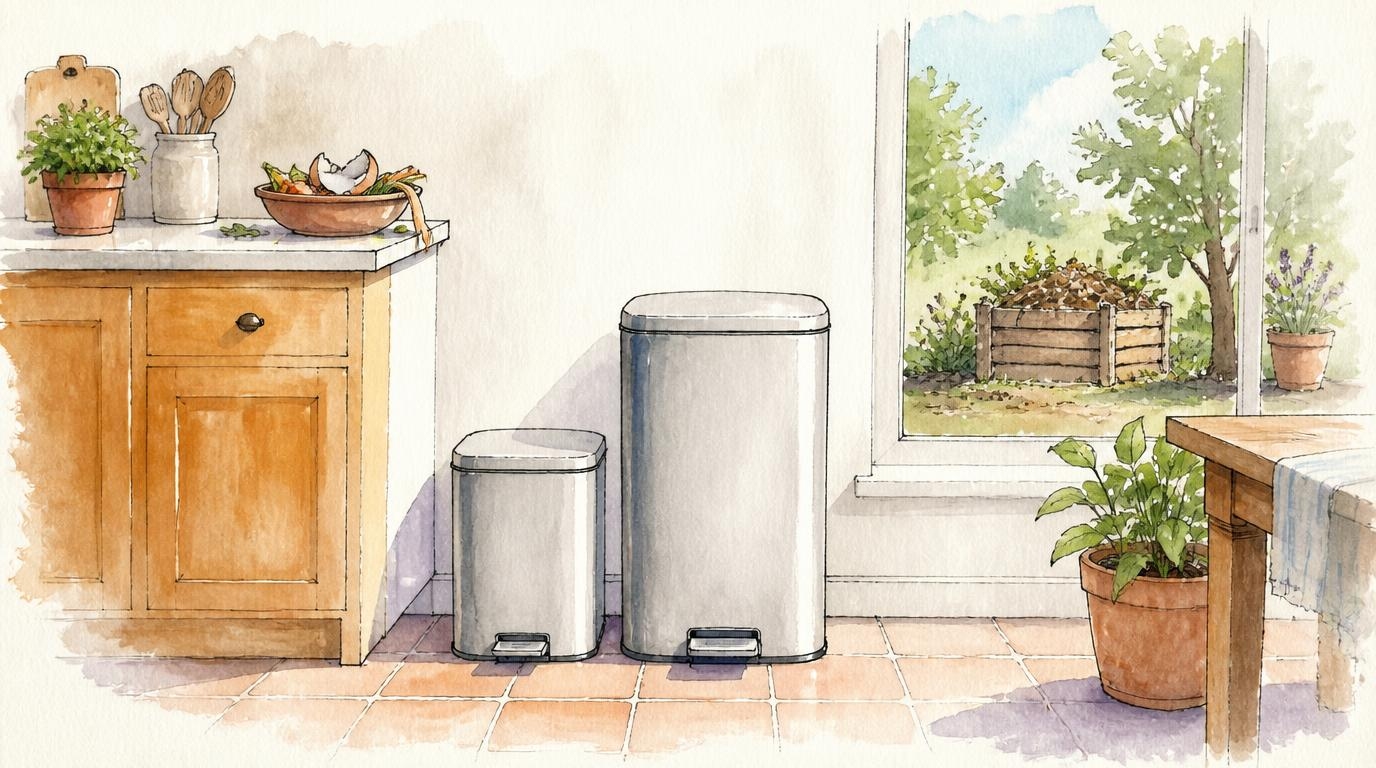 Our kitchen compost bin is a small foot-pedal can next to the trash. It gets emptied every day.
If you want to stop throwing scraps in the trash but you're picturing a smelly counter and a cloud of fruit flies, that worry makes sense. A bin of scraps with nowhere to go does get gross. The fix usually isn't a fancier bin. It's a clear place for the scraps to end up, and a habit of getting them there.
We live on 3 acres now, and most of our scraps go to our chickens. But I started composting on a quarter acre inside the Baltimore Beltway, and you don't need a yard or a flock to do this. You need a container, a destination, and a plan for emptying it.
Picked Waste-Reduction Habits in my free guide or Starter Map? This is the "simple compost collection" option: a small kitchen scrap container with a clear destination. Here's how to set one up without a yard.
Pick a destination before you pick a bin
The bin is the easy part. Page after page of kitchen compost bin reviews skips the real question: Where do the scraps go when it's full? Answer that first, and the right container usually becomes obvious.
Here are the main places scraps can go, roughly from least to most work for you:
- City or county pickup. Some places collect food scraps at the curb or through a paid hauler. If yours does, follow their list of what's accepted.
- A drop-off site. Some cities, counties, and farmers markets have bins where you empty your scraps for free.
- Someone else's pile. A friend, neighbor, or community garden with a compost pile or chickens may be glad to take your vegetable scraps. Ask what they want before you show up with a bucket.
- Worms. A worm bin can live indoors, but it's a small pet you have to check on. More on that below.
- Your own pile. If you have even a small yard, this is the most flexible option. See Compost Pile for Beginners.
If you're in Baltimore City
Baltimore City residents can drop food scraps at the city's residential drop-off centers and some farmers markets at no charge. They take things like fruit and vegetable scraps, eggshells, and bread, but not dairy, oils, or plastic bags. Check the current list and locations here: Baltimore City DPW: Reduce and Recycle Wasted Food.
Everywhere else, look up your own city or county recycling page and search "food scraps" or "compost." If nothing turns up, that's not a dead end. Keep reading.
Where can my scraps go?
Where can my scraps go?
Yes: use their pickup or drop-off, and follow their list.
No or not sure: go to 2.
A friend, neighbor, or community garden? Ask if they'd take your vegetable scraps.
No: go to 3.
Yes: worms can work indoors. Start small.
No: go to 4.
Yes: start a simple pile. Compost Pile for Beginners
No: start by wasting less food in the first place. Eat Me First Bin
Meat, dairy, and greasy food: only into a pile big enough to bury them deep and heat up. Otherwise, keep them out.
The bin is the easy part: Any lidded container works
Once you know where scraps are going, almost anything with a lid can be your food scrap bin. An old coffee can, a yogurt tub, a lidded bucket, or a container from the back of the cabinet all do the job. What matters:
- A lid that closes. It keeps smells in and flies out.
- A size you'll empty often. Small is better. A big bin lets scraps sit too long.
- Easy to wash. You'll be rinsing it, so skip anything with lots of corners.
- A spot you walk past. Ours sits on the floor right next to the regular trash can, so scraps go in without anyone thinking about it.
If you'd rather keep it on the counter, a countertop compost bin is fine too. Just keep the same rule: small, lidded, emptied often.
What I use: A small foot-pedal can
Our kitchen compost bin is this Simplehuman 4.5L/ 1.2 gallon small foot-pedal can I bought on Amazon (affiliate link). It sits on the floor beside the big trash can. The pedal means you can drop in peelings with messy hands, and the lid closes on its own.
Skip it if you already have any container with a lid. Empty it daily and it does the same job. I'd only buy one if you've tested the habit for a couple of weeks and an open-and-close lid keeps getting in your way.
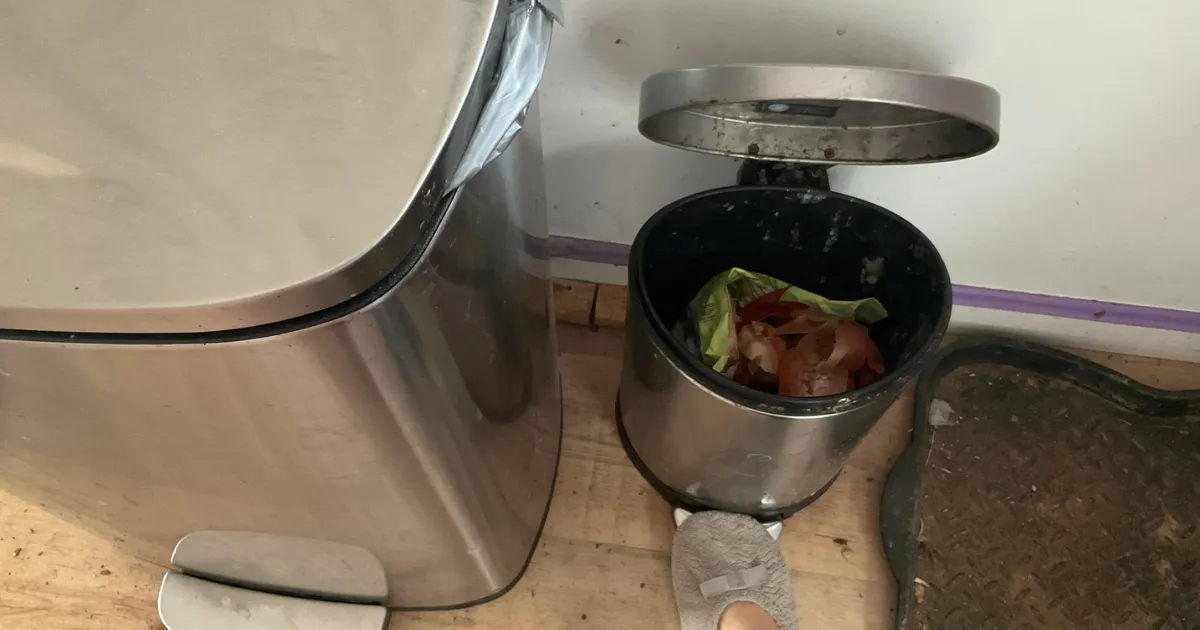 Our kitchen compost bin sits right beside the trash, so scraps go in the right can without anyone thinking about it.
What about electric composters?
You'll see countertop machines that grind and dry scraps overnight. I haven't tried one, so I can't tell you how they hold up. What I can say is that you'll still need somewhere for the dried scraps to go afterward, so the destination question doesn't disappear.
Keeping it from smelling (or worse)
A kitchen compost bin that's emptied often hardly smells. The trouble starts when scraps sit. We learned that the gross way: when we didn't empty ours often enough, we found maggots, which are fly larvae. Since then we empty it every day.
What keeps ours manageable:
- Empty it daily. This one habit does most of the work. If daily isn't realistic for you, empty it at least every couple of days, and more often in summer.
- Keep the lid closed. Flies can't lay eggs on what they can't reach.
- Wash it now and then. We don't use a bag, so rinse it when you empty it, and give it a real wash with soap when it looks or smells off. Let it dry before scraps go back in.
- Know your fruit fly source. Our fruit flies have never come from the compost can. They came from potatoes going bad in the basement. If you have fruit flies, check your produce before you blame the bin.
Some people keep scraps in the freezer or fridge until drop-off day, which stops smells completely. We can't spare the freezer space, so daily emptying is our version. If you're saving scraps for a weekly drop-off, though, cold storage may be worth a shelf.
The meat and dairy rule
Most composting advice says to keep meat, dairy, and greasy food out. I compost them anyway, but only because of how our pile works. They go deep into a big open pile where they're buried and break down, or they go to the chickens.
My rule is simple: If you can't build a pile big enough to bury them deep and heat up, don't compost them. In a small bin, a worm bin, or a shallow pile, meat and dairy smell, attract pests, and break down slowly. If you're using a drop-off site, follow its list. Many don't accept dairy or oils.
If pests are already a worry where you live, this rule matters even more. See Rats in Compost.
Where our scraps go: Chickens first, then the pile
At our house, the kitchen compost bin gets carried out once a day. Most scraps go to the chickens. We've mainly given them vegetable peelings. Our chickens won't eat onions, garlic, or citrus, so those go in the compost pile. Our quail used to eat some scraps too, and they need more protein than chickens do. (One firm rule here: we never feed chicken to our chickens.)
Whatever the birds don't eat goes into an open, two-bay cinder block compost pile. You don't need any of this to collect scraps. If you're dropping scraps at a city site or a friend's pile, you're doing the same job without the feathers.
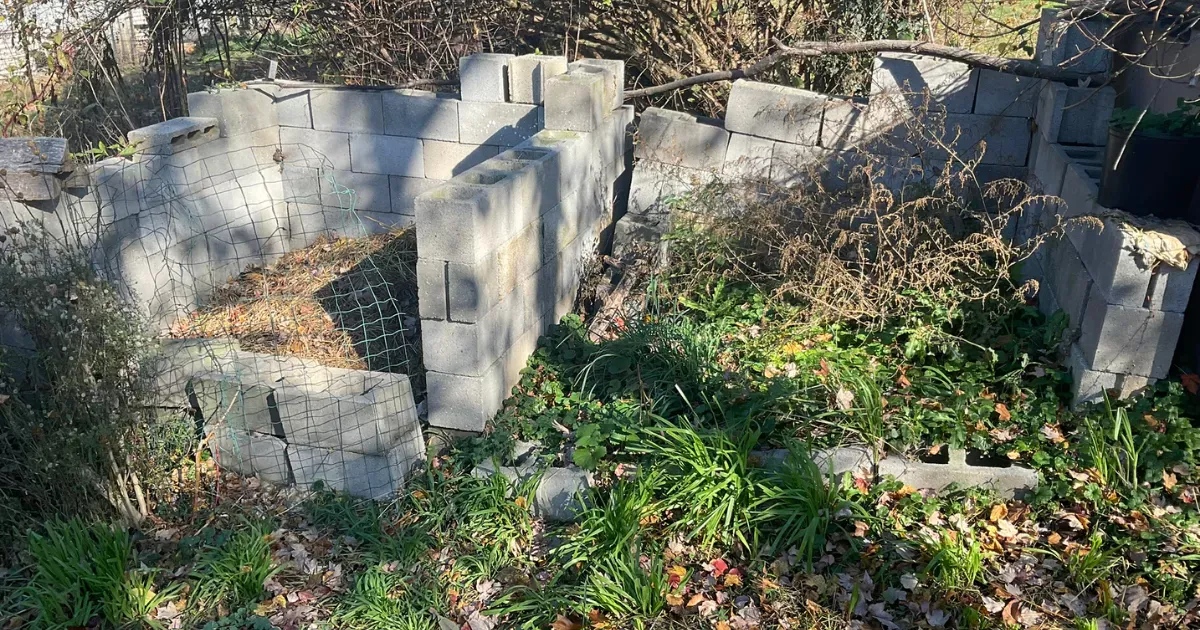 Our two-bay cinder block pile. One side gets fresh scraps while the other side ages.
Worms, honestly
If you don't have a yard, you'll hear "try a worm bin" a lot. It can work. Here's our honest history so you know what you're signing up for.
At our old house inside the Beltway, we had a worm tub in the basement. My husband took care of it. It got moldy, and harvesting the finished compost was a chore, so we stopped. Today our kids have a container of red wiggler worms from PetSmart as a school project, which is a much smaller and friendlier way to try worms.
If you want to try:
- Start small. A small container tells you whether you'll keep up with it before you invest in a big setup.
- Plan to check it every week. A worm bin is closer to a small pet than a trash can.
- If it gets moldy, wash the bin and let it dry out completely before you start again.
- Expect harvesting to take some effort. Separating worms from finished compost is the part most people don't mention.
If weekly checking sounds like one more thing to feel guilty about, skip worms for now. A drop-off site or a friend's pile is a perfectly good destination.
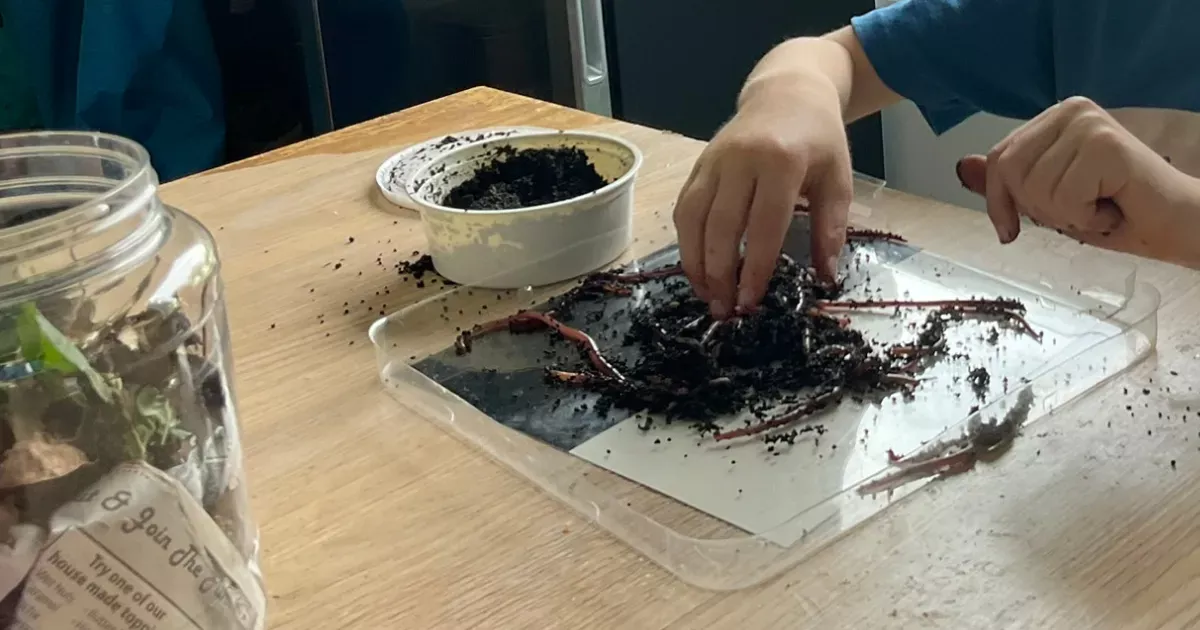 Our current worms are a small school project, which is a good way to find out if worms suit you.
Once you have finished compost, from worms or a pile, even a few pots can use it. See Container Gardening for Beginners.
Where to go next
- Want to waste less food before it becomes scraps? See Eat Me First Bin.
- Leftovers going bad? Give them a job the night you cook. See Cook Once, Eat Twice.
- Have a corner of yard? See Compost Pile for Beginners.
- Worried about rats? See Rats in Compost.
- More small food habits: See Reduce Food Waste at Home.
Kitchen compost bin FAQ
Does a kitchen compost bin smell?
Does a kitchen compost bin smell?
Not much, if you empty it often and keep the lid on. Smell comes from scraps sitting too long. We empty ours every day, and it doesn't stink up the kitchen.
How do I keep out fruit flies and maggots?
How do I keep out fruit flies and maggots?
Keep the lid closed and empty the bin before scraps start to rot. Our maggot trouble came from not emptying it often enough. If you see fruit flies, check your other produce too. Ours came from potatoes going bad in the basement, not the compost can.
How often should I empty it?
How often should I empty it?
Daily is easiest, and it's what we do. If your drop-off is weekly, store scraps in the fridge or freezer if you have room, so they don't rot on the counter.
Can I compost meat and dairy?
Can I compost meat and dairy?
Only if you have a pile big enough to bury them deep and heat up. I do, so mine go deep in the pile or to the chickens. In a small bin, a worm bin, or a small pile, leave them out. Drop-off sites set their own rules, and many don't take dairy or oils.
Do I need compostable bags?
Do I need compostable bags?
No. We don't put a bag in ours. We empty it straight onto the pile and wash the can when it needs it. If you use a drop-off site, check its rules before buying bags. Baltimore City's drop-off, for example, doesn't allow plastic bags.
Your kitchen compost bin checklist
- Pick where your scraps will go before you buy anything.
- Use a container with a lid that you already own.
- Set it next to your kitchen trash can.
- Empty it every day, or every couple of days at most.
- Wash it when it looks or smells off, and let it dry.
- Keep meat, dairy, and greasy food out unless your pile is big enough to bury them deep and heat up.
- Try worms only if you'll check on them every week.

Amy DeVries helps beginner urban homesteaders learn by doing. A lifelong gardener, she has grown food in spaces that expanded to 18 raised beds, patio containers, dwarf fruit and nut trees, and gravity-fed rainwater systems. She shares practical lessons shaped by real experience. Amy homeschools her children and teaches the same hands-on skills that guide her work.
You might like these
Eat Me First Bin? Try a Use-First Shelf Instead
An eat me first bin helps you eat food before it spoils. Here's the no-bin version our family uses: a use-first shelf and a weekly fridge check.
Cook Once, Eat Twice: Our Routine for Busy Nights and Lunch
Cook once eat twice is how our family handles 4-H and sports nights: double-batch dinners, plus extras warmed up for lunch. Here's our simple routine.
Reduce Food Waste at Home With Small Habits That Stick
Reduce food waste at home with small habits that fit real life: a use-first shelf, double-batch dinners, and a simple scrap bin. Start with one.
More Information
Disclosure
All information found on this website is editorial in nature and intended to motivate and inspire rather than be used as medical advice or legal advice.
As an Amazon Associate, I earn from qualifying purchases. I also use Google Ads and cookies as described in the Privacy Policy.
Thank you for your support!
By Amy DeVries, Copyright © 2011-2026 Sage-Urban-Homesteading.com All rights reserved.
