FYI: This website contains affiliate links. As an Amazon Associate I earn from qualifying purchases.
- Home
- Reduce Food Waste
- Bone Broth
Slow Cooker Chicken Bone Broth From a Leftover Carcass
By Amy DeVries
Short answer: Slow cooker chicken bone broth takes one leftover chicken carcass, water, a splash of vinegar, and time. I make it whenever we cook a whole bird. The carcass cooks on low for at least 8 hours, then I strain it, keep a jar in the fridge, and freeze the rest in 1-cup blocks for soup.
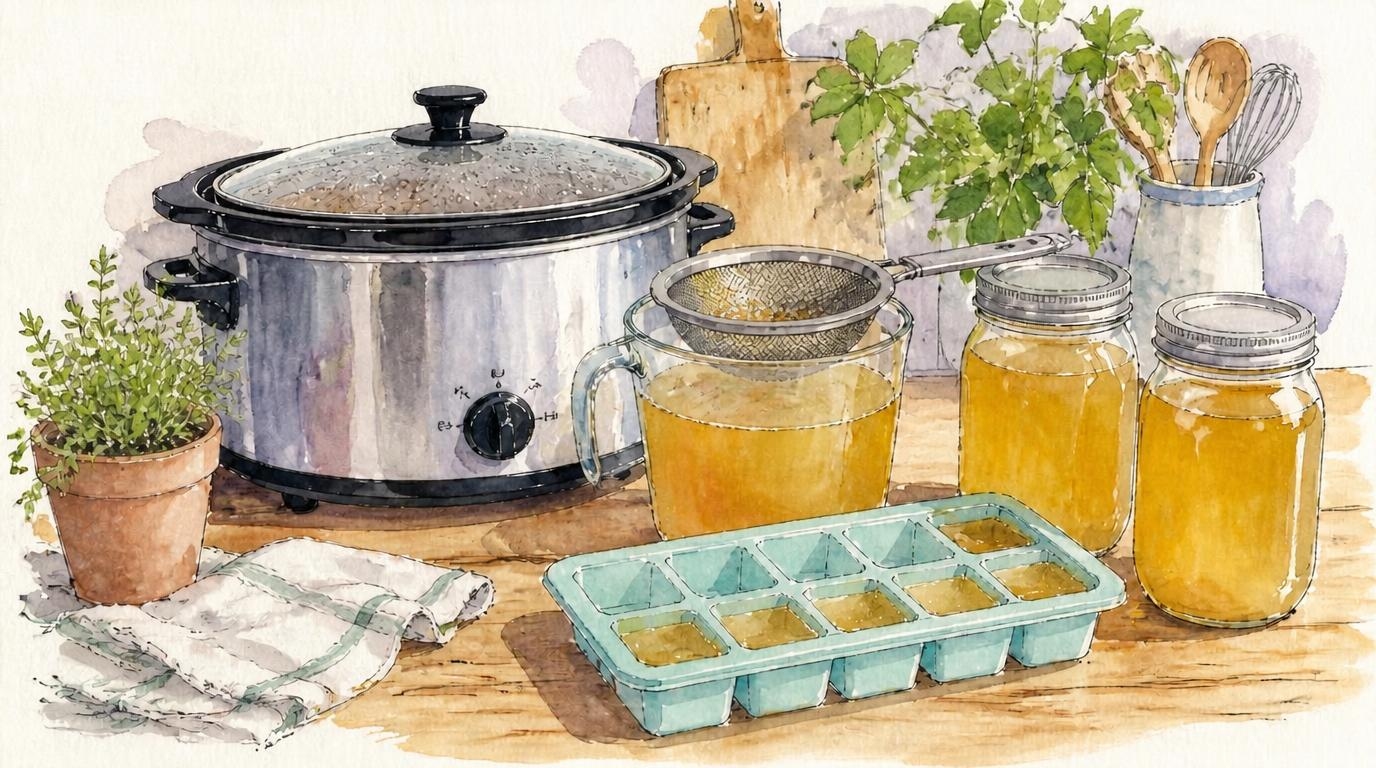 One chicken carcass, one slow cooker, and broth for the next several pots of soup.
If you roast a chicken and throw the bones away, you're not doing anything wrong. Most of us were never shown what to do with them. And it's fair to wonder if broth is worth the trouble.
Here's the honest answer: the hands-on part is short, a few minutes to start it and a little longer to strain it. The slow cooker does the rest while you sleep or go about your day. I make bone broth every time we cook a whole bird, and most of it becomes soup.
Picked Waste-Reduction Habits in my free guide or Starter Map? This page is one of two homes for "kitchen scrap routines." The other is Cook Once, Eat Twice. Broth is the scrap routine that turns the end of one meal into the start of the next one.
The smallest version: One pot and one carcass
You don't need a stockpot collection or a freezer full of bones. To start, you need:
- One carcass (whatever's left after the meat is eaten)
- One pot: a slow cooker, a big soup pot, or a multi-cooker
- Water and a splash of apple cider vinegar
- A strainer and something to pour the broth into
That's it. Make one batch, see if you use it up, and decide from there.
No whole bird? A rotisserie chicken carcass works too
If you don't roast chickens, the carcass from a store-bought rotisserie chicken is a good place to start. Pick off the meat for dinner or lunch, then save the bones for the pot. Rotisserie chickens are usually seasoned, so taste your broth before you add any salt.
How I make bone broth in the slow cooker
I have a Yedi multi-cooker that I use almost every day, which is exactly why broth usually goes in the slow cooker. A long simmer would tie up the Yedi all day. A plain slow cooker can run overnight without getting in anyone's way.
- Put the carcass in the slow cooker. No need to pick it clean. I leave the last bits of meat on and pick them off after the broth cooks.
- Add a splash of apple cider vinegar. I pour in just enough water to cover the bottom, add the vinegar, and let it sit a few minutes.
- Fill with water until the bones are covered.
- Cook on low. For bones from a bird we've already cooked, I go at least 8 hours. If I'm starting with a fresh, uncooked whole bird, I let it go 12 to 18 hours.
- Strain it. More on that below.
I don't add vegetables or salt to the broth. Vegetables go in when I make soup. Salt goes in at the end, once I know what the broth is for, so a jar meant for rice doesn't come out too salty.
If you'd rather pressure cook, my Instant Pot page has the time I use. For slow cooker safety basics, see USDA: Slow Cookers and Food Safety.
Extras, if you have them
None of these are required. They add more of what makes broth gel.
- Necks, backs, and feet. Before we raised our own chickens, I bought chicken backs and feet from a farmer just for broth. Ask at a farmers market if you're curious.
- Giblets, minus the liver. I add the giblets that come with a whole bird, but I cook the liver separately.
- Heads and feet from homegrown birds. When we process our own chickens, they go in too. We blanch and peel the feet as part of processing.
When the bird doesn't fit
This happens more than you'd think. The last rooster we butchered was a little long, so the lid wouldn't sit on the pot at first. After it cooked a while, it softened enough to bend and fit down inside. With a big carcass, break it into pieces before it goes in.
Not ready tonight? Freeze the carcass
You don't have to make broth the day you roast a chicken. I've kept carcasses in the freezer until a better time, and the broth still turned out fine.
One caution: USDA says to thaw meat and poultry before it goes in a slow cooker. Thaw a frozen carcass in the fridge first. USDA: Slow Cookers and Food Safety
The real risk is a freezer backlog. It's easy for me to end up with too many bones waiting. If yours starts to pile up, make broth before you save another carcass.
Straining and the fat
I set a metal strainer over a large Pyrex measuring cup and pour the broth through it. The cup's spout makes it easy to pour into jars and trays afterward. Then I pick the meat off the cooked bones. It comes off easily now, and it goes into the soup.
I don't skim the fat unless there's a lot. If you want to, wait until the broth has chilled in the fridge. The fat forms a layer on top, and it's much easier to lift off cold than to skim hot.
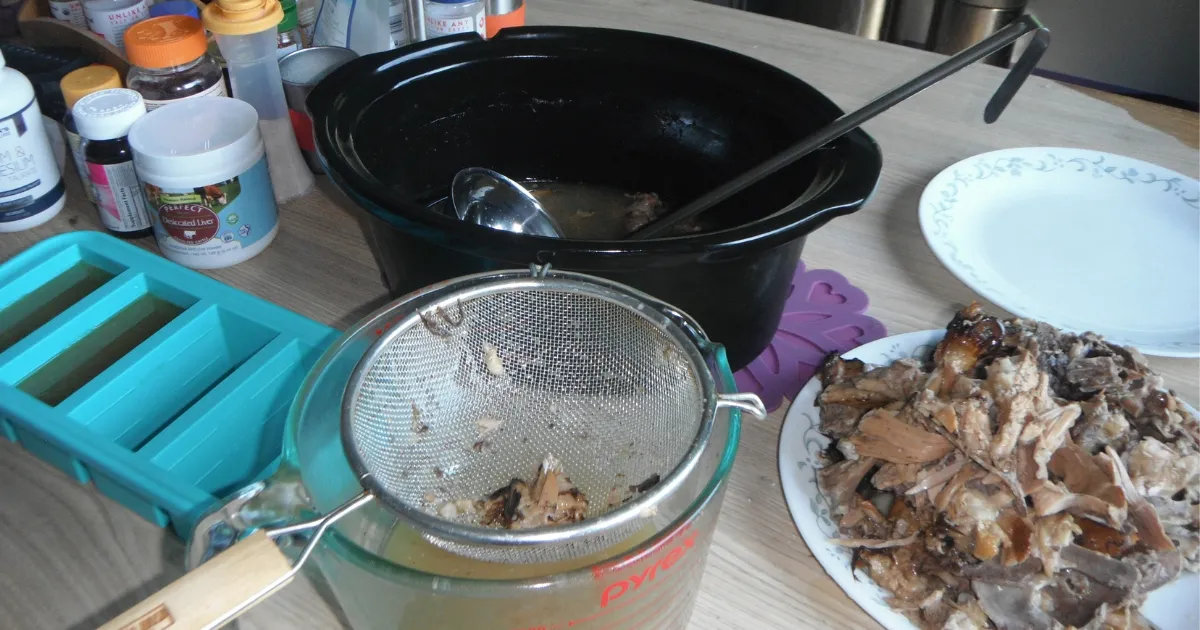 Straining into a big Pyrex measuring cup. The picked meat is set aside for soup, and the Souper Cubes tray is next.
Storing and freezing broth
Broth we'll use soon goes into glass mason jars in the fridge. The rest goes into Souper Cubes for the freezer.
- Fill the trays. I like the 1-cup Souper Cubes for broth. One block is an easy measure, and it thaws faster than a 2-cup block. I fill some 1/2-cup trays too, for recipes that need just a little.
- Chill them in the fridge first. The broth cools and gels in the trays.
- Move the trays to the freezer.
- Bag the frozen blocks. Once they're solid, I pop them out into a large zipper bag and write on the bag's label with a marker. That frees up the tray for the next batch.
You don't need special trays to start. A muffin tin or any freezer-safe container works, as long as you label it.
For how long broth keeps in the fridge and freezer, and how to cool a big batch safely, see USDA: Leftovers and Food Safety.
If your freezer is the small one on top of the fridge, flat labeled bags of blocks stack well. See Upright Freezer Organization.
How we use it up
Most of our broth becomes soup. The meat I picked off the carcass goes back in, along with whatever vegetables we have. I've also used broth to cook rice and as an ingredient in recipes.
If you're not sure you'll use it, start with one batch and one plan: "This is Thursday's soup." Giving broth a job works the same way as giving leftovers one. See Cook Once, Eat Twice.
What to do with the bones afterward
Cooked-out bones go deep into our compost pile. I only do that because our pile is big enough to bury them deep, where they break down. We never feed chicken to our chickens.
If you don't have a big pile, put the bones in the trash. If you use a food scrap drop-off, check its list first. Many don't take meat or bones. See Kitchen Compost Bin.
Wondering whether the same bones can make a second batch? That's in the FAQ below.
Turkey bone broth after Thanksgiving
Turkey works the same way as chicken. I've claimed the remains of the Thanksgiving turkey at our family dinner. If you're a guest, it never hurts to ask the host whether anyone wants the carcass.
- Make it fit. A turkey carcass is bigger than most slow cookers. Break it into pieces so the lid closes.
- Add the neck. Turkey necks make a nice addition to broth.
- Same method. Vinegar and water to cover, a long, slow cook, then strain and freeze.
- No time that weekend? Freeze the carcass, then thaw it in the fridge before it goes in the slow cooker.
Don't expect a bigger batch. In the same slow cooker, filled the same way, a turkey makes about as much broth as a chicken. The pot sets the amount, not the bird. If the pieces don't all fit, the extra can wait in the freezer for another batch.
What I use, if you're shopping
Try your first batch with what you already have. If broth becomes a habit and something keeps slowing you down, these are what we use that you can buy on Amazon (affiliate links). Each one comes with a reason to skip it.
- Slow cooker. It runs overnight while the Yedi stays free for daily cooking. We have the Hamilton Beach Portable 6 Quart Slow Cooker. I never use the thermometer and don't know where I put it. Skip it if you have a big soup pot, an Instant Pot, or a multi-cooker you don't need all day.
- Souper Cubes, 1-cup and 1/2-cup. One block is an easy measure, and the frozen blocks pop right out. I use the Souper Cubes 1-cup and the Souper Cubes 1/2-cup for broth. Skip it if a muffin tin or the freezer containers you have will do for now.
- Large glass measuring cup. I strain into it, and the spout makes filling jars and trays less messy. I have a Pyrex 8 cup, which I don't see available, but this Amazon Basics 8 cup glass measuring cup should work. Skip it if you have a big bowl and a ladle.
- Metal mesh strainer. It sits across the measuring cup and catches the bones and bits. I have this Winco 6-1/4" metal mesh strainer that can rest on the top rim of the measuring cup. Skip it if you already own a colander or strainer that fits over a bowl.
Where to go next
- Want leftovers that actually get eaten? Give them a job the night you cook. See Cook Once, Eat Twice.
- Bones and scraps with nowhere to go? See Kitchen Compost Bin.
- Freezer a black hole? See Upright Freezer Organization.
- Food going bad before you get to it? See Eat Me First Bin.
- Rather use a pressure cooker? See Instant Pot Recipes.
- More small food habits: See Reduce Food Waste at Home.
Slow cooker chicken bone broth FAQ
Can I use a rotisserie chicken carcass?
Can I use a rotisserie chicken carcass?
Yes. Chicken carcass broth works the same way whether you roasted the bird or bought it cooked. Rotisserie chickens are usually seasoned, so taste the broth before you add any salt.
Why didn't my broth gel?
Why didn't my broth gel?
Usually there wasn't enough collagen from the joints, or it didn't cook long enough. Necks, backs, and feet help, and so does a longer cook. Broth that doesn't gel still tastes good and works for soup and rice. If you want a firmer gel, you can stir in a little powdered gelatin.
How long does bone broth keep in the fridge and freezer?
How long does bone broth keep in the fridge and freezer?
Follow USDA's guidance for leftovers. Their page also covers cooling a big batch safely: USDA: Leftovers and Food Safety. Whatever we won't use soon goes straight into the freezer trays.
Can I reuse the bones for a second batch?
Can I reuse the bones for a second batch?
You can. I used to, mostly after a shorter cook. Now I cook longer and use the bones once, which keeps my freezer from filling up with bones.
Your bone broth checklist
- Save the carcass the next time you cook a whole bird or buy a rotisserie chicken.
- No time today? Freeze it, then thaw it in the fridge before it goes in the slow cooker.
- Add a splash of apple cider vinegar and water to cover.
- Cook it low and slow: at least 8 hours for cooked bones.
- Strain it, and save any meat for soup.
- Keep a jar in the fridge and freeze the rest in blocks.
- Label the bag with a marker.
- Bury the bones deep in a big compost pile, or put them in the trash.
- Make one batch before you start saving more bones.

Amy DeVries helps beginner urban homesteaders learn by doing. A lifelong gardener, she has grown food in spaces that expanded to 18 raised beds, patio containers, dwarf fruit and nut trees, and gravity-fed rainwater systems. She shares practical lessons shaped by real experience. Amy homeschools her children and teaches the same hands-on skills that guide her work.
You might like these
Eat Me First Bin? Try a Use-First Shelf Instead
An eat me first bin helps you eat food before it spoils. Here's the no-bin version our family uses: a use-first shelf and a weekly fridge check.
Cook Once, Eat Twice: Our Routine for Busy Nights and Lunch
Cook once eat twice is how our family handles 4-H and sports nights: double-batch dinners, plus extras warmed up for lunch. Here's our simple routine.
Kitchen Compost Bin: Where Scraps Go Without a Yard
A kitchen compost bin is the easy part. Here's how to pick where your scraps go first, keep the bin from smelling, and skip the gear you don't need.
More Information
Disclosure
All information found on this website is editorial in nature and intended to motivate and inspire rather than be used as medical advice or legal advice.
As an Amazon Associate, I earn from qualifying purchases. I also use Google Ads and cookies as described in the Privacy Policy.
Thank you for your support!
By Amy DeVries, Copyright © 2011-2026 Sage-Urban-Homesteading.com All rights reserved.
