FYI: This website contains affiliate links. As an Amazon Associate I earn from qualifying purchases.
Knitting Terms to Learn
By Amy DeVries
You can have a lot of fun with knitting terms. There are interesting wordplays in the names of many small shops and artists.
If you want some real laughs, check out the book It Itches: A Stash of Knitting Cartoons.
Knitting Terms and Vocabulary
If you can't understand knitting patterns even after the abbreviations are translated, you might find this list of terms useful.
- Bind off
- Secure the last row of stitches to stop working. It's usually done with a larger needle to keep things loose.
- Blocking
- Finishing a piece by washing it and shaping it as it dries.
- Cable
- Stitches that are carried out of order to create twist designs.
- Cast on
- Make a row of foundational stitches on one needle so you have somewhere to begin knitting. There are various methods for binding on depending on what type of edge you want.
- Decrease
- To create less stitches in a row. There are a couple of ways to do it depending on which way you want to slant.
- Entrelac
- A way of knitting a design with textured squares or triangles to create a basketweave illusion.
- Fair Isle
- Carrying strands of multiple colors across the back. It's traditionally done with two colors, one held in each hand for two-handed knitting.
- Frogging
- "Rip it" to take out stitches.
- Increase
- To create more stitches in a row. There are a couple of ways to do it.
- Knit
- The basic stitch that consists of a small loop pulled up through another loop.
- Purl
- The reverse side of a knit stitch. To see purl, you can look at the back of knitting, or you can work a stitch in reverse on the needle.
- Ribbing
- A stretchy area of ridges that go up and down.
- Round
- A circular row of stitches.
- Seaming
- Sewing sides together.
- Selvedge
- The edge of the knitted piece where the stitches are already secured and stable.
- Skein
- A bunch of yarn in a twisted shape rather than a ball.
Now you're ready to learn about knitting stitches!
For a well-rounded education, you should also take a look at the crochet terms and weaving terms.
More to Explore
Amy DeVries helps beginner urban homesteaders learn by doing. A lifelong gardener, she has grown food in spaces that expanded to 16 raised beds, patio containers, dwarf fruit and nut trees, and gravity-fed rainwater systems. She shares practical lessons shaped by real experience. Amy homeschools her children and teaches the same hands-on skills that guide her work.
FYI: This website contains affiliate links. As an Amazon Associate I earn from qualifying purchases.

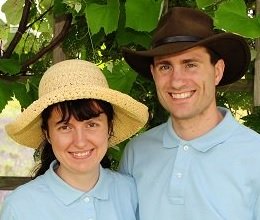 Homesteading and homeschooling near Baltimore, Maryland
Recent Articles


-
Paleo Gingerbread with Coconut Flour
Oct 25, 26 07:27 AM
 Looking for grain-free paleo gingerbread? This is a very tasty recipe that can be used to make bars or soft cookies.
-
Monthly Sensory Bins
Oct 03, 26 07:43 AM
 Exploring monthly sensory bins is a fun way to help young children develop their senses and imagination.
-
Traditional Quilt Blocks for Elementary Math
Sep 13, 26 09:16 AM
 Use traditional quilt blocks to teach geometry, fractions, and patterning with coloring pages, pattern block activities, and creative classroom ideas.
More Information
Disclosure
All information found on this website is editorial in nature and intended to motivate and inspire rather than be used as medical advice or legal advice.
As an Amazon Associate, I earn from qualifying purchases. I also use Google Ads and cookies as described in the Privacy Policy.
Thank you for your support!
By Amy DeVries, Copyright © 2011-2026 Sage-Urban-Homesteading.com All rights reserved.
