FYI: This website contains affiliate links. As an Amazon Associate I earn from qualifying purchases.
- Home
- Food Preservation
- Smoking Food
Smoking Food
By Amy DeVries
My grandmother's property had a special little building used for smoking food that was called the Meat House. By the time I was around, it was used for tool storage, but I could still see the charred walls and smell the smoky residue.
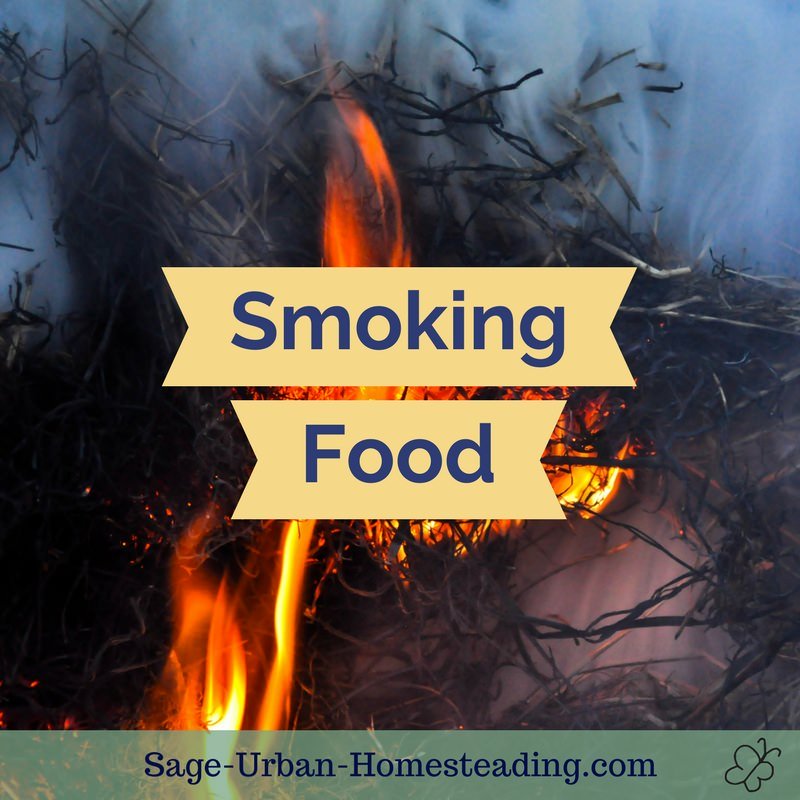
Smoking food helps to dry it out and leaves a fine layer of soot residue that repels most insects and bacteria.
Equipment
You don't need a whole shed unless you are butchering a couple of hogs at a time and curing meat. Most people just want to do a little meat or cheese, so a small contained food smoker device should be sufficient.
We plan to build a homemade smoker that can also serve as a grill and bread oven. The plans were published in Mother Earth News a couple of years ago and are available online for free.
I'll share our experiences and photos here when it happens! Please share your homesteading adventures, too.
Best Woods for Smoking Food
The type of woods you choose to use for smoking will affect the food's flavor.
Obviously, you need to choose woods that are safe for people to eat. Always inspect it carefully.
My family's traditional recipe for smoking the hog meat was apple and
hickory with a little bit of sassafras. The wood should be green to
smoke well. Learn more about my family's traditional foods and historical food preservation in my recipe book full of homemade recipes from our little corner of the mid-Atlantic region.
Ideas for foods that can be smoked include bacon, ham, cheese, salmon, jerky, chicken, or whatever. What will you make?
More to Explore

Amy DeVries helps beginner urban homesteaders learn by doing. A lifelong gardener, she has grown food in spaces that expanded to 16 raised beds, patio containers, dwarf fruit and nut trees, and gravity-fed rainwater systems. She shares practical lessons shaped by real experience. Amy homeschools her children and teaches the same hands-on skills that guide her work.
FYI: This website contains affiliate links. As an Amazon Associate I earn from qualifying purchases.

 Homesteading and homeschooling near Baltimore, Maryland
Recent Articles


-
Paleo Gingerbread with Coconut Flour
Oct 25, 26 07:27 AM
 Looking for grain-free paleo gingerbread? This is a very tasty recipe that can be used to make bars or soft cookies.
-
Monthly Sensory Bins
Oct 03, 26 07:43 AM
 Exploring monthly sensory bins is a fun way to help young children develop their senses and imagination.
-
Traditional Quilt Blocks for Elementary Math
Sep 13, 26 09:16 AM
 Use traditional quilt blocks to teach geometry, fractions, and patterning with coloring pages, pattern block activities, and creative classroom ideas.
More Information
Disclosure
All information found on this website is editorial in nature and intended to motivate and inspire rather than be used as medical advice or legal advice.
As an Amazon Associate, I earn from qualifying purchases. I also use Google Ads and cookies as described in the Privacy Policy.
Thank you for your support!
By Amy DeVries, Copyright © 2011-2026 Sage-Urban-Homesteading.com All rights reserved.
