FYI: This website contains affiliate links. As an Amazon Associate I earn from qualifying purchases.
Ticks in the Garden: Small Habits That Help You Catch Them Early
By Amy DeVries
Short answer: Ticks in the garden are a city and suburban problem too, and they don't disappear when summer ends. You don't need sprays or a tick-proof yard to start. The smallest version that works is a quick tick check when everyone changes clothes at bedtime, plus a good removal tool in the drawer.
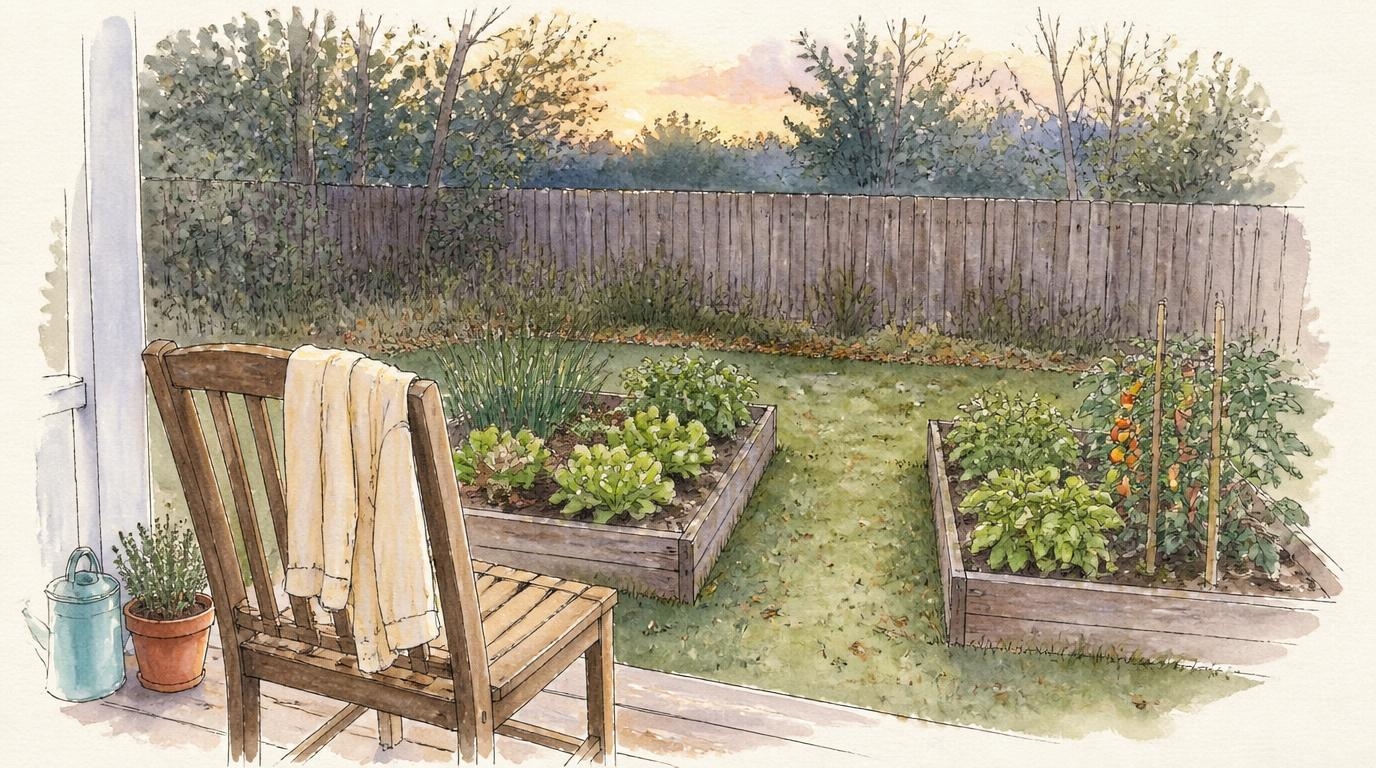 Ticks like the edges of a garden, so our checks happen at bedtime.
I learned to take ticks seriously the hard way. A deer tick bit me on my honeymoon, even though I'd used a natural repellent.
Since then, I've found ticks at both of our homes: the quarter acre inside the Baltimore Beltway and the 3 acres in central Maryland where we live now. If you garden in a small yard and worry you're not doing enough, you're not behind. Here's the habit our family actually keeps, and the things I've decided to skip.
For anything medical, like what to do after a bite or what symptoms to watch for, follow the CDC's tick guidance .
Ticks aren't only a country problem
It's easy to picture ticks as something you get on a hike in the woods. Our Beltway house proved otherwise. It sat along a wildlife buffer next to a road, and deer used that strip of trees. We had plenty of ticks on that quarter acre.
Many people pick up ticks in their own yards and neighborhoods. A garden bed next to a hedge, a fence line, or a strip of tall grass counts.
And not only a summer problem
One January, a visitor at our Beltway house found a tick crawling on them. All they'd done was walk up the driveway to our door.
At our house in the country, our peak tick season is October and November. That's when we find them on the sheep. Ticks can be active any time winter temperatures are above freezing, so I don't put our tick habits away when the garden winds down.
Where ticks wait in a small yard
Ticks like shady, damp edges more than open, sunny lawn. The University of Rhode Island's TickEncounter lists places where yards meet trees, garden plantings, and leafy shade.
I don't redesign my yard around this. I use it to know when a check matters most: after weeding along the fence, raking leaves, or cutting through tall grass.
The smallest version: a bedtime tick check
Our whole system is one habit. We check for ticks when we change clothes at bedtime.
It fits into a routine we already have, so nobody has to remember an extra step. It also means a tick picked up in the garden that morning gets found the same day.
Know your child's skin
In spring, ticks are so small they can look like a freckle or a mole. Knowing my children's skin well is what lets me spot something new right away.
If a "mole" wasn't there yesterday, look closer.
When kids want to change on their own
As my kids get older, they want privacy when they change. That's fair. I remind them to check themselves, and I offer to check their backs, since that's the one spot nobody can see well alone.
The tick we missed
One November morning, my son woke up complaining about an itchy mosquito bite. Mosquitoes were long gone by then, so that didn't add up. He hadn't asked me to check his back the night before.
I found a swollen tick and an irritated spot. It came off completely with our Tick Twister (Amazon affiliate link).
I took a photo so he could see what had been itching. Now he knows to tell me right away if he feels something, and to let me check.
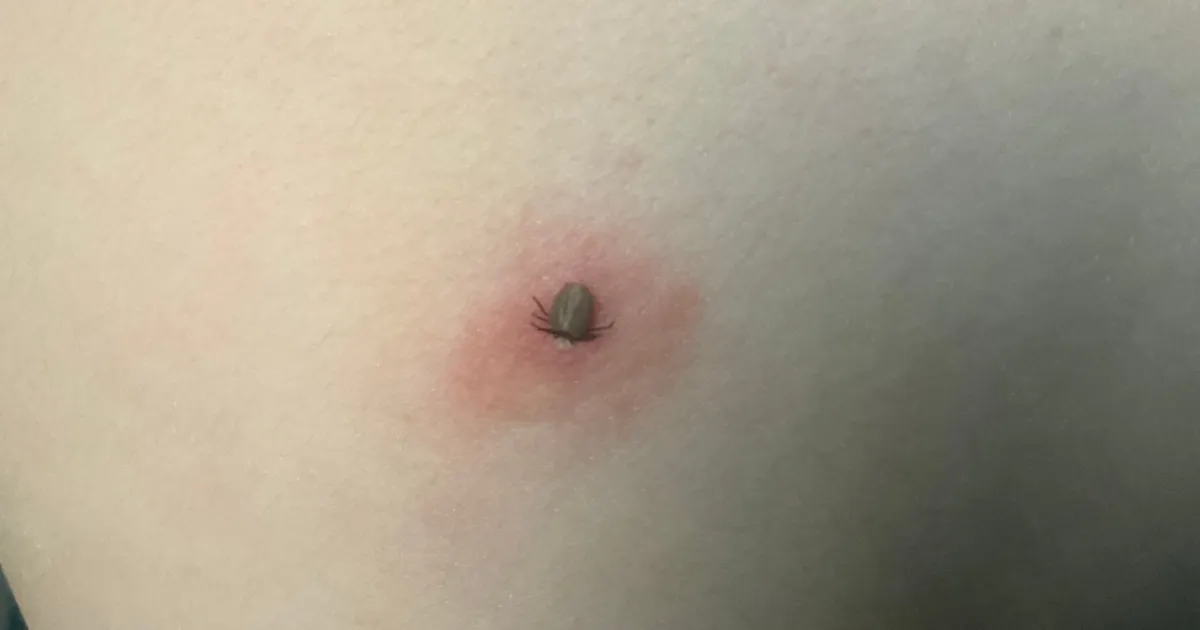 The tick we missed in November. It came off completely with our Tick Twister, and my son is doing fine.
If you find a tick attached, the CDC's tick removal steps explain how to remove it and what to watch for afterward.
Small upgrades if you need them
Start with the bedtime check. Add these only if they solve a real problem for you.
Light-colored clothes
We already wear light colors in summer to stay cooler. A bonus is that a dark tick shows up more easily on a pale shirt or pants.
Check the dog at the door
Our dog takes a flea and tick preventive from the vet. We've never had to pull a tick off her, but we have found ticks crawling on her. A pet can carry a tick inside, so a quick look when she comes in is worth it. Ask your vet which preventive fits your pet.
Permethrin, but only for hikes
We use a permethrin clothing spray only before a hike somewhere with lots of ticks. We don't use it for everyday gardening. If you try it, follow the label and the EPA's guidance on repellents.
What about chickens?
Quail, chickens, and guineas will eat ticks. We hope our chickens lower the population. Realistically, I think our sheep help more. They cover more ground, and we pick the ticks off them and squish them between bricks or rocks, which breaks the life cycle.
I wouldn't get backyard birds just for ticks. They're a big commitment with their own trade-offs. If you already have them, think of tick-eating as a small bonus.
What I skip
- Yard sprays. We're outside nearly every day, and I don't want our family or animals exposed to sprays all the time.
- Tick-repelling plants. Popular Science points out that a few herbs or flowers won't protect a whole yard. I'd rather spend that garden space on food or flowers for the bees.
- Redesigning the yard. Clearing every edge isn't realistic in a small rental yard, or on our 3 acres. A daily check works wherever you live.
If you're shopping: what we use
You don't need much gear for this. These are the two things we actually reach for (Amazon affiliate links).
- Tick Twister. This is our favorite tool. It's the one that removed my son's tick completely. Keep it somewhere you can grab it fast, like a kitchen drawer or the bathroom where you change at night.
- Sawyer Permethrin clothing spray. We use it only before hikes in tick-heavy places, not for everyday gardening. If ticks aren't a problem where you garden, I'd skip it.
Where to go next
- Back to the garden hub: Urban Gardening in Small Spaces has the rest of my small-yard garden pages.
- Another critter problem: Rats in Compost: How to Keep Them Out. Rodents can carry ticks too, so keeping their food sources down helps both problems.
- Starting small: Container Gardening for Beginners is a good first step if you're gardening on a patio or porch instead of in the yard's edges.
- New here? Urban Homesteading for Beginners shows where to begin.
If you're not sure which small system to start with, my free guide, Which Urban Homestead System Should You Start First?, helps you pick one that fits your space and energy.
If you'd like to plan a bit further, my $12 Small-Space Self-Sufficiency Starter Map helps you choose your first three systems and gives you a simple 30-day plan.
Ticks in the garden: FAQ
Can you get ticks in a city or suburban yard?
Can you get ticks in a city or suburban yard?
Yes. We had plenty at our quarter acre inside the Baltimore Beltway, which backed onto a wildlife buffer that deer used. Ticks can ride in on deer, rodents, birds, and pets.
Are ticks only a summer problem?
Are ticks only a summer problem?
No. A visitor found one on them in January after a short walk up our driveway. Our busiest tick months now are October and November.
Do chickens get rid of ticks?
Do chickens get rid of ticks?
Chickens, quail, and guineas will eat ticks, but I wouldn't count on them to clear a yard. At our country place, picking ticks off the sheep probably does more. Keep up your own checks either way.
Do tick-repelling plants or yard sprays work?
Do tick-repelling plants or yard sprays work?
A few plants won't protect a whole yard. We skip yard sprays because we're outside every day and don't want that constant exposure. A daily tick check is the one habit we rely on.
What should I do if I find a tick attached?
What should I do if I find a tick attached?
Remove it completely with a proper tool. We use a Tick Twister (Amazon affiliate link). For removal steps and what to watch for afterward, follow the CDC's guidance.
Your tick check checklist
- Check for ticks when you change clothes at bedtime
- Look closely at any new "freckle" or "mole"
- Offer to check backs, the spot nobody sees alone
- Keep a tick removal tool where you can grab it fast
- Look over pets when they come inside
- Keep checking after summer ends
- Follow the CDC's guidance if you find one attached

Amy DeVries helps beginner urban homesteaders learn by doing. A lifelong gardener, she has grown food in spaces that expanded to 18 raised beds, patio containers, dwarf fruit and nut trees, and gravity-fed rainwater systems. She shares practical lessons shaped by real experience. Amy homeschools her children and teaches the same hands-on skills that guide her work.
You might like these
GreenStalk Review: Is a Vertical Planter Worth It?
My GreenStalk review after three seasons with three planters: what grew well, what didn't, the real downsides, and who should skip it.
Container Gardening for Beginners: What to Grow in Pots
Container gardening for beginners: start with one big pot near your water, see what grew well in mine, what flopped, and what I'd skip.
Square Foot Gardening for Beginners
Square foot gardening for beginners starts with one 4x4 bed your hose can reach. How to fill it, plant by the square, and keep weeds easy to pull.






More Information
Disclosure
All information found on this website is editorial in nature and intended to motivate and inspire rather than be used as medical advice or legal advice.
As an Amazon Associate, I earn from qualifying purchases. I also use Google Ads and cookies as described in the Privacy Policy.
Thank you for your support!
By Amy DeVries, Copyright © 2011-2026 Sage-Urban-Homesteading.com All rights reserved.
