FYI: This website contains affiliate links. As an Amazon Associate I earn from qualifying purchases.
- Home
- Beginners
Urban Homesteading for Beginners: Start Here If You Feel Overwhelmed
By Amy DeVries
Short answer: Urban homesteading for beginners works best when you start with one small system that fits your space, time, and energy, not with land or a pile of gear. There are four to choose from: container gardening, rainwater catchment, home efficiency, and waste-reduction habits. Keep your first one small, let it settle in, and add more only once it's working. My free guide helps you pick which one to start with.
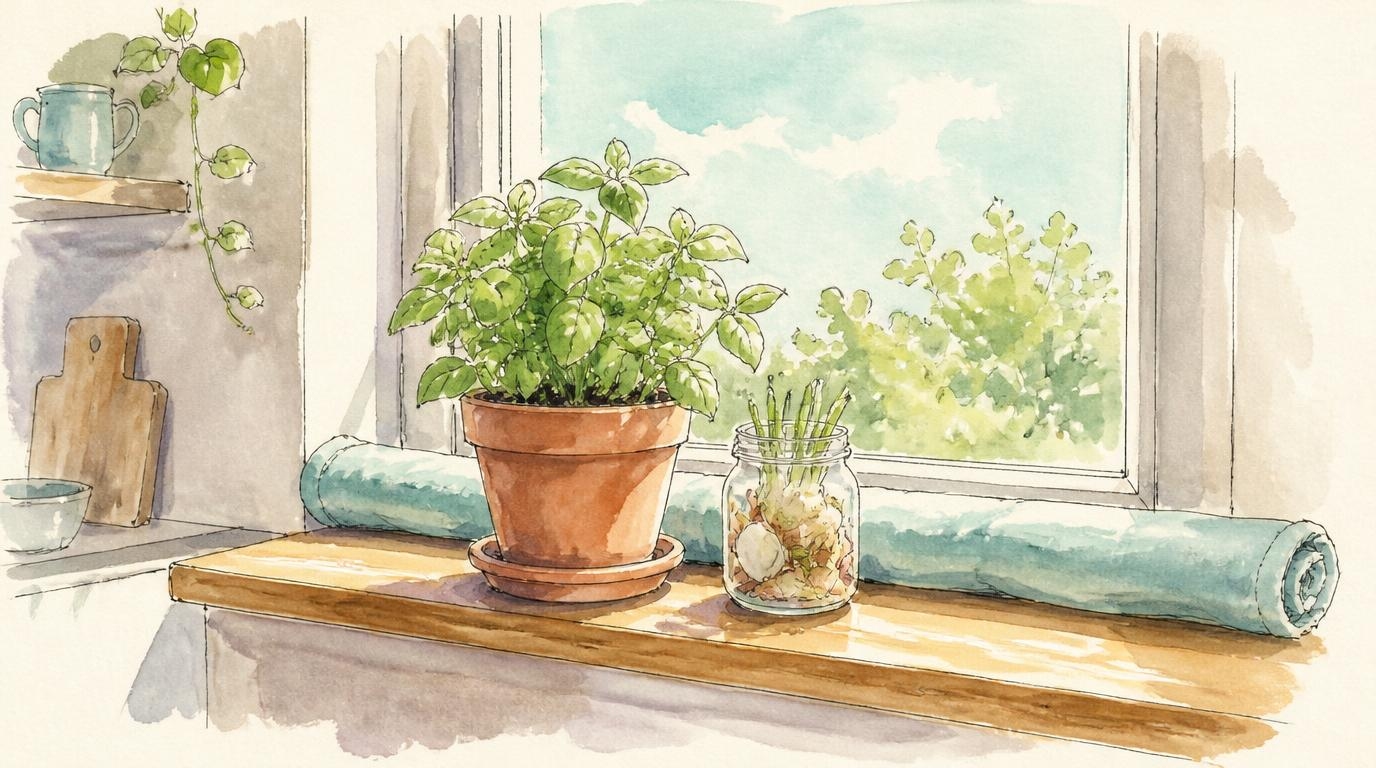 Urban homesteading can start on one windowsill.
If you've read a dozen "how to start homesteading" lists and come away more overwhelmed than when you started, you're in the right place. That feeling is normal, and it doesn't mean you're not cut out for this.
You don't need land, expensive gear, or a perfect setup
A windowsill counts. A balcony counts. A kitchen shelf counts. The goal isn't acreage. It's a little more capability at the scale you live at right now.
I'm Amy, and I've been writing Sage Urban Homesteading since 2011. I started on a quarter acre inside the Baltimore Beltway, and I still remember what it felt like to want this life without knowing where to begin. Today I rent a 1920s house on 3 acres in central Maryland, but this site is for the micro homesteader I used to be.
Here's the rule I follow on every project: start with the smallest version that works, then upgrade only when it solves a real problem. Small progress isn't a lesser version of homesteading. It's how homesteading actually gets built.
Not sure where to start? Get the free guide
This short, printable guide helps you pick your best first step based on your real space, time, and energy, not your dream setup. It takes a few minutes, and you'll come away with one clear place to begin instead of ten tabs open.
- Made for apartments, balconies, patios, and small yards
- Renter-friendly options included
- No gear to buy before you start
The guide arrives in your inbox, along with my newsletter about once a week. You can unsubscribe anytime.
The four small systems everything here is built on
Every page on Sage Urban Homesteading fits into one of four systems. You don't need all four. Most people do best starting with just one.
Patio & Container Gardening
Growing a little of your own food in pots, planters, or a small bed, whether that's on a balcony, a patio, or a sunny windowsill. Explore Urban Gardening in Small Spaces.
Simple Rainwater Catchment
Saving and reusing water on a small scale, from everyday water-saving habits to one rain barrel where local rules allow it. Explore Water Collection.
Home Efficiency
Small changes indoors that make your home more comfortable and waste less energy. Many of them work for renters too. Explore Home Efficiency.
Waste-Reduction Habits
Using what you already have more carefully: food you actually eat, scraps with somewhere to go, and fewer things you throw away. Explore Reduce Food Waste at Home.
Not sure which one fits you? That's exactly what the free guide is for. Get the free guide.
If you only have…
Want something to read while the guide lands in your inbox? Pick the line that matches your space.
- No outdoor space (an apartment): Start with the Eat Me First Bin. It's one shelf or bin, it costs next to nothing, and you don't need a landlord's permission.
- A balcony or patio: Start with Container Gardening for Beginners. One pot in decent light is a real beginning.
- A small yard: Start with Rain Barrels: A Beginner's Guide. A yard is where catching rain becomes possible. Check your local rules first, and the page walks you through the rest.
Whichever line you pick, you're reading one page, not signing up for a whole new lifestyle.
What if you start wrong?
This is the fear that keeps most people researching instead of starting. Here's the truth: a first step that doesn't stick isn't proof you're bad at this. It's information about your space, your schedule, and what you actually enjoy.
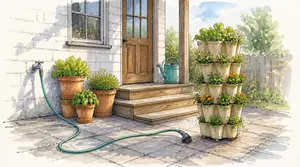
I've overbuilt plenty of times myself. My first summer on 3 acres, I planted long in-ground rows the hose couldn't reach and spent an hour every morning hauling watering cans. By the end of the season, the weeds had won. Now I grow most of our garden in a few vertical planters the hose reaches easily, and I enjoy it far more.
A few things that keep a first step small enough to stick:
- Pick one system, not four. Let the others wait. They'll still be there.
- Try the habit before you buy the gear. If it fits your week for a few weeks, then think about upgrading.
- Make it smaller than you think you need to. You can always add more. Shrinking a project that's already overwhelming you is much harder.
- Notice what's annoying, and fix just that. That's how a beginner system turns into one that lasts.
If you'd like help choosing that one first step, the free guide is the place to start.
Ready to plan beyond your first step?
Once you know where you want to start, the Small-Space Self-Sufficiency Starter Map ($12) helps you choose your first three systems and gives you a 30-day plan for the first one. It's optional. The free guide is the right place to begin.
Who's behind Sage Urban Homesteading
I'm Amy. I've been homesteading in small, practical ways since my quarter-acre days inside the Beltway, and writing about it here since 2011. If you'd like the longer story, you can meet me on my About page.
You don't have to figure out everything today. Pick one small thing, and let it teach you what comes next.
Amy DeVries helps beginner urban homesteaders learn by doing. A lifelong gardener, she has grown food in spaces that expanded to 18 raised beds, patio containers, dwarf fruit and nut trees, and gravity-fed rainwater systems. She shares practical lessons shaped by real experience. Amy homeschools her children and teaches the same hands-on skills that guide her work.
You might like these
Water Collection for Beginners: Simple Home Systems
Start collecting rainwater at home with one barrel. Find every water collection step here, from stands and diverters to overflow, and drip watering.
Home Efficiency for Beginners: Start Small, Stay Warm
Home efficiency for beginners: small habits and removable fixes that make your home warmer and cheaper to run, even if you rent.
Urban Gardening in Small Spaces
Urban gardening in small spaces starts with the garden you can water. Find the right first page for your patio, yard, or no-outdoor-space home.
More Information
Disclosure
All information found on this website is editorial in nature and intended to motivate and inspire rather than be used as medical advice or legal advice.
As an Amazon Associate, I earn from qualifying purchases. I also use Google Ads and cookies as described in the Privacy Policy.
Thank you for your support!
By Amy DeVries, Copyright © 2011-2026 Sage-Urban-Homesteading.com All rights reserved.
