FYI: This website contains affiliate links. As an Amazon Associate I earn from qualifying purchases.
- Home
- Reduce Food Waste
- Canning
Is Canning Worth It? What I Learned From Two Midnight Batches
By Amy DeVries
Short answer: Is canning worth it? For most small, busy households, not as a first step. Canning pays off when you have a real glut, a free day, and a food you'll eat all year. Otherwise, freezing, drying, sharing, or buying good canned goods usually saves more time, and nothing goes to waste.
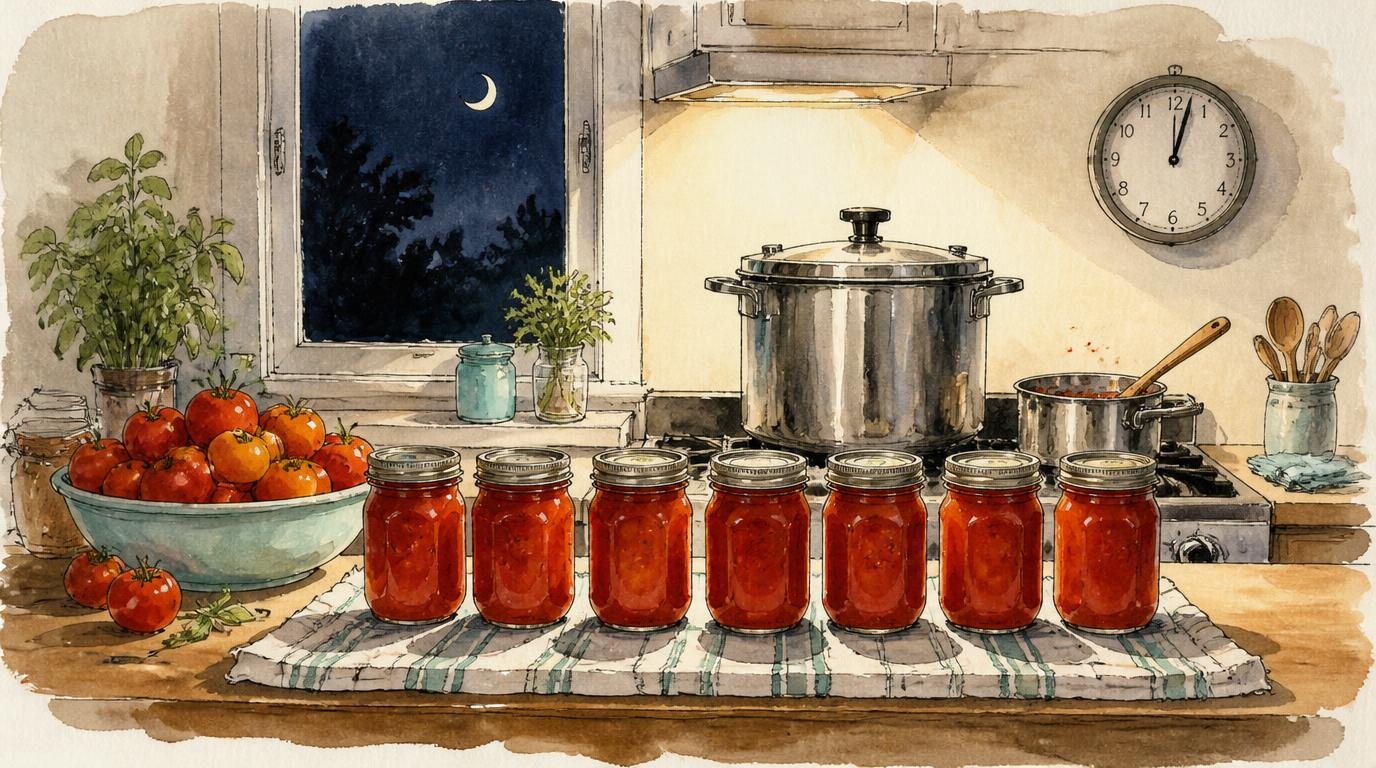 Two batches, 14 jars, and two very late nights.
The year I had too many tomatoes, I did what every homesteading book seemed to expect. I made sauce and canned it.
I simmered tomato sauce on the stove all day, then ran it through the pressure canner. I did that twice. Both times I was still up past midnight, and each batch gave me about seven jars.
I'm glad I know how to can. But I don't recommend it as a starting point, and I don't do it now while we're in a busy season of life.
If you've been wondering whether you "should" be canning to count as a real homesteader, you don't need to. Here's what canning actually took, when I think it's worth it, and what I do with extra food instead.
What canning tomato sauce actually took me
I planted a lot of tomatoes that year. I knew the trick of freezing ripe tomatoes as they come in, so you have a big batch ready all at once. Freezing also makes the skins slip off more easily.
The trick worked until the freezer filled up. Bags of tomatoes were crowding out everything else we actually eat, so I had to can them.
Then came the sauce. It simmered on the stove all day before it was thick enough. After that, the jars went into the pressure canner. Two batches, about 14 jars total, and two nights up past midnight.
Even after all that, I still had more tomatoes than we could use. So I invited friends and neighbors to come pick as many as they wanted. That was the best part of the whole season, honestly.
The real lesson wasn't "learn to can faster." It was "plant fewer tomatoes." Now I do.
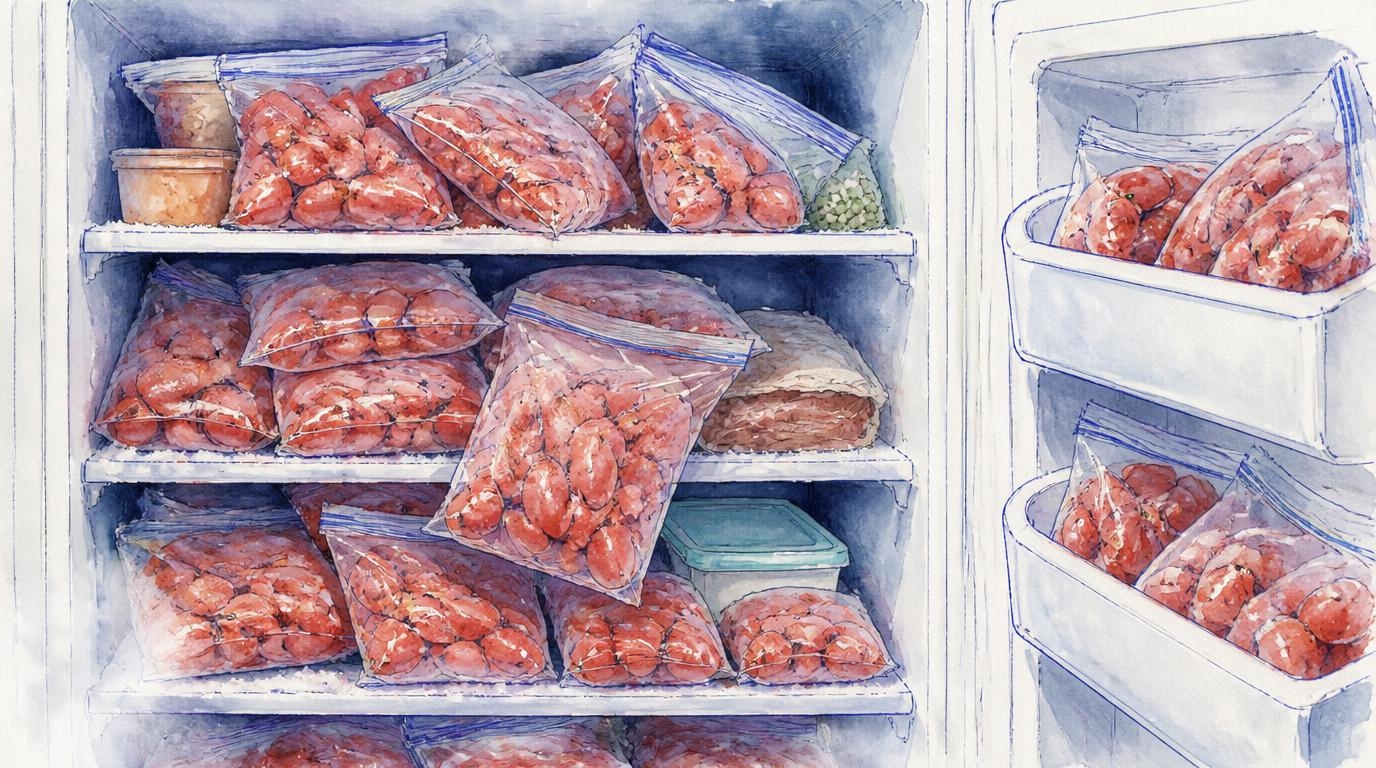 Freezing ripe tomatoes to can later works, until they take over the freezer.
Water bath vs. pressure canning in plain words
There are two main kinds of home canning, and they're for different foods.
- Water bath canning is for high-acid foods like jams, jellies, and pickles, plus tomatoes with added acid. You process the jars in a big pot of boiling water. My grandmother canned tomatoes this way every summer. I remember it as hot, damp, all-day work.
- Pressure canning is for low-acid foods like beans, most vegetables, and meat. It needs a pressure canner, which costs more and takes more attention. I've pressure canned soaked beans. They turned out well, but the time it took means I haven't done it again.
Tomatoes are the in-between food. Tested recipes give both water bath and pressure canner options for many tomato products, and both call for added acid. My grandmother used the water bath. I pressure canned my sauce because I'd read it gives better quality.
A pressure canner isn't the same as a pressure cooker or an electric multi-cooker. They aren't interchangeable for canning.
I'm not giving times, temperatures, or recipes here on purpose. Canning safety depends on following tested instructions exactly. Use the National Center for Home Food Preservation and the USDA Complete Guide to Home Canning for every step.
When canning is worth it (and when it isn't)
Canning can be worth it when:
- you have a true glut that won't fit in the freezer, the dehydrator, or your neighbors' kitchens
- it's a food your family eats every week, all year
- you have shelf space but not freezer space
- you can block out a whole day without stealing sleep
- you want to learn it as a skill, in a calmer season
It's probably not worth it right now when:
- you'd be buying produce just to can it, and a good canned version is easy to buy
- you're in a busy season of work, kids, or caregiving
- you'd need to buy a pressure canner for one batch
- you mainly feel you "should" do it to be a real homesteader
For us, the math is simple. I checked bulk tomato prices through our local food club, and good organic canned tomatoes from the store were still cheaper. That was before counting a single hour of my time. So I buy them and spend those hours somewhere else.
If you do want to try it, start with the smallest version that works. Pick one small water bath batch of something you already eat, use a tested recipe, and see how it fits your week before buying more gear.
What I'd do differently next time
If I canned tomatoes again, I'd change two things.
- Cook the sauce down in the oven instead of on the stove. I've heard of this method but haven't tried it yet. It's just a way to thicken the sauce before canning. It isn't "oven canning," which isn't a safe way to process jars (see NCHFP).
- Can diced tomatoes instead of sauce. We use diced tomatoes in chili all the time, and they skip the all-day simmer.
What I do with extra tomatoes now
My smallest version now starts in the garden: I plant fewer tomatoes. After that, I have a few easy places for extras.
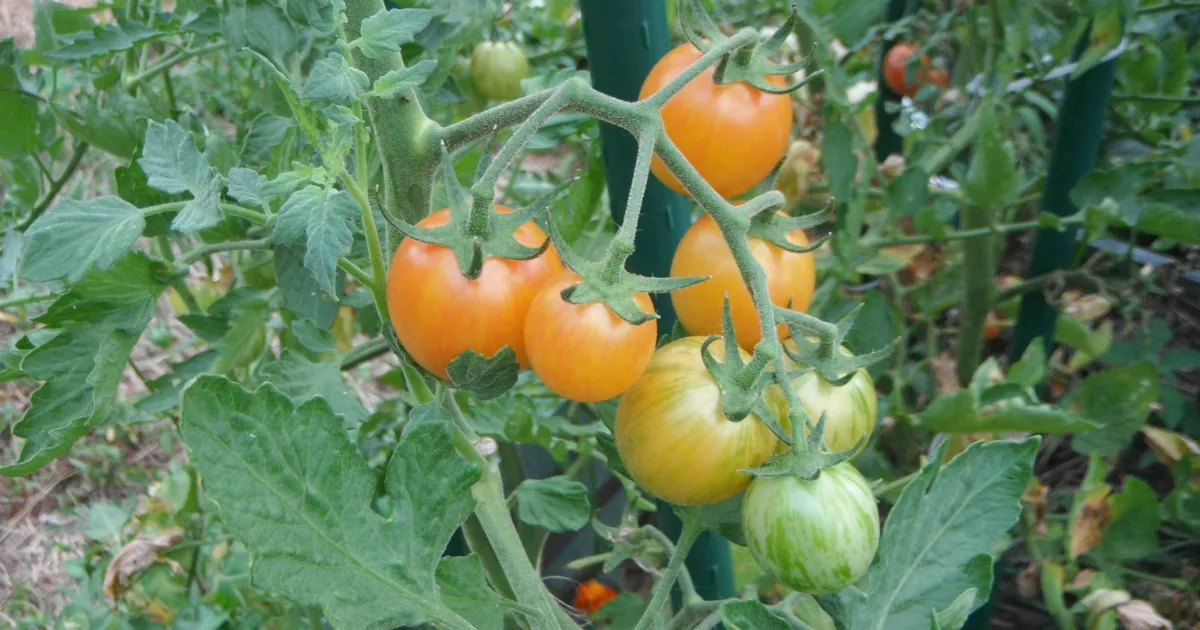 We've tried lots of tomato varieties over the years, like this cherry type, Sunrise Bumblebee. These days I plant far fewer.
- Dry some. I still dehydrate some tomatoes because my kids like them as snacks.
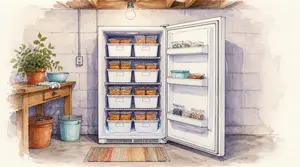
- Freeze a few. A small freezer stash is fine. The trick is not letting it take over, which is why I keep my upright freezer organized.
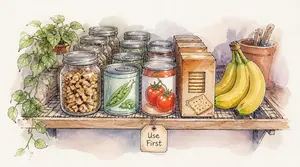
- Use them up first. Ripe ones go on our use-first shelf, the same habit as my eat me first bin.
- Share them. Inviting friends to pick was more fun than canning, and nothing went to waste.
If you're shopping: what I use instead (and what I'd buy to try canning)
You don't need any of this to start. Use what's already in your kitchen first, and buy something only when it solves a problem you keep running into.
As an Amazon Associate, I earn from qualifying purchases. If you buy through these links, it doesn't cost you anything extra.
What I reach for before canning
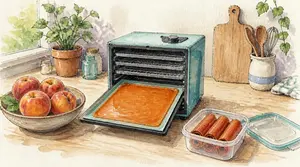
- Excalibur food dehydrator. This is what I use for dried tomato snacks, fruit leather, and sprouted nuts. It's worth it if you'd dry something most weeks. I'd skip it if you're not sure you'll use it.
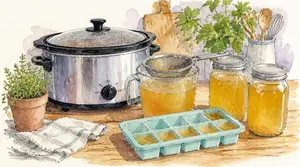
- Souper Cubes freezer trays. I freeze broth and in-season squash in portions, then move the blocks into labeled bags. That saves freezer space compared with bags of whole tomatoes.
- Masontops fermenting kit. It fits normal mason jars, so I can ferment a jar of vegetables without a big setup. I have the wide mouth kit because I like to use wide mouth mason jars. They are easier to clean.
If you decide to try canning
- A water bath canner with a rack. I don't own one myself, but this is the kind my grandmother used for her tomatoes. Start here, not with a pressure canner. If you already have a big, deep stockpot, a canning rack may be all you need to try one batch.
- A basic canning tool kit (jar lifter, funnel, headspace tool). I found a blue kit to match my kitchen decor but it's unavailable, so here's a similar set available in a variety of colors. The jar lifter is essential.
- A pressure canner, only if you know you'll can beans, vegetables, or meat more than once. Mine works well, and I still don't use it in busy years. I have an All American 21.5 qt model.
- Recipes: the USDA Complete Guide to Home Canning is free online through NCHFP, so you don't need to buy a book to start.
If you're trying to decide which small system deserves your time this season, my $12 Small-Space Self-Sufficiency Starter Map helps you pick your first three and save the rest for later. Canning can wait on the "later" list.
If you like older, from-scratch kitchen traditions, my cookbook Traditional Recipes Near Gettysburg includes the homemade applesauce and stock recipes I still make today.
Where to go next
- New to all of this? My free guide, Which Urban Homestead System Should You Start First?, helps you pick one small first step that fits your space, time, and energy. Grab it in the box at the bottom of this page.
- Reduce Food Waste at Home: the small kitchen habits I'd start with before any preserving project.
- Dehydrating Food: how we turn soft fruit into fruit leather.
- Upright Freezer Organization: how we keep the freezer from swallowing food.
- Eat Me First Bin: the simplest way to use food before it spoils.
Is canning worth it FAQ
Does canning save money?
Does canning save money?
It can if you grow or get a lot of produce cheaply and value the time as a hobby. If you'd be buying produce to can, run the numbers first. When I compared bulk tomatoes from our food club with store-bought organic canned tomatoes, the canned ones cost less, even before counting my time.
Is water bath or pressure canning better for beginners?
Is water bath or pressure canning better for beginners?
Water bath canning is the usual starting point, because it needs less equipment and works for high-acid foods. Pressure canning is for low-acid foods like beans and vegetables, and it takes more gear and attention.
Can I use my pressure cooker or multi-cooker to can?
Can I use my pressure cooker or multi-cooker to can?
No. A pressure canner is a different piece of equipment. Check NCHFP for what's tested and safe.
Is freezing better than canning for a small household?
Is freezing better than canning for a small household?
For many small households, freezing is simpler: less equipment, less time, and you can do a little at a time. The catch is freezer space, which is exactly what ran out for me.
Can I can food in the oven?
Can I can food in the oven?
No. Oven canning isn't a safe way to process jars. Cooking sauce down in the oven before canning is a different thing. Follow NCHFP for the canning itself.
Your "should I can this?" checklist
- I have more of this food than I can freeze, dry, or share.
- My family eats it often, all year.
- I can't easily buy a good canned version.
- I have a whole day free, not just a late night.
- I'm following a tested recipe from NCHFP or the USDA.
- I'm starting with one small batch before buying more gear.

Amy DeVries helps beginner urban homesteaders learn by doing. A lifelong gardener, she has grown food in spaces that expanded to 18 raised beds, patio containers, dwarf fruit and nut trees, and gravity-fed rainwater systems. She shares practical lessons shaped by real experience. Amy homeschools her children and teaches the same hands-on skills that guide her work.
You might like these
Reusable Kitchen Swaps That Actually Stick
Reusable kitchen swaps that lasted at our house, the ones I dropped, and why I'd use what you already own before buying anything new.
Slow Cooker Chicken Bone Broth From a Leftover Carcass
Slow cooker chicken bone broth from a leftover carcass, the way we make it: a long, low cook, jars for the fridge, freezer blocks, and what to do with the bones.
Dehydrating Food: How We Turn Soft Fruit Into Fruit Leather
Dehydrating food at our house mostly means fruit leather from fruit going soft. Here’s how we make it, and why the freezer works if you don’t own a dehydrator.
More Information
Disclosure
All information found on this website is editorial in nature and intended to motivate and inspire rather than be used as medical advice or legal advice.
As an Amazon Associate, I earn from qualifying purchases. I also use Google Ads and cookies as described in the Privacy Policy.
Thank you for your support!
By Amy DeVries, Copyright © 2011-2026 Sage-Urban-Homesteading.com All rights reserved.
