FYI: This website contains affiliate links. As an Amazon Associate I earn from qualifying purchases.
- Home
- Cookbook
Traditional Recipes Near Gettysburg From My Family's Kitchen
By Amy DeVries
Short answer: Traditional Recipes Near Gettysburg is my seasonal cookbook of family recipes from Carroll County, Maryland, where my German Lutheran ancestors settled before 1776. It's a 96-page print book, also on Kindle and other e-readers, arranged by season from spring asparagus to winter beef stew.
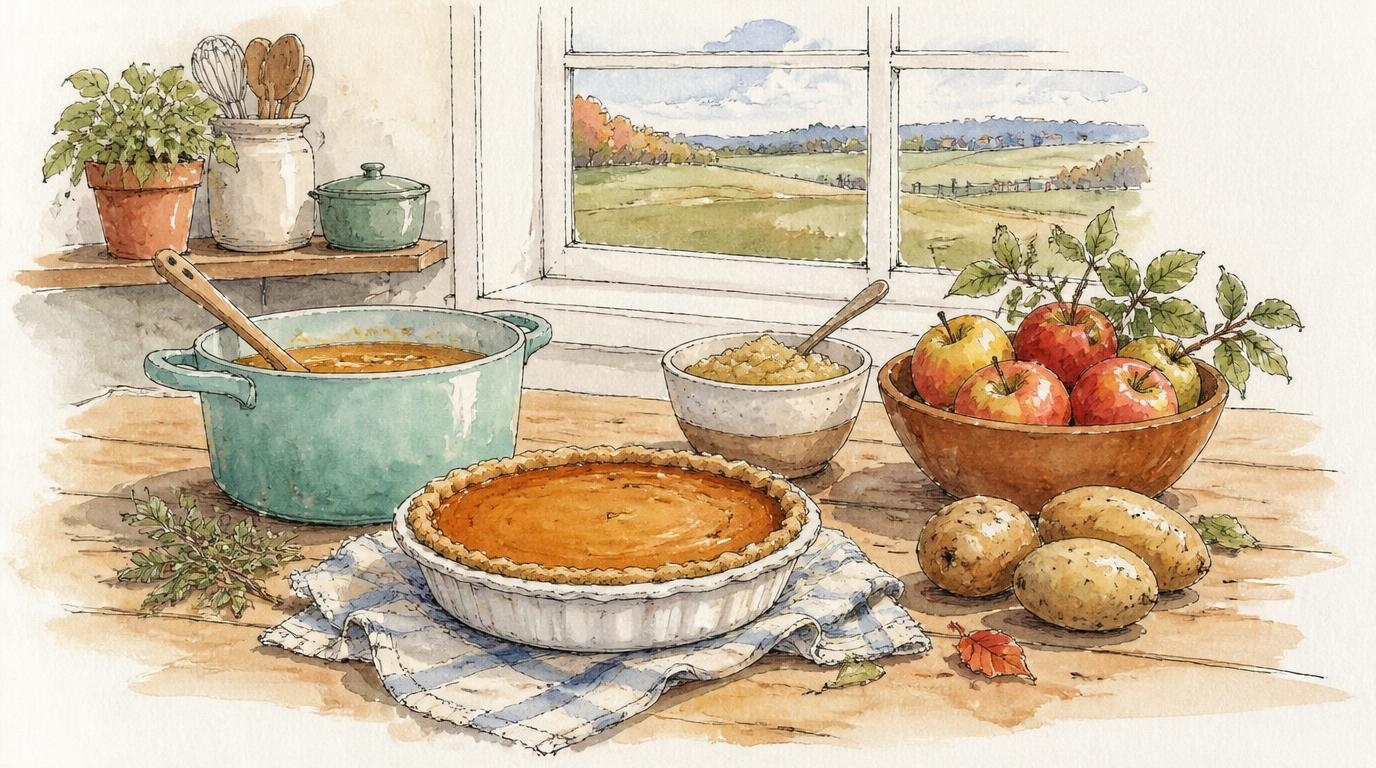 Fall in my family's kitchen: pumpkin pie, applesauce and stock from the turkey bones.
My ancestors on both sides of my family lived in Carroll County, just south of Gettysburg. They were German Lutherans who were here before 1776, and they helped found the town of Taneytown. After years of genealogy research, I wanted to write down how families like mine cooked through the seasons.
Now I live in Carroll County too, in a rented 1920s house on 3 acres. A handful of these recipes still show up on our table every year, especially at Thanksgiving.
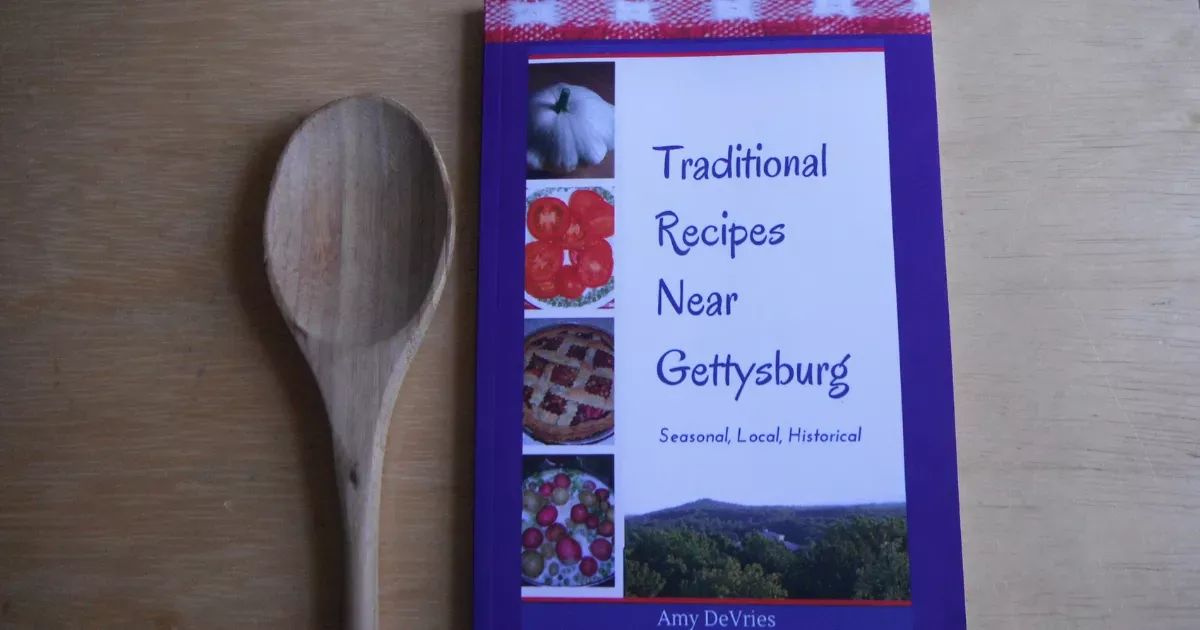 I designed the cover using my own photos.
Why I called it Traditional Recipes Near Gettysburg
Most people have no idea where Carroll County is. And if I'd called it a Maryland cookbook, you'd expect crab cakes and oysters.
But my ancestors were a couple of days by horse and wagon from the Chesapeake Bay. Their food was farm food: pork, apples, corn, potatoes and whatever the season brought. Gettysburg was the closest place name most readers would recognize.
You may spot dishes you know from Pennsylvania Dutch cooking, like scrapple, apple butter and pot pie. My family has never called itself Pennsylvania Dutch. They were German Lutherans, but farm families on both sides of the Mason-Dixon Line cooked a lot alike.
What's inside the cookbook
The recipes are arranged by season, and I walk you through the steps for each one. I included the history behind the ingredients, suggested menus, and even the menu from President Lincoln's inaugural ball.
There are lots of color photos and a few historical black-and-white ones. It's a cookbook you might actually curl up with and read like an easy chapter book.
Recipes by season
- Spring: asparagus, baby potatoes and peas, dandelion greens, kale with ham broth, violets, cooked beets, pickled beets, pickled eggs, herring, shad roe, strawberry-rhubarb pie, ice cream
- Summer: corn on the cob, succotash, sliced tomato, cucumbers and onions, parsley potatoes, fried squash, fried green tomatoes, zucchini crab cakes, stuffed peppers, green beans with ham, roast chicken with giblet gravy, chicken soup, grape jelly, peach crisp
- Fall: dried corn, mashed potatoes, potato cakes, fried parsnips, cornbread dressing, roast turkey with giblet gravy, scrapple, hominy and pudding, hogmaw, venison and wild game, apple butter, applesauce, baked apples, pumpkin pie
- Winter: scalloped potatoes, turnips, lima beans and ham, pork and sauerkraut, sausage, fried mush, cream gravy, roast beef, beef stew, pot pie, tomato soup, apple snits, apple crisp
- Anytime: cornbread, wheat bread, rye bread, buckwheat pancakes, mayonnaise, cheese, butter, turkey or chicken stock, beef stock, tonics and teas
The spring chapter has a couple of wild greens. If you try any, use a local foraging guide and eat only what you're sure you've identified.
What you can read just for the history
Some chapters, like home butchering and hogmaw, are there because that's how my ancestors used the whole hog. I don't expect you to stuff a pig's stomach this weekend. Read those parts as history, and cook the recipes that fit your kitchen.
The recipes I still make every year
None of these need a farm. A grocery-store turkey makes the same stock, and a pie pumpkin from the farmers market works just like one from the garden.
- Roast turkey, then stock from the bones. The book explains how to reuse the bones for soup stock. My slow cooker chicken bone broth page has a turkey section too.
- Mashed potatoes from potatoes we grow ourselves.
- Pumpkin pie made from a whole pumpkin, with a homemade lard crust. The book walks through cooking the pumpkin.
- Applesauce, a fall staple in our house.
For thawing and roasting turkey safely, follow USDA's Let's Talk Turkey guide. For canning applesauce, follow the National Center for Home Food Preservation's applesauce directions.
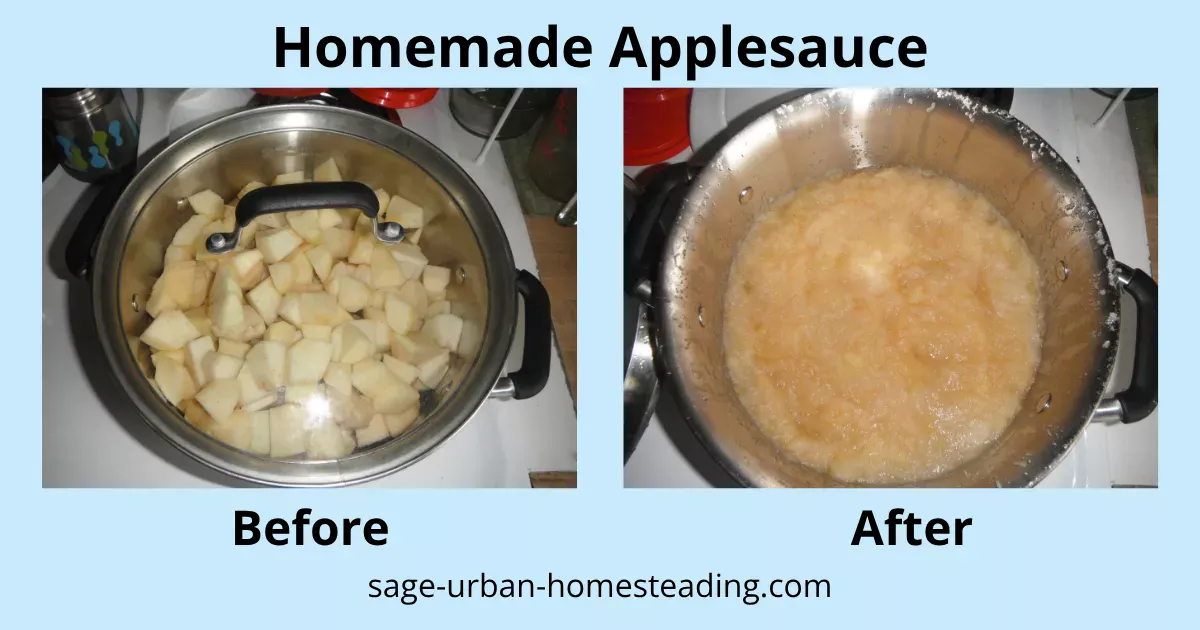 Applesauce my kids and I made together, from a pot of chopped apples to sauce.
What old family recipes teach about wasting less
My ancestors didn't have a word for food waste habits. They just used everything: bones became stock, extra apples were dried into snits, and corn was dried for winter.
You don't need a root cellar to borrow that thinking. My Reduce Food Waste at Home pages turn it into small habits for a regular kitchen.
If you're not sure where your own first step should be, my free guide, Which Urban Homestead System Should You Start First?, helps you pick one that fits your space, time and energy. You can get it in the box at the bottom of this page.
Print or ebook: how to get a copy
These are affiliate links to my cookbook that I wrote myself without any assistance from AI. I use Amazon and Smashwords to help distribute it.
- Print: the updated second edition, 96 pages, through Amazon (print link).
- Kindle edition: through Amazon (Kindle link), for Kindle and Kindle Fire.
- Other e-readers, including Nook: the Smashwords edition (Smashwords link).
Both ebook versions have a hyperlinked table of contents, so you can jump straight to a recipe. They're stored in an online library you can open from any internet-connected device.
Where to go next
- Recommended resources from the book: the websites and books I mention in the cookbook.
- Slow cooker chicken bone broth: how I make stock now, with a short turkey section.
- Dehydrating food: my modern take on drying fruit, the way my ancestors dried apple snits.
- Upright freezer organization: where all that stock and pie pumpkin ends up.
- Reduce food waste at home: small kitchen habits that build on the same use-it-all thinking.
- About me: more about Sage Urban Homesteading and how I got here.
Traditional recipes near Gettysburg FAQ
Is this a Pennsylvania Dutch cookbook?
Is this a Pennsylvania Dutch cookbook?
Not exactly. My family were German Lutherans in Carroll County, Maryland, and never called themselves Pennsylvania Dutch. You'll still find some shared farm dishes, like scrapple, apple butter and pot pie.
Does it include Maryland seafood?
Does it include Maryland seafood?
Very little. My ancestors lived days from the Chesapeake Bay, so the book sticks to farm food. For crab and southern Maryland dishes, I recommend the Maryland's Way cookbook (Amazon affiliate link).
Do I need a farm to use these recipes?
Do I need a farm to use these recipes?
No. Most of them work with grocery store or farmers market ingredients. The butchering chapters are there for the history, not as homework.
Can I read it on a Nook or another e-reader?
Can I read it on a Nook or another e-reader?
Yes. The Smashwords edition works on Nook and most other e-readers. The Kindle edition is for Kindle devices and the Kindle app.
Is there a print copy?
Is there a print copy?
Yes. The updated second edition is 96 pages in print through Amazon.
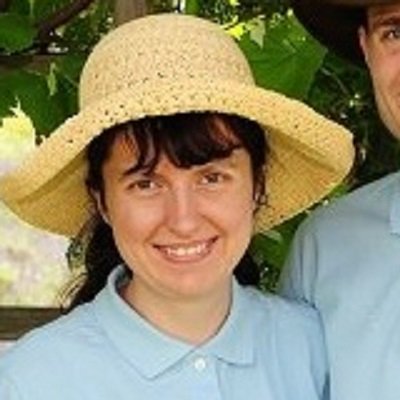
Amy DeVries helps beginner urban homesteaders learn by doing. A lifelong gardener, she has grown food in spaces that expanded to 18 raised beds, patio containers, dwarf fruit and nut trees, and gravity-fed rainwater systems. She shares practical lessons shaped by real experience. Amy homeschools her children and teaches the same hands-on skills that guide her work.
You might like these
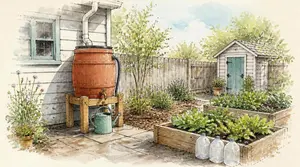
Water Collection for Beginners: Simple Home Systems
Start collecting rainwater at home with one barrel. Find every water collection step here, from stands and diverters to overflow, and drip watering.
Home Efficiency for Beginners: Start Small, Stay Warm
Home efficiency for beginners: small habits and removable fixes that make your home warmer and cheaper to run, even if you rent.
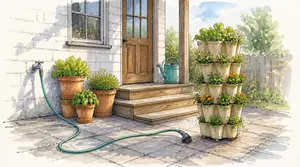
Urban Gardening in Small Spaces
Urban gardening in small spaces starts with the garden you can water. Find the right first page for your patio, yard, or no-outdoor-space home.
More Information
Disclosure
All information found on this website is editorial in nature and intended to motivate and inspire rather than be used as medical advice or legal advice.
As an Amazon Associate, I earn from qualifying purchases. I also use Google Ads and cookies as described in the Privacy Policy.
Thank you for your support!
By Amy DeVries, Copyright © 2011-2026 Sage-Urban-Homesteading.com All rights reserved.
