FYI: This website contains affiliate links. As an Amazon Associate I earn from qualifying purchases.
Homesteading With Kids: Small Jobs They Can Really Help With
By Amy DeVries
Short answer: Homesteading with kids works best when you hand them one small, real job inside a system you already keep, like picking ripe berries, checking the use-first shelf, or raising the shades. You don't need land or kid-sized gear. You need one job where they can see why it matters.
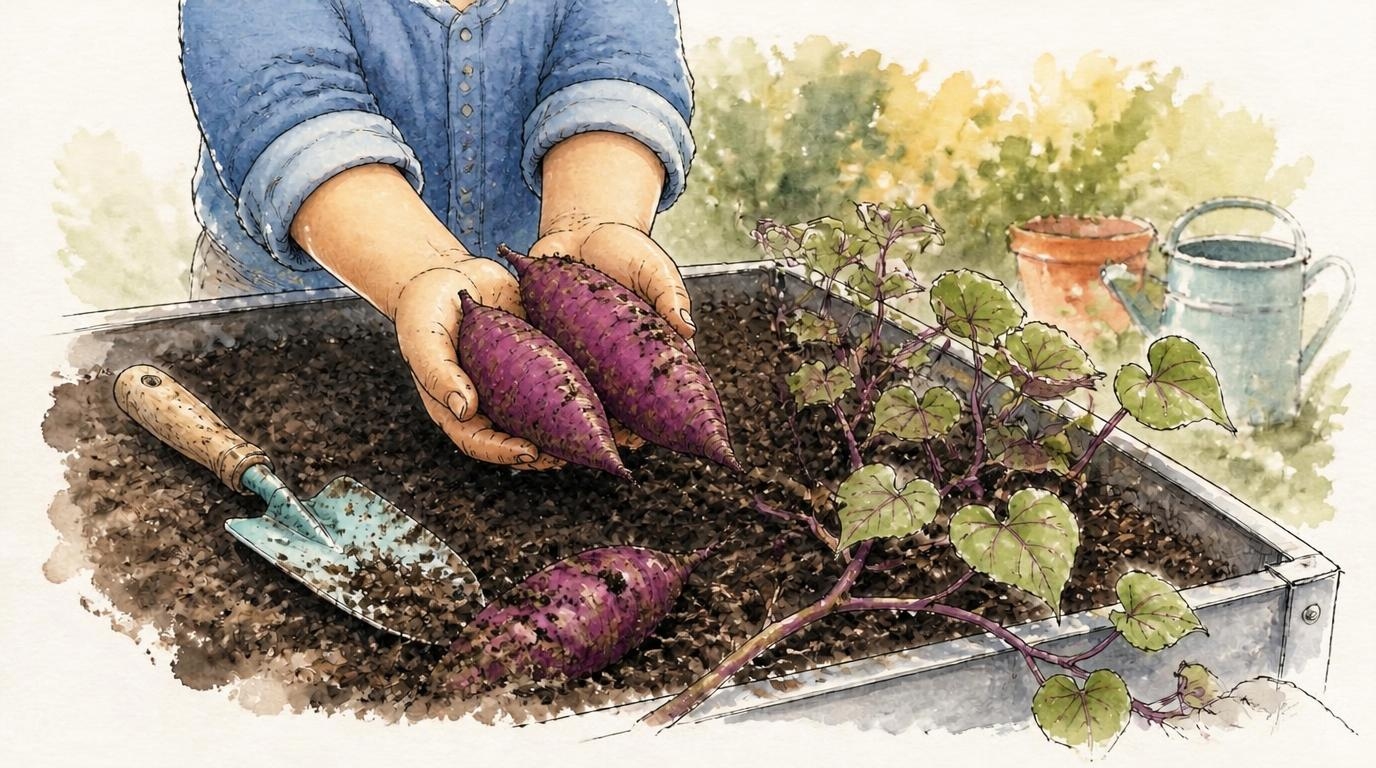 Digging sweet potatoes is the closest thing our garden has to a treasure hunt.
When my kids were little, we were homesteading on a quarter acre inside the Baltimore Beltway. There was no farm, no barn, and no master plan. There was a patio, some raised beds, a small greenhouse, and a lot of small jobs that little hands could help with.
Today we rent a 1920s house on 3 acres in central Maryland, and the kids still do the same kinds of jobs. Most of them would work just as well on a balcony or in a small yard.
If you're picturing homesteading families with goats, a big garden, and kids doing chores at dawn, take a breath. That's not the starting line. Kids helping with one small thing still counts. So does a single pot on the porch that they water.
The easiest kid jobs come from a system you already keep. If you haven't picked yours yet, my free 2-page guide helps you choose.
Why we fill the time with real jobs instead of screens
This is our family's choice, not a rule for yours. I mention it because it's a big part of why homesteading and kids go together at our house.
We've always kept screens small. My view is simple: kids have their whole lives to watch movies. The early years are their time to use their hands, move their bodies, get bored, and figure out what to do next. A lot of the time, "what to do next" turned out to be helping with something real.
Here's what that has looked like for us:
- When they were young: screen time was limited to our music curriculum.
- Typing: no computer time to learn to type until 5th grade or middle school, once their hands were bigger.
- Now: my high schooler does some schoolwork on the computer, meeting with classmates and turning in work.
- Phones: no cell phones or social media. We keep one family flip phone that goes along on trips when we need it.
- Nature: instead of nature documentaries, we go on walks and look at the real thing.
You don't have to go this far to try any idea on this page. Even one screen-free job a week gives kids a reason to be outside with you.
Small homesteading jobs kids can help with
These are grouped by the four systems I use across this site. You don't need all four. Pick the system you're already working on and borrow one job from it.
In the garden: Patio and container gardening
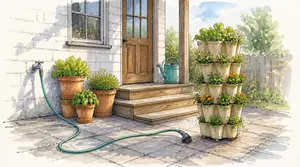
- Checking for ripe berries and tomatoes. Ripeness is one of the easiest things for kids to learn. They watch for the right color and a little give when they touch it. And yes, a lot of them get eaten on the spot. I think of those snacks as an investment in their future. A sun-warm berry straight off the plant is how a lot of kids get interested in growing things.
- Digging potatoes and sweet potatoes. This is the job nobody has to be talked into. We dig by hand, which damages fewer of them, and every handful of dirt might hide a surprise. Purple Viking has been our best potato, and we grow purple sweet potatoes too. Purple ones are easy for small eyes to spot in the dirt.
- Pulling carrots. There's something so satisfying about a good tug and then watching the orange surprise pop out of the ground, even when the carrot turns out tiny or forked.
- Picking the flower colors for our petunia pot. Every year the kids choose the colors and help plant one pot near the garden. It's small, it's theirs, and it gets watered.
- Rooting sweet potato slips. The cuttings root in a yogurt container of water on a sunny table, with pipe cleaners holding up the leaves. Kids can check the roots every day.
Small-space version: One everbearing strawberry or cherry tomato pot on the porch gives kids something to check for ripe fruit all summer.
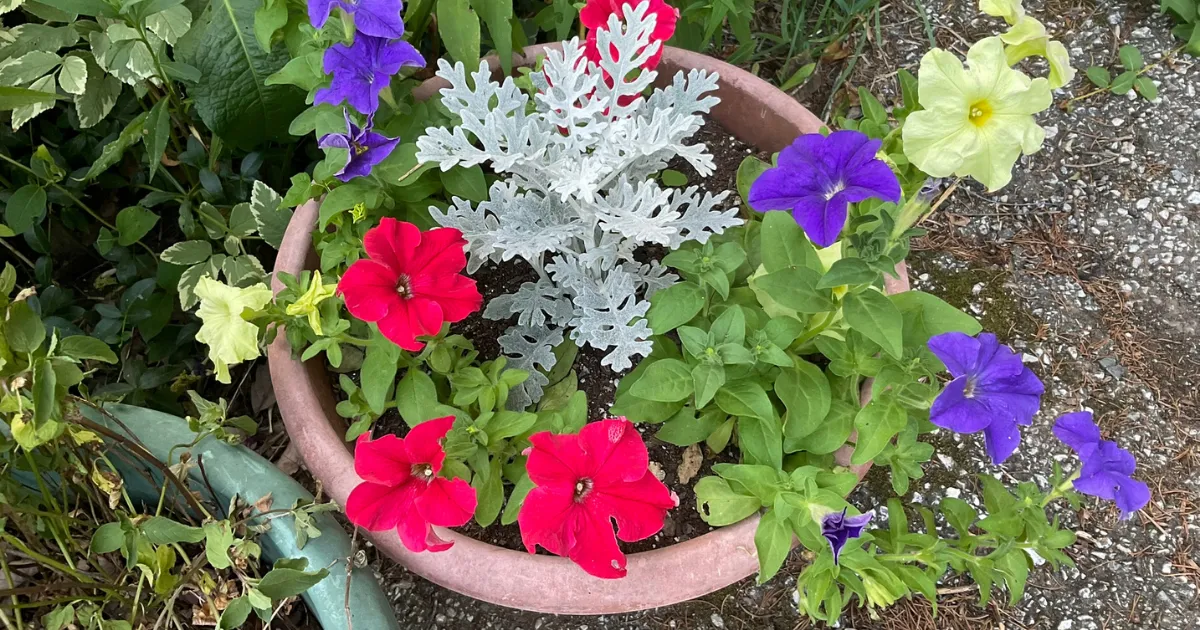 The kids pick the petunia colors every year, so this pot is always theirs.
With the rain tanks: Simple rainwater catchment
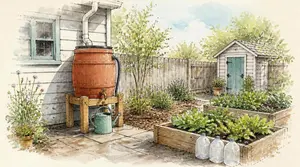
- Filling watering cans from the rain tanks. Our kids fill watering cans for the garden and the outdoor water dishes for the chickens. Hauling water is real work, and they can see right away where it went.
Small-space version: If you don't have a barrel yet, catch the cold water while the shower warms up and let a child carry it to the porch plants.
In the kitchen and pantry: Waste-reduction habits
- Checking expiration dates. My kids actually enjoy this one. They check dates and move anything that's getting close to our use-first shelf.
- Fetching containers by shape. We buy the same kind of containers again and again, so the lids fit and the kids can grab "a square" or "a big round" without help.
- Carrying weeds and scraps to the animals. Pulled weeds and vegetable peelings go to our rabbits or chickens. Kids carry the bucket, and the animals make it worth the walk.
- Keeping worms. Right now my kids keep red wiggler worms in a container as a school project.
Small-space version: No animals? Kids can carry the scrap container out to the compost or drop-off bin.
Around the house: Home efficiency
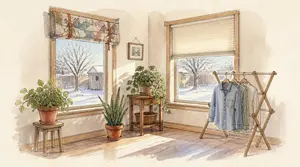
- Shades up and shades down. We all help. Whoever is up first raises the shades in the morning, and we split upstairs and downstairs in the evening.
- Closing the outside door behind you. It sounds too small to count, but it's the habit I repeat most. When someone stands in the open doorway, I'll remind them, "In or out!" It keeps the heat or cool air where we paid for it to be.
Bigger projects when they get curious
Once kids have a job or two down, they often want to try something bigger. These worked for us as one-time or once-a-year projects, not daily chores.
- Peeling chestnuts. We buy a bag at the grocery store each fall. My husband cuts the slits wearing cut-resistant gloves, and the kids help peel after cooking.
- Raising silkworms. These are part of our homeschool science now, on a much smaller scale than we used to raise them.
- Growing sprouts. We tried a sprouting seed mix with a sprouter, tied to a lesson. Honest result: my family didn't enjoy eating them. The chickens did, so nothing was wasted.
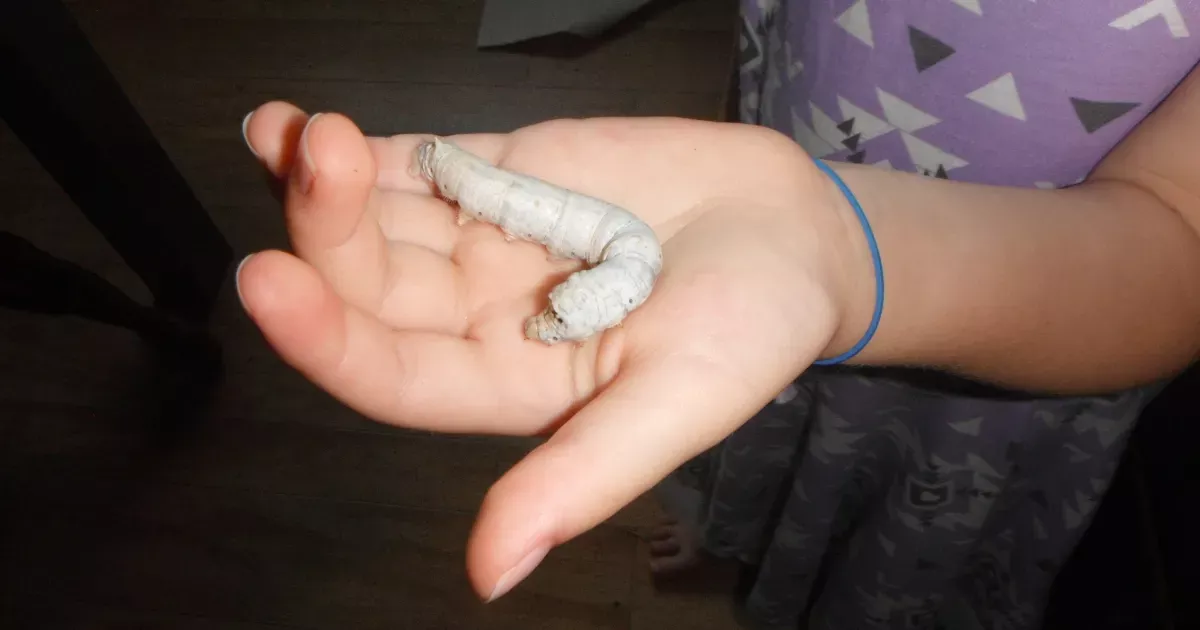 Holding a full-grown silkworm, just before it's ready to spin.
How to start homesteading with kids without overloading anyone
- Pick one system first. That means yours, not theirs. If you're not sure which, the free guide walks you through it.
- Choose one job inside it. Look for a job with a visible result: a ripe berry, a full watering can, a shade that's up.
- Do it together for a few weeks. Kids learn the job by doing it beside you, not from a chart.
- Let them own it. Once they've got it, it becomes their job, like the petunia pot at our house.
- Add a second job only when the first one is easy. That's the same rule I use for my own systems: start with the smallest version that works, then upgrade when it solves a real problem.
What I'd skip (and what kids won't love)
- Skip starting big. Our first year at this house, I planted long in-ground rows the hose couldn't reach. Watering took an hour before breakfast, and the weeds won. A small setup your family can actually keep up with is a better place for kids to learn.
- Skip expecting them to love every job. My kids were never as excited about weaving as I was at their age. They didn't like eating the sprouts we grew. That's fine. The point is trying things, not finding a passion on the first try.
- Skip buying kid gear before the job exists. Let them try with what you already have. If a job sticks, then decide whether anything would make it easier.
- Skip turning it into a performance. Real homesteading with kids is messy. Carrots come out forked, and half the berries never make it to the bowl. That still counts.
If you're ready to plan beyond one first system, my $12 Small-Space Self-Sufficiency Starter Map helps you choose your first three systems and gives you a 30-day action map. It's a good fit for families who want a plan everyone can see.
Where to go next
- New to all of this? Start with Urban Homesteading for Beginners.
- Garden jobs: Urban Gardening in Small Spaces, Container Gardening for Beginners, and How to Grow Sweet Potato Slips.
- Water jobs: Water Collection.
- Kitchen jobs: Reduce Food Waste at Home and Eat Me First Bin.
- House jobs: Home Efficiency and the shade routine page (Should You Close Blinds).
- Bigger projects: Raising Silkworms and Peeling Chestnuts.
Homesteading with kids FAQ
Do we need land to homestead with kids?
Do we need land to homestead with kids?
No. Most of the jobs on this page work on a patio, a balcony, or in a kitchen. We started on a quarter acre inside the Beltway, and the window shade, pantry, and container jobs need no yard at all.
What's the easiest first job for kids?
What's the easiest first job for kids?
Picking ripe berries or tomatoes, or checking dates for the use-first shelf. Both have a clear right answer and a quick payoff.
What if my kids lose interest?
What if my kids lose interest?
That's normal. Let that job go and try a different one, or come back to it next season. Some jobs, like picking berries, seem to win kids back every year.
Do my kids need their own tools?
Do my kids need their own tools?
Not to start. Try the job with what you already have, and only buy something if the job sticks and a tool would make it easier.
Your homesteading with kids checklist
- Pick one system you're already working on.
- Choose one small, real job your kids can see the result of.
- Do it together until they've got it.
- Let them own it.
- Add a second job only when the first one feels easy.
- Let it be messy. Snacking in the berry patch counts.

Amy DeVries helps beginner urban homesteaders learn by doing. A lifelong gardener, she has grown food in spaces that expanded to 18 raised beds, patio containers, dwarf fruit and nut trees, and gravity-fed rainwater systems. She shares practical lessons shaped by real experience. Amy homeschools her children and teaches the same hands-on skills that guide her work.
You might like these
Reduce Food Waste at Home With Small Habits That Stick
Reduce food waste at home with small habits that fit real life: a use-first shelf, double-batch dinners, and a simple scrap bin. Start with one.
Water Collection for Beginners: Simple Home Systems
Start collecting rainwater at home with one barrel. Find every water collection step here, from stands and diverters to overflow, and drip watering.
Urban Homesteading for Beginners: Start Here If You Feel Overwhelmed
Urban homesteading for beginners who feel overwhelmed: no land or perfect setup needed. Start with one small system and get my free guide to pick yours.

More Information
Disclosure
All information found on this website is editorial in nature and intended to motivate and inspire rather than be used as medical advice or legal advice.
As an Amazon Associate, I earn from qualifying purchases. I also use Google Ads and cookies as described in the Privacy Policy.
Thank you for your support!
By Amy DeVries, Copyright © 2011-2026 Sage-Urban-Homesteading.com All rights reserved.
