FYI: This website contains affiliate links. As an Amazon Associate I earn from qualifying purchases.
- Home
- More Topics
- Make a Rag Rug
How to Make a Rag Rug From Old Clothes
By Amy DeVries
Short answer: How to make a rag rug, the short version: cut old clothes into long strips, then either braid them and stitch the braid into a flat coil, or weave them on a loom. Braiding needs only scissors, a needle, and strong thread, so it's the easier first step. Weaving makes a thinner, flatter rug, but you need a loom.
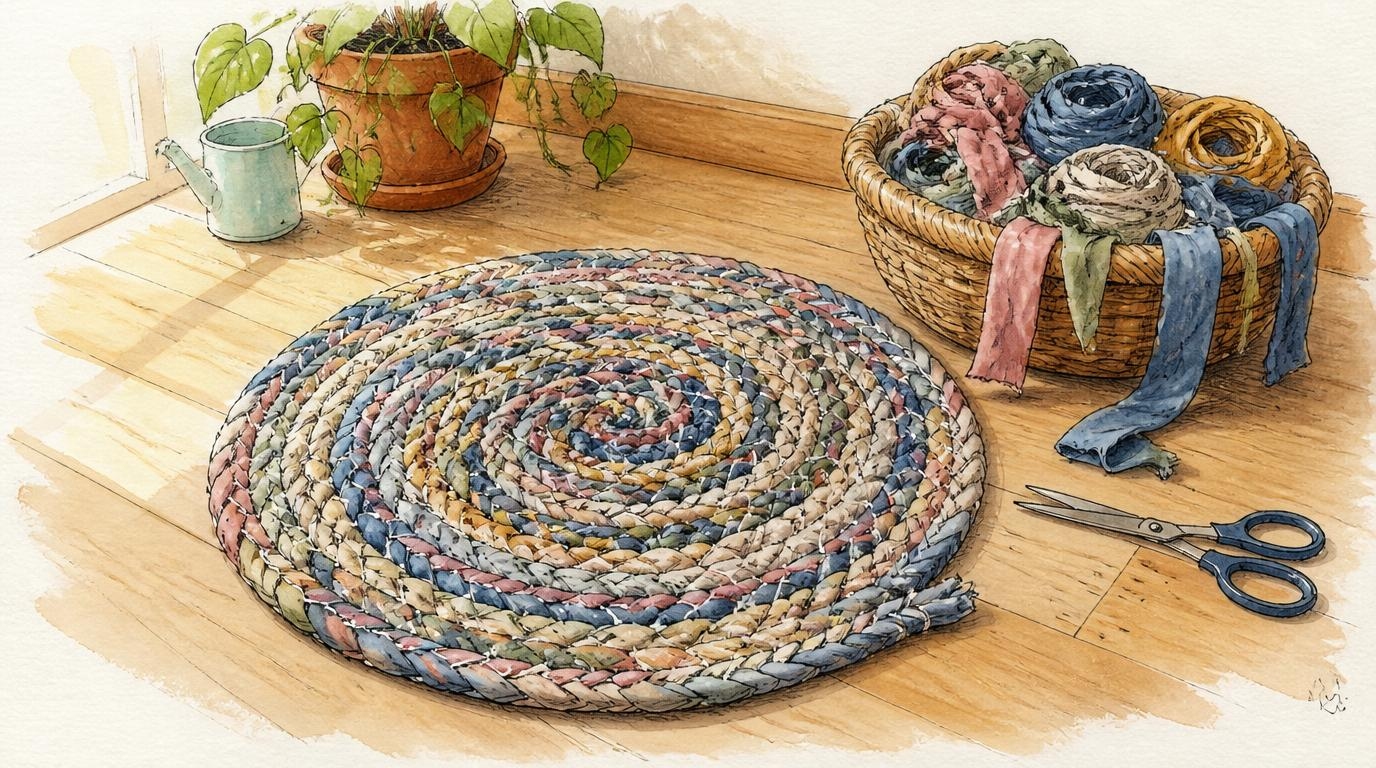 Old clothes, a pair of scissors, and a few evenings are really all a first rag rug needs.
For years I kept a bag of old clothes I couldn't bring myself to throw away. I wanted to make something with them. Some of it was my own thin, worn-out T-shirts, a few with stains. Eventually that bag became the rag rug that sits beside my bed.
That rug is more than 20 years old now and still holding up well. I like having it there for a reason I didn't expect: when I come into the bedroom in the dark, the different texture under my feet tells me I've found my spot.
You don't need a loom, a pattern, or a sewing room to start. The kids and I made our first braided rug for the gnome home, and it was small enough to finish in one go. (The gnome home is one of the kids' wooden toys. You can see it on my Homemade Toys page.) That's the size I'd start with too.
Braided or woven: which rag rug should you make first?
There are a few ways to turn rags into a rug. These are the two I've done:
- Braided rag rug: Three strips braided together, then coiled and stitched flat. No special tools, and you can stop at any size. It turns out thicker and a little lumpier than woven. It's the best first step.
- Woven rag rug: Rag strips woven across strong warp threads on a loom. Thinner and flatter, so it lies nicely on wood floors and doesn't trip anyone. It takes more setup and a loom.
You can also crochet rag strips into a rug with no sewing. If you already crochet, see my How to Crochet page.
My advice: Start with a small braided rug. If you love working with rags and you already have a loom (or can borrow one), weave the next one. I wouldn't buy a loom just to make one rug.
What fabric works for rag rugs
Almost any fabric works if you cut it into strips. These are what I've used:
- Old cotton T-shirts: My bedroom rug is all old T-shirts, cut into strips about 1 inch wide. Thin and stained shirts are fine.
- Fleece: A friend gave me fleece strips about 1-1/2 inches wide, trimmed off the ends of fabric rolls at a factory. One side was fuzzy, and it made a warm, soft play rug for our living room.
A few things I'd keep in mind:
- Try to keep fabrics in one rug about the same weight, so the rug doesn't come out lumpy.
- Cut your strips the same width as each other, for the same reason.
- Plan on cutting being the slow part. For my bedroom rug, cutting the strips took as long as setting up the loom.
How many clothes does a rug take? I honestly don't know. I had a whole bag of old clothes, and the bedroom rug didn't use all of it. If you're saving up, keep a bag going and start when it's full.
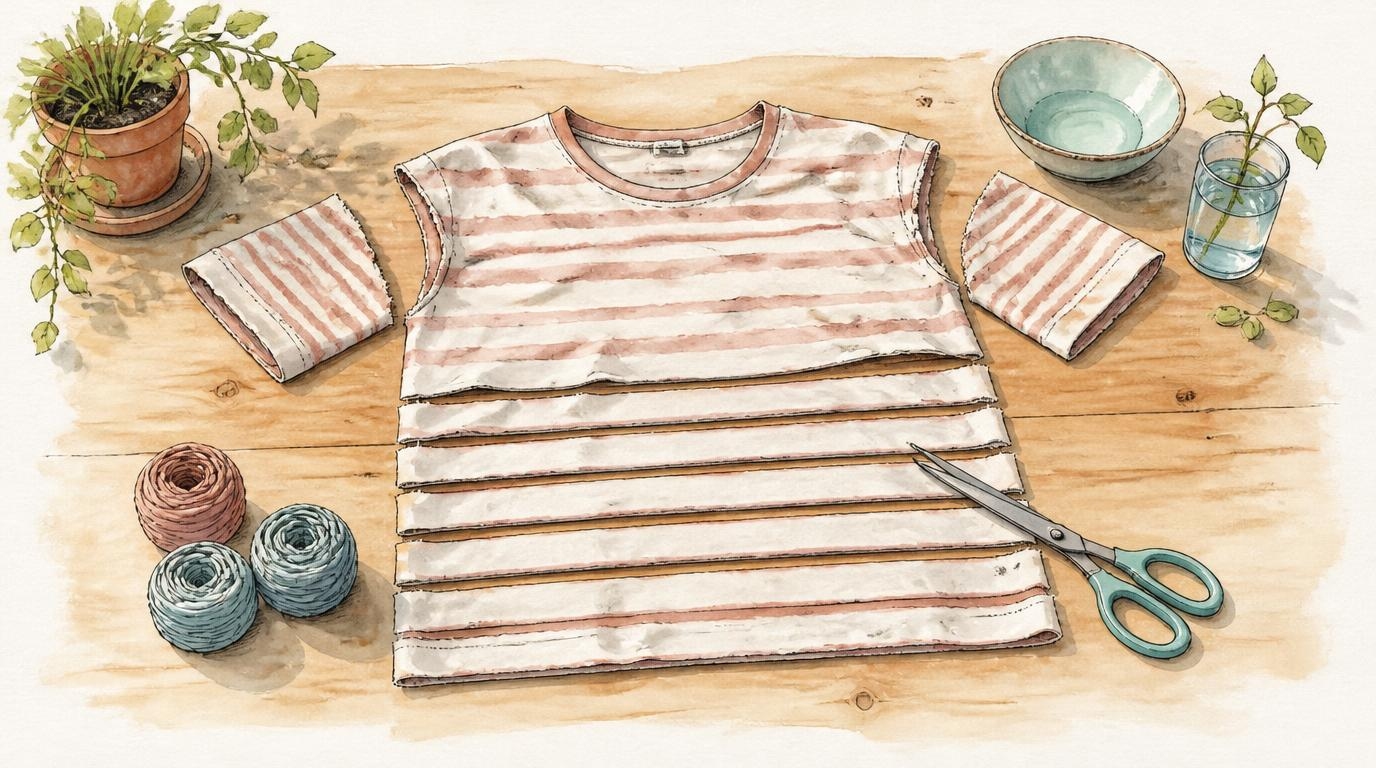 Thin, stained, and worn-out T-shirts are perfect rag rug material.
How to make a braided rag rug (the easier first step)
A braided rag rug is the gentlest way to start. Make a small one first. Ours was for the gnome home, but if you don't have a toy house to furnish, a mug rug or coaster is the perfect size, and you'll actually use it. You'll learn how the braid behaves before you commit to a whole bag of clothes.
- Cut your strips. Cut old clothes into long strips of about the same width.
- Join strips end to end. Sew the ends together so you have long strips to braid. Join a few at a time; you can add more as you go.
- Braid three strips. Pin or clip the ends to something sturdy and braid. Keep the tension even so the braid stays the same thickness.
- Coil and stitch. Start coiling the braid into a flat circle or oval. Stitch each round to the one before with strong thread as you go, checking often that it lies flat.
- Finish the end. Taper the last bit of braid, tuck it against the coil, and stitch it down securely.
For the gnome home rug, we followed Wee Folk Art's free Mini Braided Rugs tutorial, which makes a little rug sized for gnome or doll houses. The kids helped braid the fabric strips, and then I hand sewed the braid into a coil. Braiding is an easy part to share with kids; I took care of the sewing.
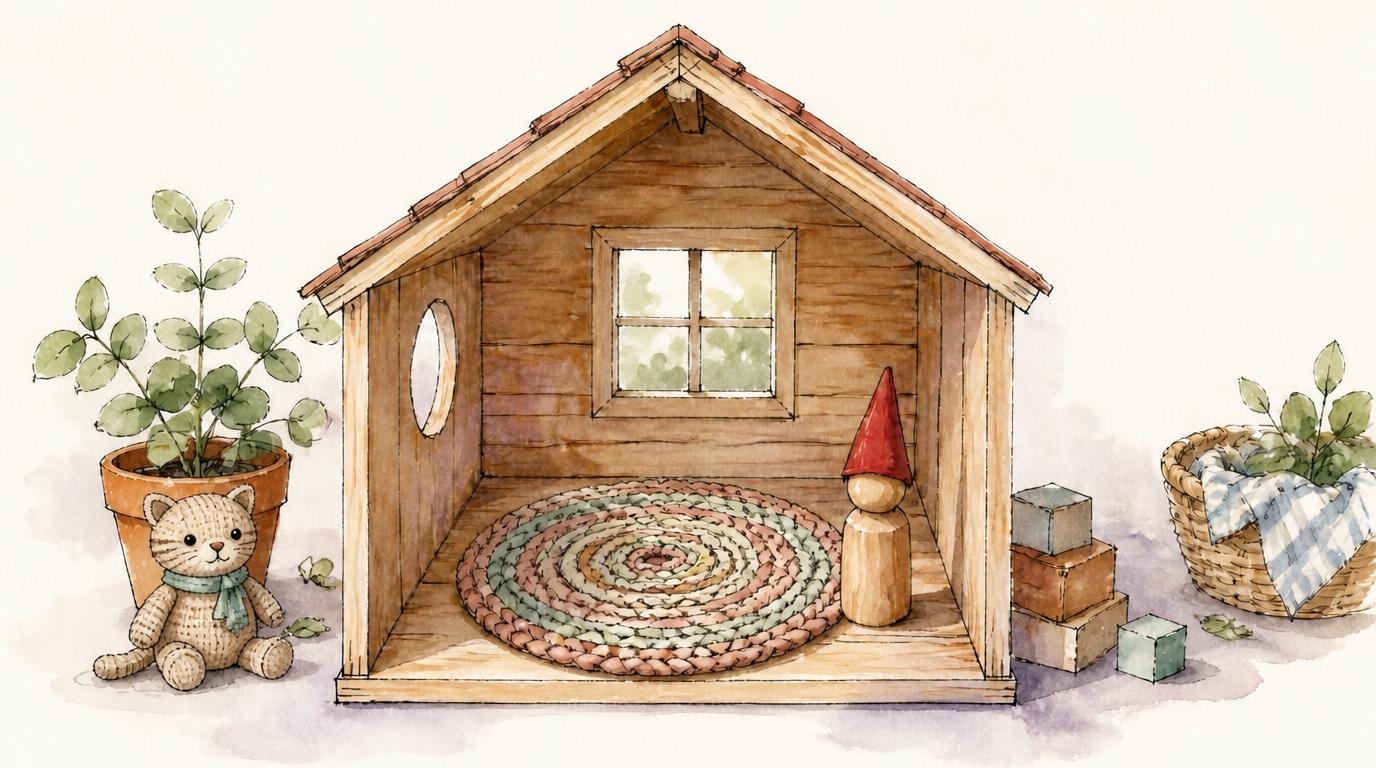 Our first braided rag rug was tiny, made with the kids for the gnome home.
How to weave a rag rug on a loom
I wove both of my rugs on my Baby Wolf floor loom. It still sits in my living room, though I haven't used it in a while. Weaving with rags is a lot like any other weaving, with two big differences.
Use carpet warp and a sturdy beater
- Carpet warp: Rag rugs are usually woven on carpet warp, an extra-strong cotton yarn. I set both rugs at 12 ends per inch. Colored warp can cover the rags completely, or be spaced so the rags show through, which is what I did.
- A sturdy beater: Rags need to be packed in firmly, so the beater has to be strong. Some weavers add weight to theirs. I didn't. I just beat hard and sometimes pushed rows down with a dinner fork. Next time I'd try a tapestry beater instead.
The weaving itself goes fast. Once the loom was warped, both rugs came together quickly.
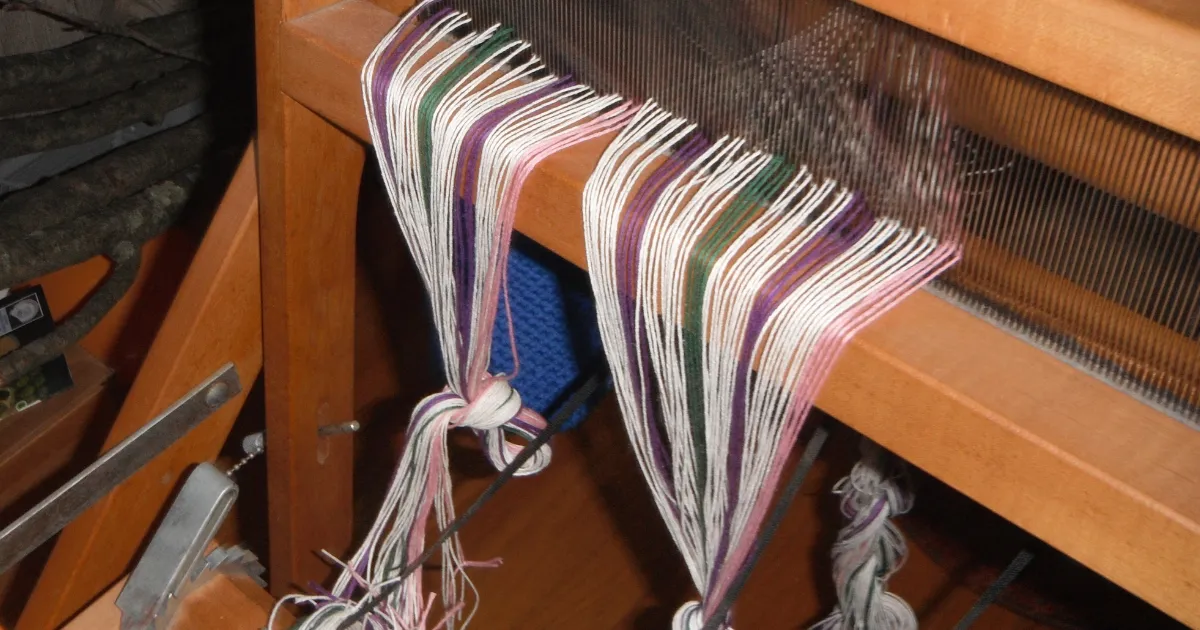 Warping my Baby Wolf floor loom for a rag rug. Stripes of purple, green, and pink carpet warp add color on top of the rag stripes.
Plan the size first
Decide how big you want the finished rug before you warp. Estimating warp for rags is trickier than for yarn, because rag strips vary in thickness. Weaving a small sample first helps.
For my first rug I guessed. For the second, I used what I'd learned from making the first one and was able to calculate the size. That's another reason to start small: your first rug gives you the numbers for the next one.
Finish the ends
I knotted the warp ends and then sewed them so the rug wouldn't unravel. After more than 20 years beside my bed, the ends are still holding.
Keep it from sliding
I use a separate non-slip pad under the rug on our wood floors. The rug has outlasted the pad: I've had to replace the pad, not the rug.
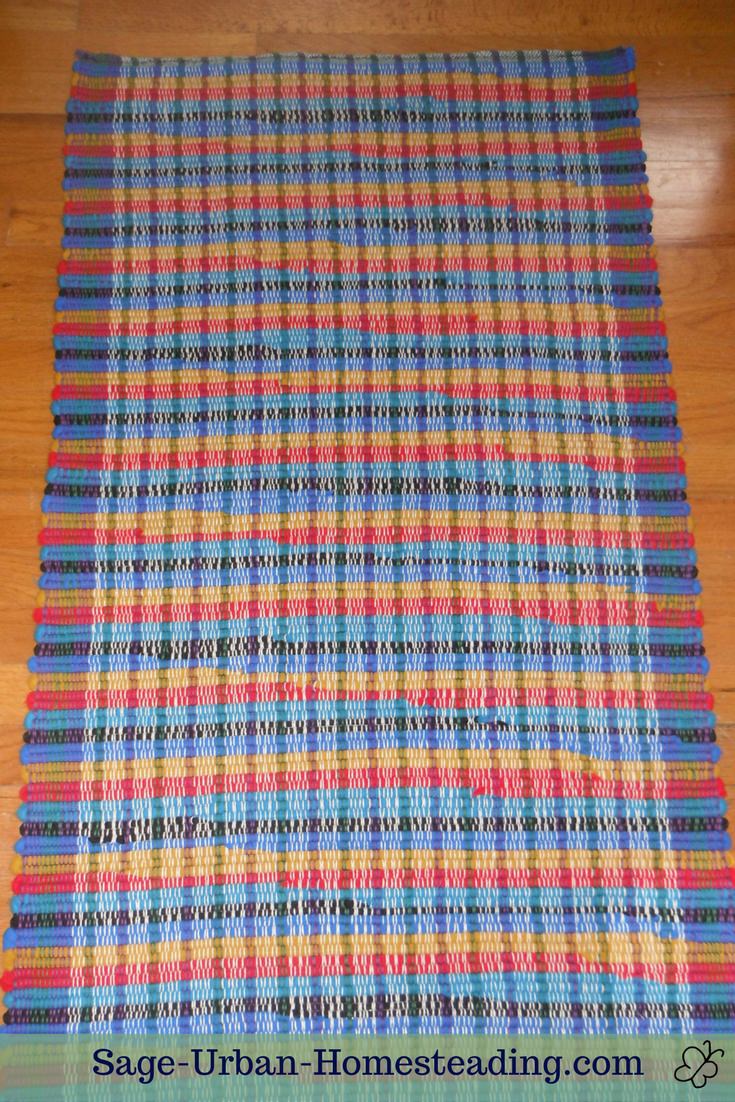 A handwoven rag rug made from 1-1/2 inch fleece strips, in primary-color stripes for a warm play rug.
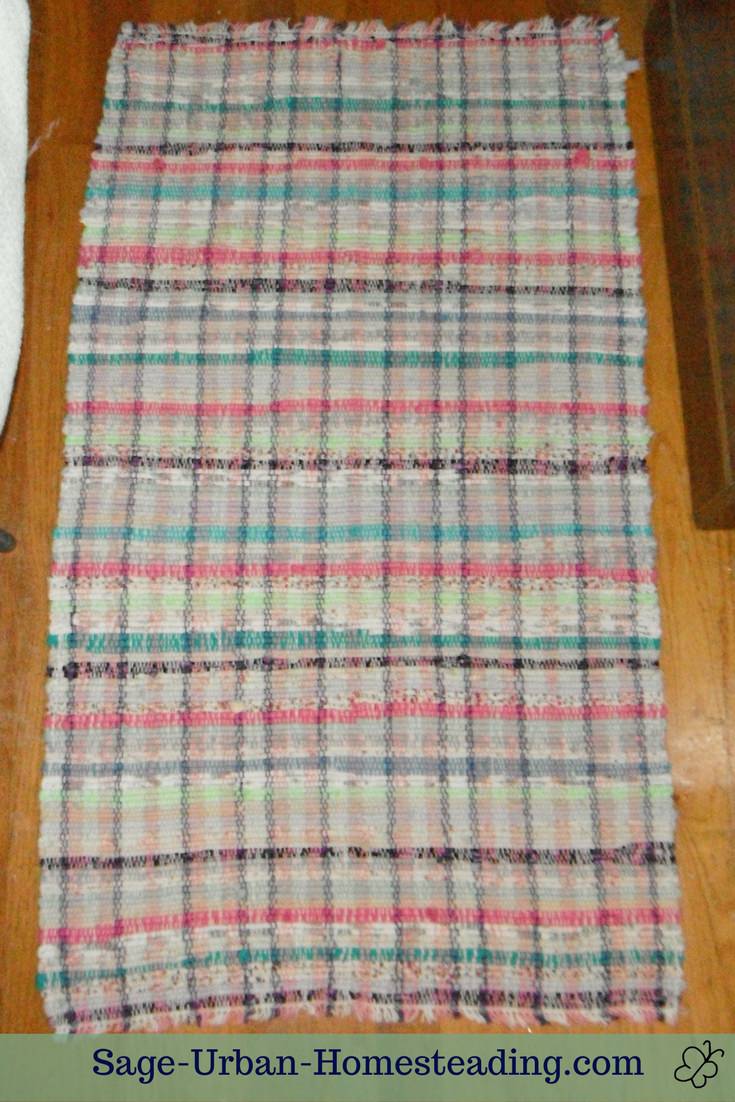 My bedroom rug, woven from 1-inch strips of old T-shirts in random stripes. It's been beside my bed for more than 20 years.
Where rag rugs work best (and how I care for them)
Rag rugs are cozy, not heavy-duty. I've used mine in bedrooms and playrooms, and I keep them away from outside doors, where mud and constant foot traffic would wear them down fast.
They don't suit every room forever, either. The fleece rug was our living room play rug for years. Now the kids would rather drive their wheeled toys on the bare wood floor, where they go faster. It's a little larger, and we don't have a good spot for it right now, so it's folded up in the closet until we do.
Care is simple:
- Vacuum regularly. That's most of the upkeep.
- Wash only now and then. I don't wash mine often.
- Hang to dry. When I do wash one, I hang it up instead of using the dryer.
If you're shopping
You can make a braided rug with what's already in your sewing basket. Good scissors help with any rag rug; the rest is for weaving (Amazon affiliate links):
- Sharp fabric scissors: This is what I'd recommend for cutting strips. I used a rotary cutter and mat, but if you don't already own them, they're more equipment than you need, and cutting that many strips was really hard on my mat. I'll use my fabric scissors next time.
- Carpet warp: I used strong 8/4 cotton warp I used for both rugs. It comes in a variety of colors.
- Non-slip rug pad: I keep one under my rug on wood floors. Expect to replace the pad before the rug.
- Tapestry beater: I haven't used one; I made do with hard beating and a fork. If I wove another rug, this is what I'd add.
Where to go next
- Not sure where to start with homesteading at all? If saving old clothes from the trash appeals to you, waste-reduction habits might be your easiest first system. My free guide, "Which Urban Homestead System Should You Start First?", helps you choose your best first step. See the box at the bottom of the page.
- More ways to use what you have: Reusable Kitchen Swaps That Actually Stick covers the reusables our family actually keeps using.
- Ready to plan more than one system? My $12 Small-Space Self-Sufficiency Starter Map helps you choose your first three systems and gives you a 30-day plan.
- Browse more weaving and other articles: More Topics
Rag rug FAQ
What's the easiest rag rug for beginners?
What's the easiest rag rug for beginners?
A braided rag rug. You only need fabric strips, a needle, and strong thread, and you can start with something tiny, like a mug rug or coaster.
Do you need a loom to make a rag rug?
Do you need a loom to make a rag rug?
No. Braided and crocheted rag rugs don't need a loom. You only need one for a woven rag rug.
What's the best fabric for a rag rug?
What's the best fabric for a rag rug?
Cotton T-shirts and fleece have both worked well for me. Whatever you use, keep the fabrics in one rug about the same weight and cut the strips the same width.
How long do handwoven rag rugs last?
How long do handwoven rag rugs last?
My woven T-shirt rug is more than 20 years old and still beside my bed, holding up well. The non-slip pad underneath has worn out and been replaced; the rug hasn't.
Is a braided or woven rag rug thinner?
Is a braided or woven rag rug thinner?
Woven. That's why I chose weaving for my floor rugs. Braided rugs are thicker and squishier.
How do you clean a rag rug?
How do you clean a rag rug?
I vacuum mine regularly and wash them only occasionally. When I do wash one, I hang it to dry.
Your how to make a rag rug checklist
- Keep a bag going for old clothes you'd otherwise toss.
- Start with a small braided piece, like a mug rug or coaster, before a big rug.
- Keep fabrics in one rug about the same weight.
- Cut strips the same width.
- If you weave, use carpet warp and beat firmly.
- Decide the size before you start.
- Knot and sew the ends so the rug doesn't unravel.
- Put a non-slip pad under rugs on hard floors.
- Use rag rugs in bedrooms and playrooms, not by outside doors.
- Vacuum regularly, wash now and then, and hang to dry.

Amy DeVries helps beginner urban homesteaders learn by doing. A lifelong gardener, she has grown food in spaces that expanded to 18 raised beds, patio containers, dwarf fruit and nut trees, and gravity-fed rainwater systems. She shares practical lessons shaped by real experience. Amy homeschools her children and teaches the same hands-on skills that guide her work.
You might like these
Grow Aloe Vera as a Houseplant
It's easy to grow aloe vera for yourself, and it's a useful houseplant for treating skin conditions.



More Information
Disclosure
All information found on this website is editorial in nature and intended to motivate and inspire rather than be used as medical advice or legal advice.
As an Amazon Associate, I earn from qualifying purchases. I also use Google Ads and cookies as described in the Privacy Policy.
Thank you for your support!
By Amy DeVries, Copyright © 2011-2026 Sage-Urban-Homesteading.com All rights reserved.
