FYI: This website contains affiliate links. As an Amazon Associate I earn from qualifying purchases.
- Home
- More Topics
- Aloe Vera Pups
Aloe Vera Pups: How One Plant Became a Windowsill Full
By Amy DeVries
Short answer: Aloe vera pups are the baby plants that sprout around the base of a happy aloe. I let mine crowd the pot until they start tipping out over the edge, then pot them up and give them to friends. My one starter plant has turned into several this way, with a sunny window, a bagged succulent mix, and a weekly look at the leaves.
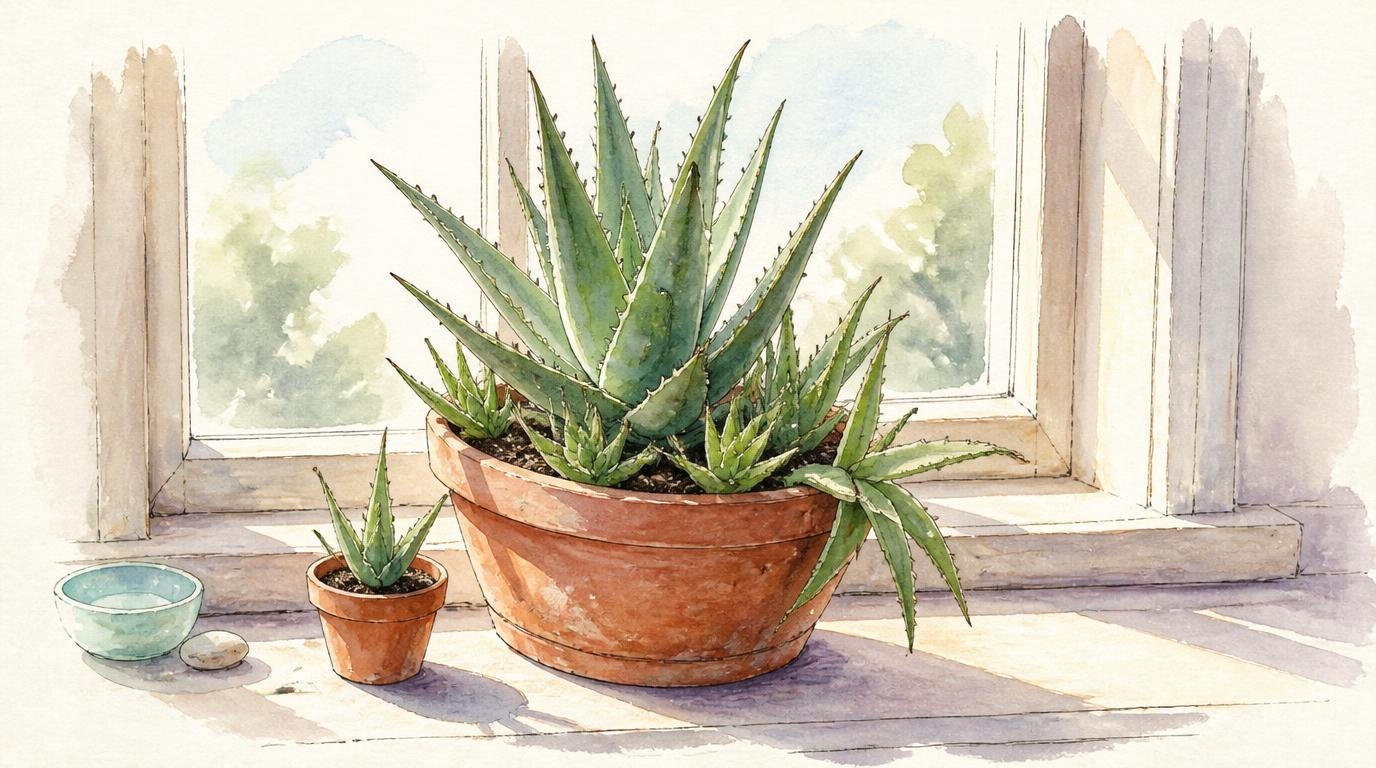 One aloe, a few years, and a pot full of pups.
I started with one aloe. I didn't buy more. It made more on its own, a little pup at a time, and some of those pups made babies of their own before I ever got around to dividing anything.
If you've lost a few houseplants and wonder whether you're just not a plant person, aloe is a kind place to start over. It asks for light, a pot that drains, and less water than most beginners give it. Mostly it asks you to look before you water.
This page covers how I keep mine going in a southwest window, how I tell when it needs water, and what I do when the pups take over.
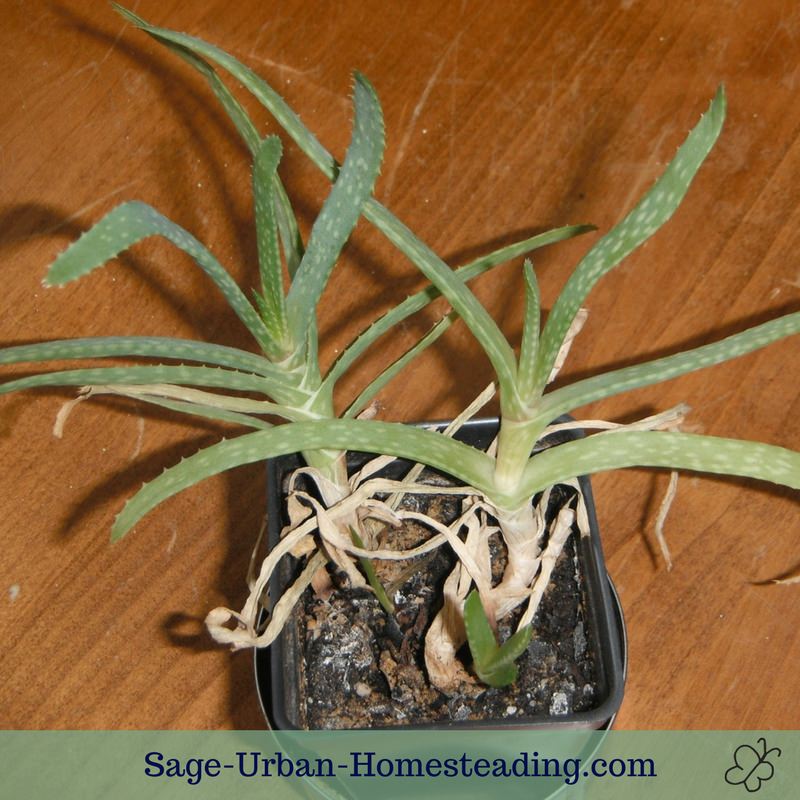 These two little aloe plants decided to sprout another little one.
Where I keep mine: one sunny window, all year
My aloe lives in a southwest window. It used to spend summers outside, but now it stays in year-round.
If you're choosing a spot, pick your brightest window first and worry about everything else second. An aloe in a dim corner tends to stretch and flop. In a sunny window it stays compact and keeps making pups.
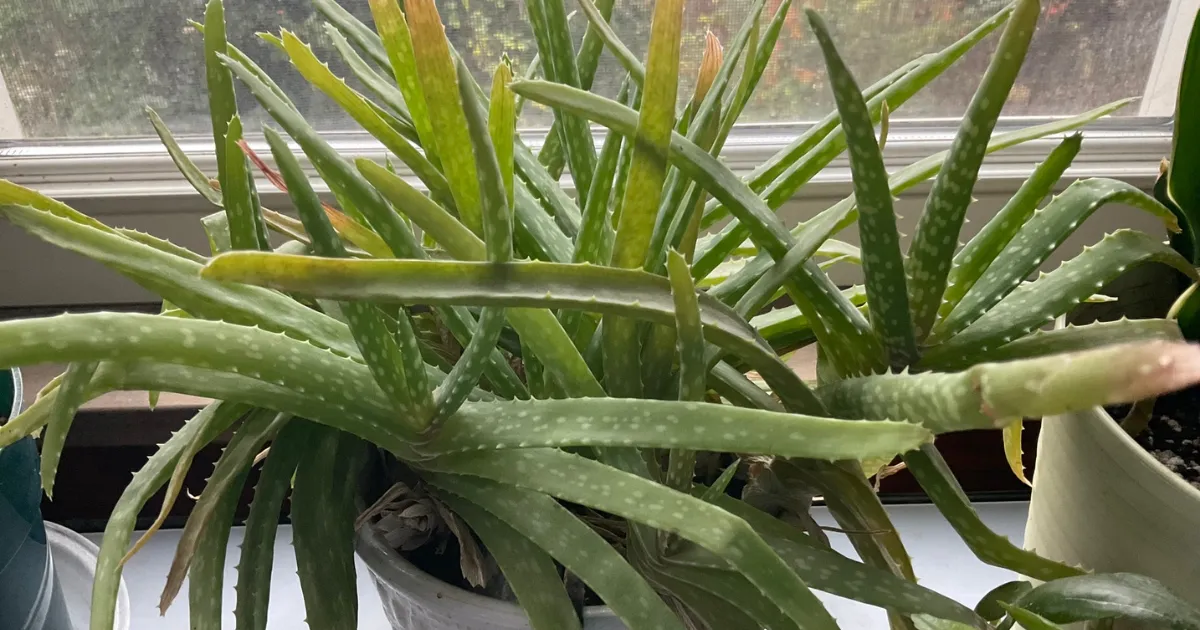 Our aloe in late fall, a little on the dry side. See the curled leaf in the middle and the brown tips? That's my cue to water.
The soil: I switched to a bagged mix
I used to mix my own aloe soil. These days I buy a bagged succulent mix from Sol Soils and skip the measuring (Amazon affiliate link).
Whatever you use, the goal is the same: soil that drains fast and doesn't stay soggy. Regular potting soil on its own holds more water than aloe likes. A pot with a drainage hole matters just as much as the mix.
How I water: a weekly check, judged by the leaves
I check my aloe once a week. I don't water on a schedule, though. I look at the leaves.
- Plump, firm leaves: it's fine. I leave it alone.
- Leaves looking thinner or curling inward, a lower leaf drooping, or brown tips: it's thirsty, so it gets a drink.
- Soft or mushy leaves: that's the warning sign for too much water. I'd hold off and let the soil dry out.
The leaves store water, so they tell you how full the plant's "tank" is. That's why a weekly look works better for me than a calendar. Some weeks it needs nothing at all.
In late fall and winter, when the days get shorter, I keep mine on the dry side on purpose. A slightly thirsty aloe bounces back after a drink. One sitting in wet, cold soil is the bigger risk, so when I'm unsure, I wait.
When I do water, I pour it on the soil around the plant rather than into the center of the leaves, and let the extra drain away.
Aloe is a gentle way to practice the habit that keeps any container going: look before you water. If you'd like to grow something you can eat next, my free guide, Which Urban Homestead System Should You Start First?
Letting aloe vera pups crowd the pot (and passing them on)
I don't rush to divide my aloe. The pups can share the pot with the mother plant for a long time. I let them crowd until they start tipping out over the edge, then I pot those up and give them to friends.
That's the whole system. No schedule, no special tools, and the plant tells you when it's time.
What you need
- A crowded aloe with pups leaning out of the pot
- A small pot with a drainage hole for each pup
- The same fast-draining mix you use for the mother plant
Step 1: Wait for the pups to push their way out
When a pup is leaning over the rim or getting crowded out by its neighbors, it's ready to go.
Step 2: Lift the pup out
Pull up the pups that are already loose, keeping whatever roots come with them.
Step 3: Pot it up on its own
Set the pup in its own small pot of fast-draining mix, firm the soil around it, and give it a sunny spot.
Step 4: Pass it on
Keep one if you want another plant. Otherwise, hand it to a friend. An aloe pup is a nice no-cost gift for someone who's nervous about houseplants.
A few cautions: pets and skin
Aloe vera is toxic to cats and dogs if eaten, according to the Old Farmer's Almanac. Ours sits out of reach of our pets.
There are different aloe varieties, and some can cause skin irritation, so be cautious about touching the gel.
If you're shopping
You don't need much. If you're starting from scratch, this is all I'd get:
- An aloe plant. A friend's extra pup costs nothing, so ask around before you buy one.
- A bagged succulent mix. I use Sol Soils (Amazon affiliate link).
- A pot with a drainage hole. One a little bigger than the root ball is plenty, since aloe doesn't mind being crowded.
What I'd skip: a moisture meter. The leaves already tell you when the plant is thirsty.
If you're ready to plan beyond one plant, my $12 Small-Space Self-Sufficiency Starter Map helps you choose your first three systems based on your real space, time, budget, and energy.
Where to go next
- Container Gardening for Beginners: for when you want your windowsill or patio to grow something you can eat.
- Urban Gardening in Small Spaces: the hub for all my small-space growing pages.
- Urban Homesteading for Beginners: if you're new here and not sure where to start.
Aloe vera pups FAQ
Do I have to separate aloe vera pups?
Do I have to separate aloe vera pups?
No. I let mine crowd the pot until they start tipping out, and the plant keeps going. Separate them when you want more plants or the pot is overflowing.
How often should I water aloe?
How often should I water aloe?
I check mine once a week and water only when the leaves start looking thinner or curling inward. In late fall and winter I keep it on the drier side. Plump leaves mean it doesn't need anything yet.
Why are my aloe leaves soft or mushy?
Why are my aloe leaves soft or mushy?
That's usually a sign of too much water. Hold off and let the soil dry out.
Is aloe safe around pets?
Is aloe safe around pets?
Aloe vera is toxic to cats and dogs if eaten, so keep it out of their reach.
Your aloe vera pups checklist
- Put your aloe in your sunniest window.
- Use a fast-draining bagged succulent mix and a pot with a drainage hole.
- Check the leaves once a week; water only when they look thinner or flatter.
- Keep it on the dry side in late fall and winter.
- Water the soil, not the center of the plant.
- Let pups crowd until they start tipping out of the pot.
- Pot up the loose pups and give them to friends.
- Keep the plant out of reach of pets.

Amy DeVries helps beginner urban homesteaders learn by doing. A lifelong gardener, she has grown food in spaces that expanded to 18 raised beds, patio containers, dwarf fruit and nut trees, and gravity-fed rainwater systems. She shares practical lessons shaped by real experience. Amy homeschools her children and teaches the same hands-on skills that guide her work.
You might like these
Urban Gardening in Small Spaces
Urban gardening in small spaces starts with the garden you can water. Find the right first page for your patio, yard, or no-outdoor-space home.
Home Efficiency for Beginners: Start Small, Stay Warm
Home efficiency for beginners: small habits and removable fixes that make your home warmer and cheaper to run, even if you rent.
Urban Homesteading for Beginners: Start Here If You Feel Overwhelmed
Urban homesteading for beginners who feel overwhelmed: no land or perfect setup needed. Start with one small system and get my free guide to pick yours.

More Information
Disclosure
All information found on this website is editorial in nature and intended to motivate and inspire rather than be used as medical advice or legal advice.
As an Amazon Associate, I earn from qualifying purchases. I also use Google Ads and cookies as described in the Privacy Policy.
Thank you for your support!
By Amy DeVries, Copyright © 2011-2026 Sage-Urban-Homesteading.com All rights reserved.
